Charles Howard “Charlie” Fite III (GW024)

(1940 – May 3, 2016)

(from The Greenwood Project)

Jefferson Street dominated Nashville’s 1960s R&B scene. Charlie Fite, Frank Howard, and Herschel Carter performed there as The Marquees, soon catching the eye of DJ/entrepreneur “Hoss” Allen, who renamed them Frank Howard & The Commanders, featured them on The!!!!Beat, and produced their earliest records. They became R&B royalty, performing alongside Earl Gaines, Etta James, and Ray Charles. Jimi Hendrix (still “Jimmy” then), who came down from Fort Campbell to perform in the clubs, recorded with the Commanders. R&B ruled . . . until Interstate 40 slashed through the music landscape, changing it forever. The Soul scene faded. Musicians took other jobs. But the Country Music Hall of Fame’s 2005 retrospective, Night Train to Nashville, brought The Commanders and others out of retirement. When Charlie Fite lost his house to the 2010 flood, Frank Howard and other musicians produced a benefit to help him rebuild. Charlie’s gone now, but a little Jefferson Street magic still survives in a few local venues.  
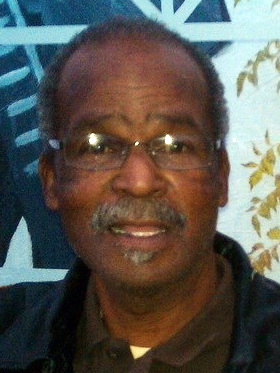
Charlie Fite, about 2010 (family photo)

Frank Howard and the Commanders, about 1965; Charlie is on the left. (Photo courtesy of the Country Music Hall of Fame and Museum)

____________________

Charlie Fite stands on the left in this video of The Commanders and is the second dancer. https://www.youtube.com/watch?v=1MjOQ5gd7QM

____________________

The Greenwood Project is a series of 160-word biographies of individuals who lie at rest in Mt. Ararat and Greenwood cemeteries, two historic African American burial grounds in Nashville, Tennessee. The project, which began in September 2014 (and is still available on Facebook, at https://www.facebook.com/profile.php?id=100064806156276), shares the stories of more than 300 consequential individuals, primarily African American, who changed the course of city, state, and national history through their words and deeds. (All biographies were written by Kathy Lauder unless otherwise noted.)

Beverly Gail Neely (GW023)

(June 9, 1947 – December 10, 2004)

from The Greenwood Project

Born in Nashville in 1947, Beverly Gail Neely, known professionally as Gail Neely, had a long career in movies, television, and television commercials, and her face became familiar to many viewers. Her film roles included Winnie Mandela in The Naked Gun 2½: The Smell of Fear (1991) with Leslie Nielsen and Priscilla Presley; an operating room nurse in The Doctor (1991) with William Hurt; a nurse again in Betrayal of the Dove (1993); and top-billed Eleanor “Mama” Washington in Surf Nazis Must Die (1987). She also appeared in a number of television series, including L. A. Law (1986-88), Dave’s World (1994), The Wayans Bros. (1995-96), and C-16: FBI (1997), and she was seen in TV movies Winnie (1988) and The Heart of Justice (1992) with Vincent Price, Dennis Hopper, and Dermot Mulroney. She was perhaps most familiar to TV audiences as the down-to-earth “Maureen” in a long-running series of Philips Milk of Magnesia commercials (“Mauree-een, you don’t even know these people!”).

Gail Neely (photo from Find a Grave website)

____________________

The Greenwood Project is a series of 160-word biographies of individuals who lie at rest in Mt. Ararat and Greenwood cemeteries, two historic African American burial grounds in Nashville, Tennessee. The project, which began in September 2014 (and is still available on Facebook, at https://www.facebook.com/profile.php?id=100064806156276), shares the stories of more than 300 consequential individuals, primarily African American, who changed the course of city, state, and national history through their words and deeds. (All biographies were written by Kathy Lauder unless otherwise noted.)
Salem Mason (GW022)

(December 25, 1795 – December 28, 1899)

from The Greenwood Project

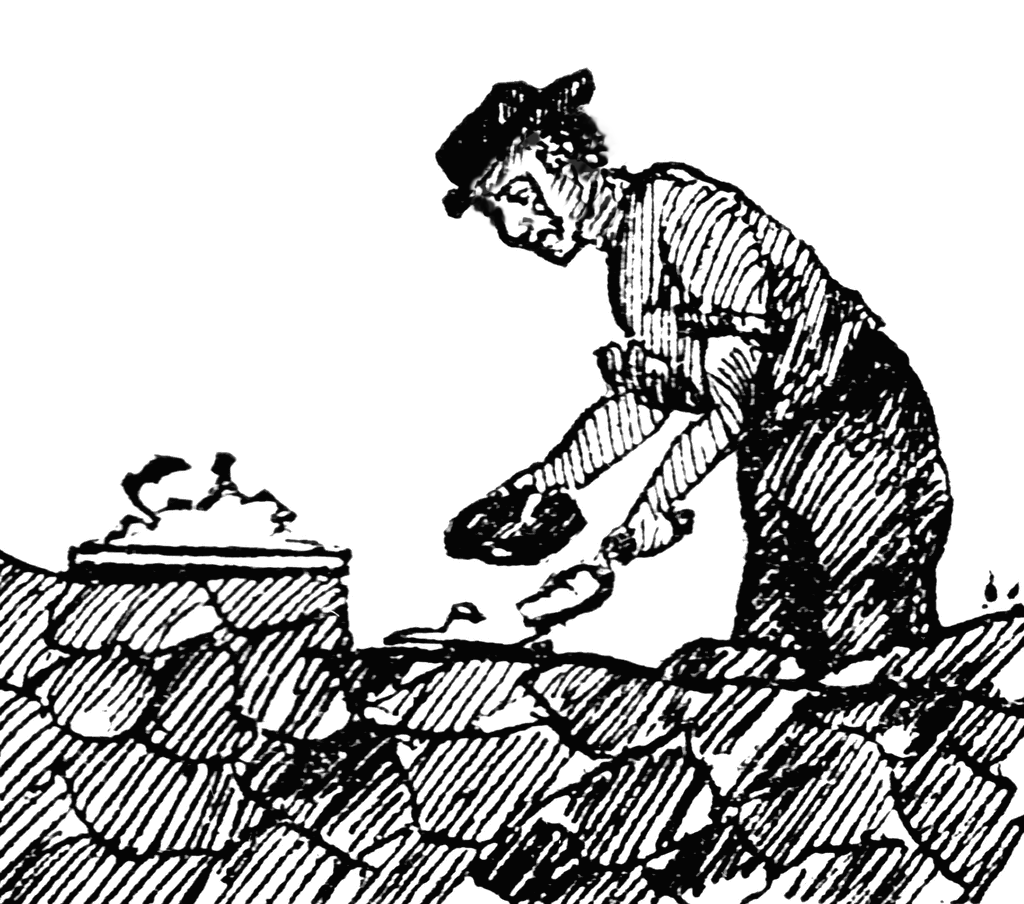
Born a slave in Virginia, young Salem Mason lost his wife and two children when their owner moved out of the state . . . and he never saw them again. Salem himself was one of 23 slaves purchased by the city of Nashville in 1830 and brought to Tennessee to lay pipe for the city’s first water system. He helped grade the Square (where the courthouse now stands) when it consisted of four frame buildings and a weed-covered field crossed by cow paths, and he headed the crew laying the cornerstone of the old state penitentiary, which opened in 1831. Salem was one of only three workers kept on by the city after the completion of the waterworks. He continued as a city employee after emancipation, barely surviving an attempt by the Board of Public Works to strip him of his $10 monthly pension. He died at age 104, four days short of having lived in three different centuries!

Illustration of stoneworker courtesy of the Florida Center for Instructional Technology

____________________

The Greenwood Project is a series of 160-word biographies of individuals who lie at rest in Mt. Ararat and Greenwood cemeteries, two historic African American burial grounds in Nashville, Tennessee. The project, which began in September 2014 (and is still available on Facebook, at https://www.facebook.com/profile.php?id=100064806156276), shares the stories of more than 300 consequential individuals, primarily African American, who changed the course of city, state, and national history through their words and deeds. (All biographies were written by Kathy Lauder unless otherwise noted.)
Dr. Matthew Walker Sr., M.D. (GW021)

(December 7, 1906 – July 15, 1978)

from The Greenwood Project

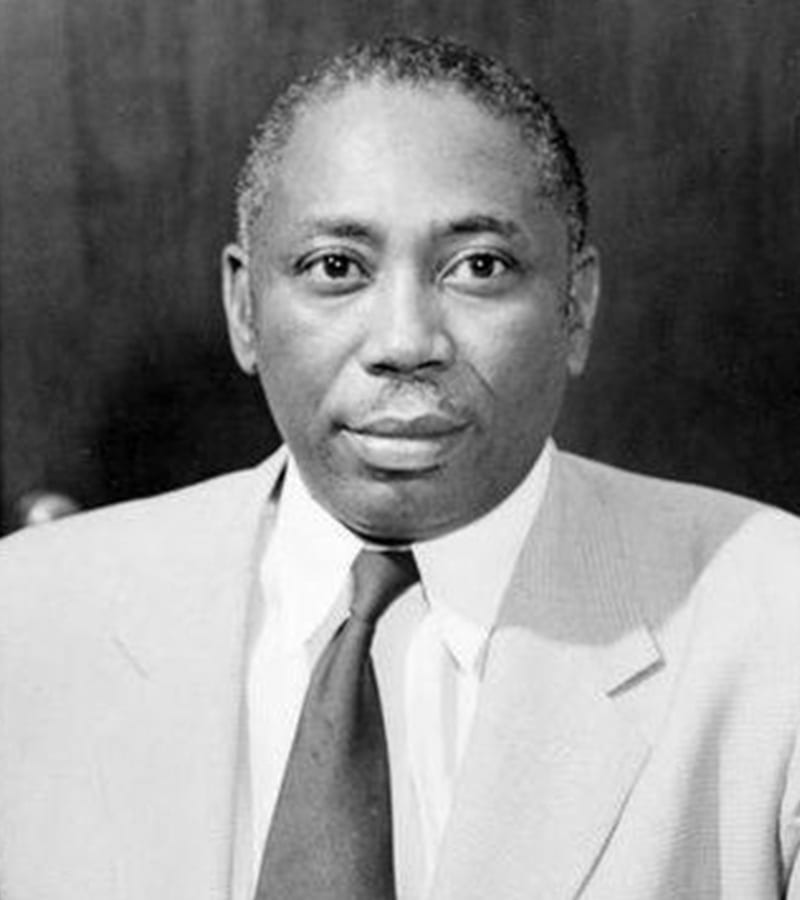
Dr. Matthew Walker is said to have trained more black surgeons – as many as half of those practicing at the time he died – than anyone else in the world. The son of a Pullman porter, he worked his way through New Orleans (later Dillard) University and graduated from Meharry Medical College with honors (1934), also studying at Howard University and the Mayo Clinic. He was a diplomat of the American Board of Surgeons, a fellow of the International College of Surgeons (1947), and a member of many other professional organizations. A former president of the National Medical Association, he received their distinguished service award in 1959. Walker taught surgery, gynecology, orthopedics, and pathology at Meharry, and, against the advice of his colleagues, welcomed Dr. Dorothy L. Brown and other women into the surgical residency program. The Matthew Walker Comprehensive Health Centers, honoring his name and his philosophy, continue to provide health care for the poor and uninsured of all races.

Dr. Matthew Walker Sr. (Photo from Tennessee Health Care Hall of Fame)


The Greenwood Project is a series of 160-word biographies of individuals who lie at rest in Mt. Ararat and Greenwood cemeteries, two historic African American burial grounds in Nashville, Tennessee. The project, which began in September 2014 (and is still available on Facebook, at https://www.facebook.com/profile.php?id=100064806156276), shares the stories of more than 300 consequential individuals, primarily African American, who changed the course of city, state, and national history through their words and deeds. (All biographies were written by Kathy Lauder unless otherwise noted.)
Nellie Griswold Francis (GW020)

(November 7, 1874 – December 13, 1969)

from The Greenwood Project

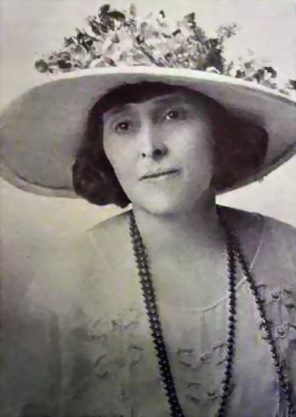
Nashville-born Nellie Griswold was a young girl when her family moved to Minnesota, where she met and married St. Paul attorney William Trevanne Francis in 1893. She founded the Everywoman Suffrage Council and held leadership positions in the Minnesota State Federation of Colored Women, the Urban League, and the NAACP. Enlisting her husband’s assistance in writing anti-lynching legislation after a 1920 incident in Duluth, Nellie shepherded the bill through the state legislature to passage in 1921. This ground-breaking law – be reminded that the United States Congress has never passed anti-lynching legislation! – awarded monetary compensation to victims’ families and established penalties for police who failed to protect prisoners from mobs. Facing discriminatory housing practices in their Minnesota neighborhood, Nellie and her husband moved to Africa in 1927 when President Coolidge appointed William to serve as special minister to Liberia. After yellow fever took William’s life, Nellie brought his body to Nashville for burial, remaining here herself until her death at 95.

Nellie Francis Griswold. (Mary Dillon Foster, Who’s Who Among Minnesota Women (1924), 111.)

____________________

The Greenwood Project is a series of 160-word biographies of individuals who lie at rest in Mt. Ararat and Greenwood cemeteries, two historic African American burial grounds in Nashville, Tennessee. The project, which began in September 2014 (and is still available on Facebook, at https://www.facebook.com/profile.php?id=100064806156276), shares the stories of more than 300 consequential individuals, primarily African American, who changed the course of city, state, and national history through their words and deeds. (All biographies were written by Kathy Lauder unless otherwise noted.)
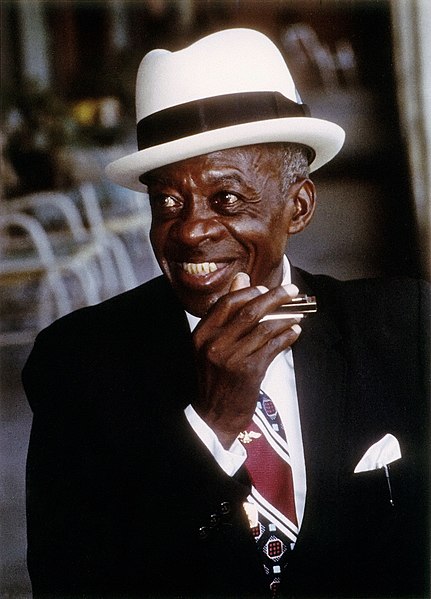
DeFord Bailey Sr. (GW019)

(December 14, 1899 – July 2, 1982)

from The Greenwood Project

A musician who achieved national fame as the “Harmonica Wizard,” DeFord Bailey (1899-1982) was a founding member of the Grand Ole Opry, as well as being its first African American member. Born near Carthage, Tennessee, this grandson of slaves and survivor of childhood polio learned to play the harmonica as a schoolboy. Although he had to deal with racist attitudes throughout his career, he became as much a part of the Opry as Roy Acuff or Bill Monroe, sometimes playing as much as a 25-minute set during the three-hour WSM radio show. He was best known for “Pan American Blues,” “Fox Chase,” and “Ice Water Blues/Davidson County Blues,” and he recorded for Columbia, Brunswick, and Victor Records. However, WSM had released him by 1941, and he opened a busy shoe-shine shop at 12th Ave. S. and Edgehill. He re-emerged as a performer during the Civil Rights era and appeared at the Grand Old Opry House as late as April 3, 1982, three months before his death.   

DeFord Bailey Sr. in the 1970s. (Photo file is licensed under the Creative Commons Attribution-Share Alike Attribution-Share Alike 4.0 International3.0 Unported2.5 Generic2.0 Generic and 1.0 Generic license.)

____________________

The Greenwood Project is a series of 160-word biographies of individuals who lie at rest in Mt. Ararat and Greenwood cemeteries, two historic African American burial grounds in Nashville, Tennessee. The project, which began in September 2014 (and is still available on Facebook, at https://www.facebook.com/profile.php?id=100064806156276), shares the stories of more than 300 consequential individuals, primarily African American, who changed the course of city, state, and national history through their words and deeds. (All biographies were written by Kathy Lauder unless otherwise noted.)
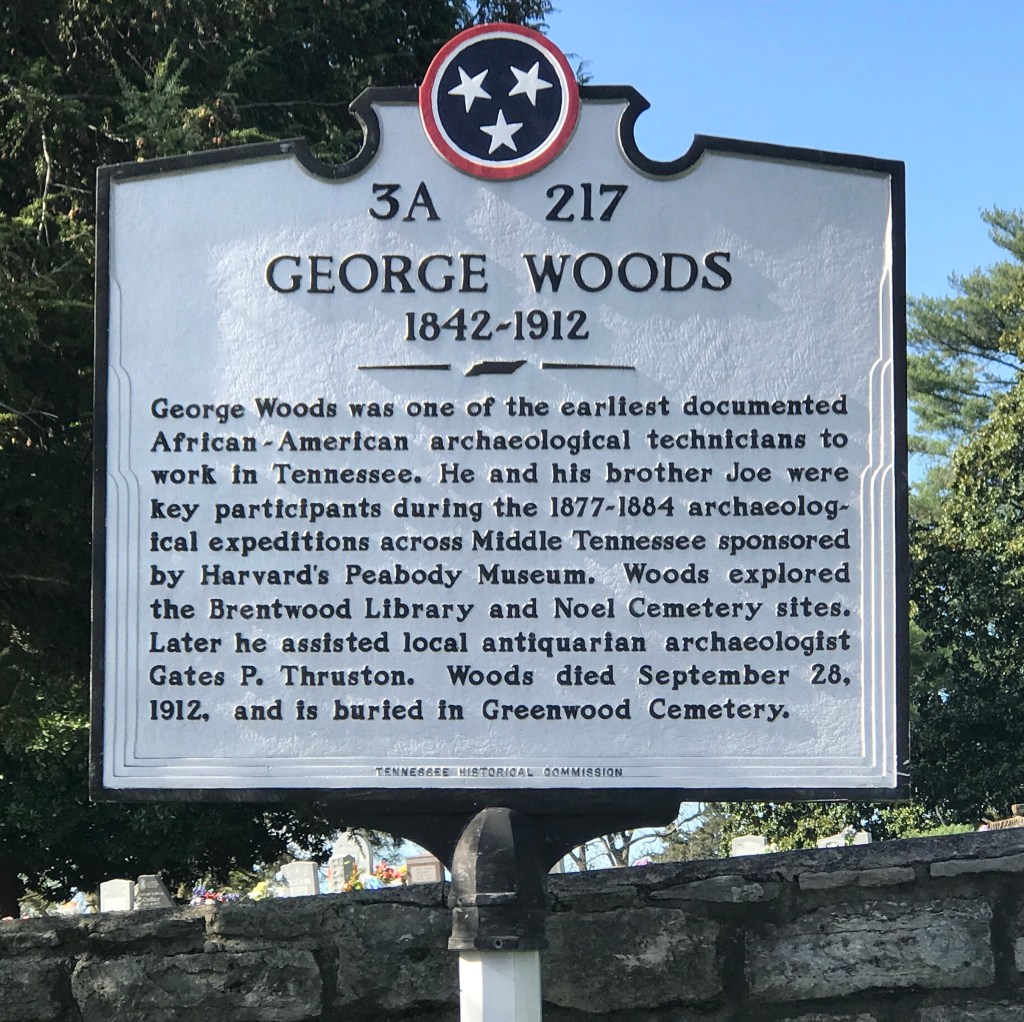
George Woods (GW018)

(March 1842 – September 28, 1912)

from The Greenwood Project

George Woods, memorialized on a historical marker near the Greenwood Cemetery entrance, was almost certainly Tennessee’s first African American archaeological technician. When Harvard University’s Frederic Ward Putnam came to Tennessee to excavate Davidson and Wilson County sites for the Peabody Museum (1877), his foreman Edwin Curtiss hired brothers George and Joe Woods as laborers on the project. The Woods brothers acquired a reputation for competence and dependability, and, after Curtiss’s sudden death, Professor Putnam himself began to correspond with George Woods about continuing Harvard’s archaeological efforts in Tennessee. In 1882 Putnam hired Woods as foreman on the Jarman and Hunt digs, and, after he returned to Harvard, arranged for Woods to continue digging and collecting artifacts for the Peabody from those two excavations as well as the Noel and Cooper Farm digs (1885-1890). In the Tennessee State Museum’s Gates Thruston Collection are several artifacts collected by George Woods, who, in later years, worked as a blacksmith, railroad porter, and quarryman.

There are no known photographs of George Woods. This historical marker stands near the main entrance of Greenwood Cemetery, on Elm Hill Pike at Spence Lane, in Nashville, Tennessee. (Photo by Duane and Tracy Marsteller: https://www.hmdb.org/m.asp?m=147556ttps://www.hmdb.org/m.asp?m=147556)

____________________

The Greenwood Project is a series of 160-word biographies of individuals who lie at rest in Mt. Ararat and Greenwood cemeteries, two historic African American burial grounds in Nashville, Tennessee. The project, which began in September 2014 (and is still available on Facebook, at https://www.facebook.com/profile.php?id=100064806156276), shares the stories of more than 300 consequential individuals, primarily African American, who changed the course of city, state, and national history through their words and deeds. (All biographies were written by Kathy Lauder unless otherwise noted.)

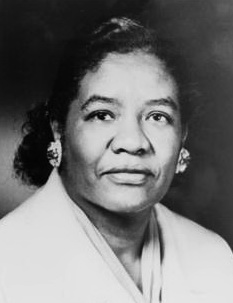
Dorothy Lavinia Brown (GW017)

(January 7, 1919 – June 13, 2004)

from The Greenwood Project

Although abandoned by her mother and raised in foster homes, Dorothy Brown became valedictorian of her high school graduating class. However, she could not afford college until a Methodist women’s group for whom she worked as a housekeeper paid her tuition at Bennett College. She graduated with honors, then worked in a defense plant to earn money for medical school, entering Meharry in 1944. After the Harlem hospital where she interned denied her a surgical residency, she convinced Meharry surgical chief Matthew Walker to allow her a residency in Nashville. In 1954 Brown became the first African American female surgeon in the South when she was named attending surgeon at Hubbard Hospital, chief of surgery at Riverside, and professor of surgery at Meharry. In 1956 she became the first single woman in Tennessee to adopt a child, and in 1966 she won a seat in the Tennessee House, becoming the first African American woman to serve in the state legislature.

Dr. Dorothy L. Brown, M.D. (Department of Interior photo, public domain)

____________________

The Greenwood Project is a series of 160-word biographies of individuals who lie at rest in Mt. Ararat and Greenwood cemeteries, two historic African American burial grounds in Nashville, Tennessee. The project, which began in September 2014 (and is still available on Facebook, at https://www.facebook.com/profile.php?id=100064806156276), shares the stories of more than 300 consequential individuals, primarily African American, who changed the course of city, state, and national history through their words and deeds. (All biographies were written by Kathy Lauder unless otherwise noted.)

Avon Nyanza Williams Jr. (GW016)

December 22, 1921 – August 29, 1994

from The Greenwood Project

Knoxville native Avon Williams earned an L.L.B. (1947) and an L.L.M. (1948) from Boston University. After interning with attorney Z. A. Looby in Nashville, he set up a law practice in Knoxville, often working closely with the NAACP Legal Defense Fund. He filed Tennessee’s first school desegregation case (Anderson County, 1950), and his lawsuit to admit African American students to the UT graduate school (1951) was one of seven discrimination cases he argued before the U.S. Supreme Court. In 1953 he moved to Nashville, partnered with Looby, and took an active (and mostly unpaid) role in civil rights cases ranging from lunch counter and school desegregation to housing discrimination. A founder of the Davidson County Independent Political Council and the Tennessee Voters Council, he was one of Tennessee’s first two African American state senators, serving from 1969-1990. His lawsuit to merge UT Nashville with TSU led to a landmark legal decision and the renaming of the downtown campus after him.

Avon Nyanza Williams Jr. (Photo from Avon Williams Manuscript Collection, Tennessee State University)

Avon N. Williams Jr. Marker from Historical Marker Database, Darren Jefferson Clay photo

____________________

Full text of historical marker pictured above, side A: “A native of Knoxville, Tennessee, Avon N. Williams, Jr., was an attorney, statewide civil rights leader, politician, educator, and a founder of the Davidson County Independent Political Council and the Tennessee Voters Council. In 1950, as a cooperating attorney for the NAACP Legal Defense Fund, he and attorneys Z. Alexander Looby and Carl Cowan filed and successfully litigated McSwain v. Board of Anderson County, Tennessee, the first public school desegregation case in the state. Side B: “Assisting in every school desegregation case statewide except Shelby County, he was counsel for the plaintiff intervenors in the Tennessee State University / University of Tennessee at Nashville merger suit. In 1979, under federal court order, UTN merged with TSU. Williams was elected to the state legislature in 1968, becoming the first African-American state senator from Nashville to serve as a member of the Tennessee General Assembly. He represented the 19th district for more than 20 years, serving as a member of the 86th through the 96th General Assembly of Tennessee.”


The Greenwood Project is a series of 160-word biographies of individuals who lie at rest in Mt. Ararat and Greenwood cemeteries, two historic African American burial grounds in Nashville, Tennessee. The project, which began in September 2014 (and is still available on Facebook, at https://www.facebook.com/profile.php?id=100064806156276), shares the stories of more than 300 consequential individuals, primarily African American, who changed the course of city, state, and national history through their words and deeds. (All biographies were written by Kathy Lauder unless otherwise noted.)
Capt. W. L. Irvin (GW015)

(ca. 1835 – May 5, 1907)

from The Greenwood Project

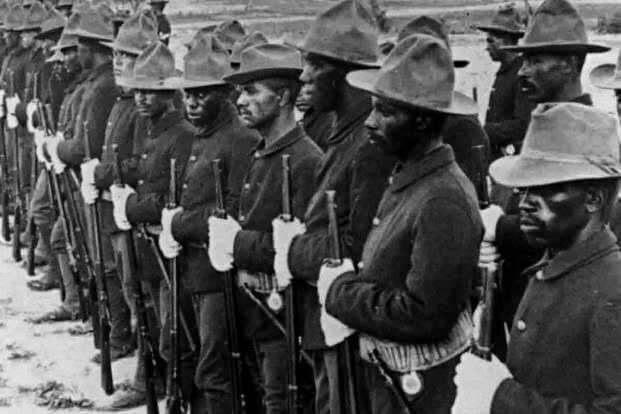
W.L. Irvin’s name appeared frequently in post-Civil War newspapers. A barber by trade, he and other elite leaders posted letters to Gov. John C. Brown and Gen. W.B. Bate in 1874, urging them to take stronger action against lynching. Irvin was a board member of the House Building and Loan Association during the 1890s. He served in the U.S. Army for several years and later led the Langston Rifles, one of Nashville’s five “colored” military companies. During the Spanish American War (1898), he became a lieutenant in an “immune regiment” (military authorities erroneously believed African American troops were naturally immune to tropical diseases and sent many into combat in the tropics), serving until the regiment mustered out. An alternate delegate to the state Republican Convention in 1900, Irvin was active in the [Frederick] Douglass Club and was a featured speaker at their 1903 meeting. He was buried with honors by the Masonic Order, of which he was a longtime member.

All existing African American military units were called up for service in the Spanish American War. (Photo from the Library of Congress)

____________________

The Greenwood Project is a series of 160-word biographies of individuals who lie at rest in Mt. Ararat and Greenwood cemeteries, two historic African American burial grounds in Nashville, Tennessee. The project, which began in September 2014 (and is still available on Facebook, at https://www.facebook.com/profile.php?id=100064806156276), shares the stories of more than 300 consequential individuals, primarily African American, who changed the course of city, state, and national history through their words and deeds. (All biographies were written by Kathy Lauder unless otherwise noted.)