DeFord Bailey Sr. (GW019)

(December 14, 1899 – July 2, 1982)

from The Greenwood Project

A musician who achieved national fame as the “Harmonica Wizard,” DeFord Bailey (1899-1982) was a founding member of the Grand Ole Opry, as well as being its first African American member. Born near Carthage, Tennessee, this grandson of slaves and survivor of childhood polio learned to play the harmonica as a schoolboy. Although he had to deal with racist attitudes throughout his career, he became as much a part of the Opry as Roy Acuff or Bill Monroe, sometimes playing as much as a 25-minute set during the three-hour WSM radio show. He was best known for “Pan American Blues,” “Fox Chase,” and “Ice Water Blues/Davidson County Blues,” and he recorded for Columbia, Brunswick, and Victor Records. However, WSM had released him by 1941, and he opened a busy shoe-shine shop at 12th Ave. S. and Edgehill. He re-emerged as a performer during the Civil Rights era and appeared at the Grand Old Opry House as late as April 3, 1982, three months before his death.   
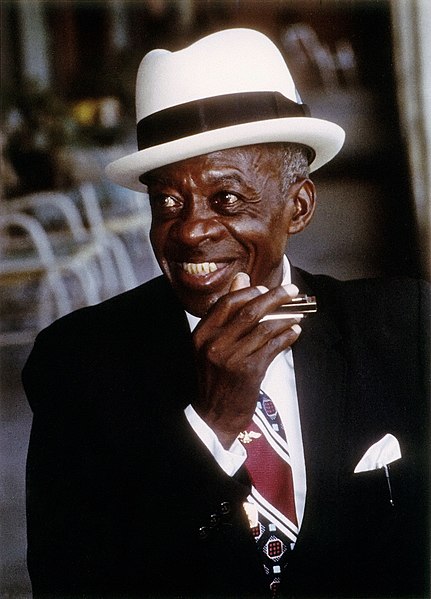
DeFord Bailey Sr. in the 1970s. (Photo file is licensed under the Creative Commons Attribution-Share Alike Attribution-Share Alike 4.0 International3.0 Unported2.5 Generic2.0 Generic and 1.0 Generic license.)

____________________

The Greenwood Project is a series of 160-word biographies of individuals who lie at rest in Mt. Ararat and Greenwood cemeteries, two historic African American burial grounds in Nashville, Tennessee. The project, which began in September 2014 (and is still available on Facebook, at https://www.facebook.com/profile.php?id=100064806156276), shares the stories of more than 300 consequential individuals, primarily African American, who changed the course of city, state, and national history through their words and deeds. (All biographies were written by Kathy Lauder unless otherwise noted.)

Ten Important Dates in Nashville History

by Mike Slate.

A short list of important dates in Nashville history must necessarily exclude many defining events. Nevertheless, we believe the effort to narrow our history into an easily memorized list is worthwhile. The listed items provide an overview of the whole and serve as guideposts between which additional events can be viewed with some perspective. Perhaps it is also motivating to realize that memorizing a list of ten important Nashville dates will result in your suddenly knowing more Nashville history than probably eighty or ninety percent of all Nashvillians!

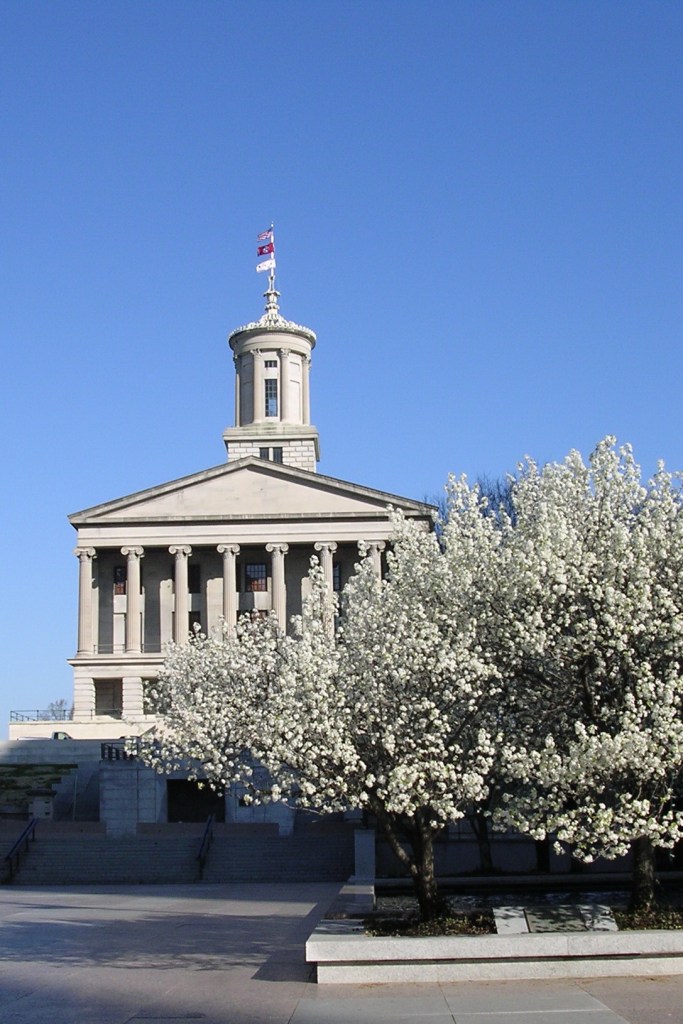
Photo of Tennessee State Capitol from NHN collection

Regrettably, in addition to Native American history, our list of dates omits Nashville’s heroic pre-settlement period, including the exploits of Timothy Demonbreun and the founding journeys to the Cumberland region led by James Robertson and John Donelson. Also omitted is the date of the formation of Davidson County (1783) as well as the dates on which Nashville was officially named (1784) and incorporated (1806). The Union occupation of Nashville (beginning February 1862) is another significant event not specified here. Several important twentieth century dates, including the rise of the huge DuPont Powder Plant complex during World War I, are not included. Finally, the modern development of Nashville, with its high-rise buildings and its various sports and entertainment venues, has been left for some future list.

No entry on the list should necessarily be construed as carrying the same historical weight as any other item on the list. For example, the 1925 beginning of the Grand Ole Opry would probably not carry the same weight as, say, the 1864 Battle of Nashville.

Expansive timelines of Nashville history can be found in other sources, including such excellent books as Henry McRaven’s Nashville: “Athens of the South.”

Photo of Parthenon from NHN collection

1. 1780 The signing of the Cumberland Compact.

2. 1824 The arrival of Philip Lindsley and the rise of the University of Nashville.

3. 1828 The election of Andrew Jackson as President of the United States.

4. 1843 The designation of Nashville as the capital of Tennessee.

5. 1864 The Battle of Nashville.

6. 1873 The founding of Vanderbilt University.

7. 1880 The Nashville Centennial Celebration.

8. 1897 The Tennessee Centennial Exposition.

9. 1925 The beginning of the Grand Ole Opry.

10. 1963 The formation of Metropolitan Nashville Government.

(article published in 2001)