The Powder Magazine Explosion (1847)

by Allen Forkum.

During October 1847 Nashvillians were alarmed by newspaper reports of numerous fires in the city, some caused by accident, some by “incendiaries” (i.e., arsonists). But on the evening of October 12, 1847, something much worse happened when a strong thunderstorm passed over the city.

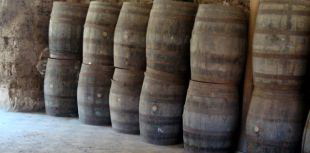
A newspaper editor wrote of hearing a thunderclap, then a “terrific report—a lifting up sensation, as if something had exploded in the interior of the earth, with the effects of an earthquake.” He was in an office on the Public Square about one-half mile from the source of the explosion: a brick building storing gunpowder just west of Capitol Hill. The “powder magazine,” which reportedly contained over 500 kegs of gunpowder, had been struck by lightning. The building was completely blown from the site, sending brick missiles throughout the city.

The shock wave and debris broke almost every pane of glass in the city, some two miles away. More than fifty nearby houses were destroyed or rendered unfit for occupation, particularly on the streets Gay, Spruce (today’s Rosa L. Park Avenue) and High (today’s 6th Avenue North). Three people were killed instantly and at least one other person died later; many more were wounded. One newspaper account described a 100-pound rock going through the roof and into the cellar of the Nashville Inn on the Public Square.

Within a week of the explosion, city officials took measures to relocate another powder magazine away from the city, and the owners stationed a guard by it “day and night” until it could be moved. An attempt was made in the Tennessee House of Representatives to pass a resolution giving the city $1,000 from the State Treasury “for distribution among the sufferers.” The resolution did not make it to the Senate.
Lawsuits for damages were filed against the owners of the powder manufacturing company, Sycamore Powder Mill. One case went all the way to the Tennessee State Supreme Court, which found that “powder houses” placed in populated areas constitute a “nuisance.” During the Civil War, the memory of the 1847 explosion prompted the Nashville Dispatch to call for the removal of powder and ammunition stored downtown, a recommendation with which Federal authorities complied.


Sources:

Nashville Whig, October 7, 1847, “DISTRESSING AFFAIR,” regarding an explosion at a house on Market Street where fireworks were being manufactured.

Nashville Whig, October 9, 1847, “FIRES,” regarding “several fires during the present week.”

Nashville Whig, October 12, 1847, “MORE FIRES.”

Nashville Daily Union, October 13, 1847, “TERRIBLE CATASTROPHE.”

Republican Banner, October 13, 1847, “Explosion of a Powder Magazine by Lightning,” which also includes a reprint of a detailed article from the Orthopolitan titled “DREADFUL ACCIDENT” containing a house-to-house description of damage.

Nashville Whig, October 14, 1847, “FRIGHTFUL CALAMITY, A POWDER MAGAZINE EXPLODED!!!”

Nashville Daily Union, October 14, 1847, “FURTHER PARTICULARS OF THE DISTRESSING CALAMITY,” regarding the 100-pound rock and other stories.

Republican Banner, October 18, 1847, “The Powder Magazine Below the City.”

Republican Banner, November 19, 1847, “Corporation of Nashville.” Attributes three deaths to the “Explosion of a Powder Magazine.”

Journal of the House of Representatives of the State of Tennessee, at the Twenty-Seventh General Assembly, Held at Nashville, 1847-8. Pages 79 and 80, Resolution No. 26.

Republican Banner, May 22, 1851, “Suit for Damages.”

Reports of the Cases Argued and Determined in the Supreme Court of Tennessee, During the Years 1851–2, Volume 1 (1853), pages 213–217, Cheatham et als. vs. Shearon, Trustee, &c.

Nashville Dispatch, June 4, 1863, “Whether justly entertained or not, there is no little uneasiness among the citizens of Nashville in regard to the large quantity of powder and ammunition of various kinds believed to be stored in the city for the military authorities.”

Nashville Dispatch, December 18, 1863, “Removal of Powder.”

Francis Baily and the Flavor of the Tennessee Frontier

by Mike Slate.

On the evening of Monday, July 31, 1797, a 23-year-old English sojourner arrived at Nashville, an upstart town in the embryonic State of Tennessee. For our purposes, forget that this refined, yet daring young man would return to England and make a fortune as a stockbroker. Never mind that in the third stage of a charmed life he would become a world-class astronomer and have a moon crater named after him. For if Francis Baily had accomplished nothing else except to bequeath us his American travel journal, that alone would have secured him a place in the annals of history. First published posthumously in 1856, Baily’s Journal of a Tour in Unsettled Parts of North America in 1796-1797 is an invaluable primary source for interpreting an emerging nation.

After nearly starving and drowning on his way up the trail later called the Natchez Trace, sometimes with Indians as companions, Baily approached a ramshackle settlement on the fringes of Nashville. In a lengthy July 31st journal entry, he noted that “Nothing could exceed our joy upon this occasion: we jumped, halloed, and appeared as elated as if we had succeeded to the greatest estate imaginable.” The Natchez-to-Nashville leg of his American odyssey had taken about 27 days by horseback.

A mile and a half closer to Nashville, Baily and some fellow travelers arrived at the plantation of a “Mr. Joslin.” Perhaps this was the Joslin’s Station mentioned by later historians (e.g., Haywood, Civil and Political History of Tennessee, p. 427). Of this outpost and his meal there, Baily wrote:

“It has been formed about seven or eight years, and consisted of several acres of land tolerably well cultivated: some in corn, some in meadow, and others in grain, &c.  His house was formed of logs, built so as to command a view of the whole plantation, and consisted of only two rooms; one of which served for all the purposes of life, and the other to hold lumber, &c.  Our fare, when it came to be served up, was such as we might have expected in such a rough country as this: it consisted of nothing more than a large piece of boiled bacon, and a great dish full of French beans, together with some bread made of Indian meal. However, as it was quantity, not quality, which we stood most in need of, we made a very hardy meal, and devoured with great avidity the homely fare that was set before us.”

Continuing toward Nashville later that day, Baily and a companion named Bledsoe (perhaps a member of the important Bledsoe’s Lick community northeast of Nashville) “even met, within three or four miles of the town, two coaches, fitted up in all the style of Philadelphia or New York, besides other carriages, which plainly indicated that a spirit of refinement and luxury had made its way into this settlement.” Tantalizing tidbits to ponder are the identities and destinations of the passengers in these fine coaches.

Baily entered Nashville that evening and stayed for about two days. In his journal he left us a few precious paragraphs about the town, including this excerpt with its memorable “rude rabble” conclusion:

“This town contains about sixty or eighty families; the houses (which are chiefly of logs and frame) stand scattered over the whole site of the town, so that it appears larger than it actually is. The inhabitants (like all those in the new settled towns) are chiefly concerned in some way of business: a storekeeper is the general denomination for such persons, and under this head you may include every one who buys and sells. There are two or three taverns in this place, but the principal one is kept by Major Lewis [this was, in fact, William T. Lewis’s establishment, later known as the Nashville Inn]. There we met with good fare, but very poor accommodations for lodgings; three or four beds of the roughest construction in one room, which was open at all hours of the night for the reception of any rude rabble that had a mind to put up at the house; and if the other beds happened to be occupied, you might be surprised when you awoke in the morning to find a bedfellow by your side whom you had never seen before, and perhaps might never see again.”

Leaving Nashville in the afternoon of August 2, Baily proceeded across the Cumberland wilderness to Knoxville, a 15-day immersion in further adventures, privations, and scenery. At one point on this trek, he complimented Tennessee’s beauty by noting that “the agreeable diversity of hill and dale with which this state is favored, together with the delightful views of a fine romantic country, served to dissipate that ennui and wearisomeness which, perhaps, I might otherwise have experienced.”

The Nashville and Tennessee portion of Baily’s journal has been extracted in various historical works including Samuel Cole Williams’ Early Travels in the Tennessee Country and J. Wooldridge’s History of Nashville, Tenn. The newly formed state, however, was only one destination of Baily’s much larger American itinerary. Prior to his Natchez Trace expedition, he had visited such eastern cities as Philadelphia, New York, and Washington before crossing the Allegheny Mountains and voyaging down the Ohio and Mississippi rivers to New Orleans. His resulting journal of roughly 300 pages, one of our most engaging firsthand accounts of early American life, begs to be read in its entirety.


Rights to the 1856 edition of the Journal are in the public domain and, fortunately, Google Books offers the complete text online. In addition, used hardcopies of the 1969 Southern Illinois University Press edition can be purchased through such vendors as AbeBooks.com and Amazon.com.  Surprise after surprise awaits the reader of the full travelogue, including a description of Washington city under construction, details on building a flatboat (pertinent to John Donelson’s founding voyage to Nashville), and an almost-incredible account of meeting with none other than Daniel Boone.


This article was first published in the August 2009 issue of The Nashville Retrospect. We thank publisher Allen Forkum for his permission to republish it here.