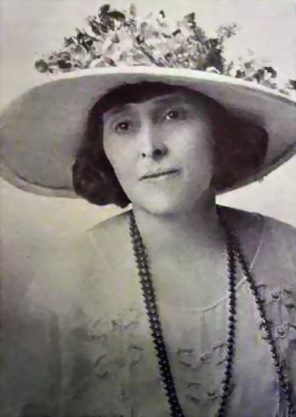
Nashville-born Nellie Griswold was a young girl when her family moved to Minnesota, where she met and married St. Paul attorney William Trevanne Francis in 1893. She founded the Everywoman Suffrage Council and held leadership positions in the Minnesota State Federation of Colored Women, the Urban League, and the NAACP. Enlisting her husband’s assistance in writing anti-lynching legislation after a 1920 incident in Duluth, Nellie shepherded the bill through the state legislature to passage in 1921. This ground-breaking law – be reminded that the United States Congress has never passed anti-lynching legislation! – awarded monetary compensation to victims’ families and established penalties for police who failed to protect prisoners from mobs. Facing discriminatory housing practices in their Minnesota neighborhood, Nellie and her husband moved to Africa in 1927 when President Coolidge appointed William to serve as special minister to Liberia. After yellow fever took William’s life, Nellie brought his body to Nashville for burial, remaining here herself until her death at 95.
Nellie Francis Griswold. (Mary Dillon Foster, Who’s Who Among Minnesota Women (1924), 111.)
____________________
The Greenwood Project is a series of 160-word biographies of individuals who lie at rest in Mt. Ararat and Greenwood cemeteries, two historic African American burial grounds in Nashville, Tennessee. The project, which began in September 2014 (and is still available on Facebook, at https://www.facebook.com/profile.php?id=100064806156276), shares the stories of more than 300 consequential individuals, primarily African American, who changed the course of city, state, and national history through their words and deeds. (All biographies were written by Kathy Lauder unless otherwise noted.)
Louise Grundy Lindsley was born March 11, 1858, in Nashville, Tennessee.1 She was the eldest child of Dr. John Berrien Lindsley (1822-1897) and Sarah “Sallie” McGavock Lindsley (1830-1903), and the great-granddaughter of U. S. Senator and jurist Felix Grundy (1777-1840).2 Miss Lindsley, a debutante (1898)3 and a college graduate,4 remained unmarried, devoting her life to worthy causes. She was active in Nashville chapters of the Daughters of the American Revolution, the Daughters of 1812, and the Centennial Club.5 When the Tennessee Historical Society opened its membership to women in 1915, she was one of its first female members.6
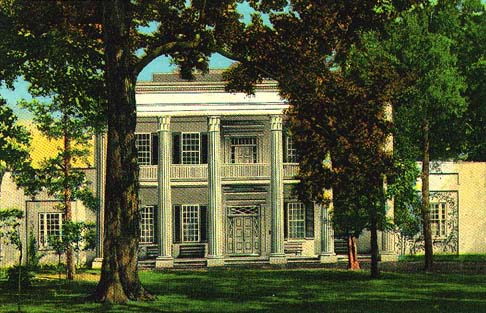
Postcard photo of The Hermitage from NHN collection
Louise Lindsley was one of five women who signed the charter of incorporation of the Ladies’ Hermitage Association (LHA), later serving as director and regent for many years.7 In 1889 the LHA gained possession of the 25 acres that included the house and tomb.8 After the Confederate Soldiers’ Home closed in the 1930s, the State awarded the hard-working Association the remaining Hermitage land.9 A 1910 newspaper reporter observed Regent10 Louise Lindsley tending to the Hermitage hydrangeas “planted as tiny shrubs by her mother, the late Mrs. Berrien Lindsley, during her term of Regency.”11
In 1912 Louise Lindsley described the work of the LHA to the Southern Commercial Congress,12 a group of representatives from the Southern states who worked to promote regional economic growth. At the request of the group’s president, Miss Lindsley organized the Tennessee Women’s Auxiliary to the Congress, soon becoming the Auxiliary’s national president.13 The group took a great interest in the economic possibilities of the new Panama Canal, and Lindsley herself traveled to Panama.14 The Auxiliary also worked to bring together women – particularly rural women – in an effort to encourage them to become involved in such local issues as roads, community health, and vocational education.15
John Berrien Lindsley’s handwritten will, dated July 19, 1892, left his interest in the Nashville Medical College to his daughters Louise G. and Annie D. Lindsley.16 When Sallie Lindsley died in 1898, she left a hand-written deed of gift, giving all her “furniture silver and pictures and other household effects” to Louise, “all of my other children being married and provided for.”17 After Annie’s marriage failed, she, her daughter Margaret, and Louise shared a residence for the remainder of their lives. In February 1922, although Annie was still living, Louise petitioned to adopt Margaret so her niece would become her legal heir.18
Louise Lindsley was an active participant in the Tennessee Equal Suffrage Association for many years.19 When World War I broke out, she was appointed to chair the Woman’s Committee of the Council of National Defense.20 She became a Southern representative to the National Bureau of Speakers and was involved locally in efforts to encourage housewives to support the war effort through resourcefulness and efficiency.21
Louise G. Lindsley’s will, dated December 11, 1939, left half her estate to her niece, Margaret Lindsley Warden, and half to her sister Annie.22 Louise died of colon cancer on July 18, 1944, at the age of 86.23 (2014)
SOURCES:
1 Lindsley, John Berrien. Diary, Volume 5, October 6, 1856 – January 1, 1866. Lindsley Family Papers, ca. 1812 – [1840-1940] – 1953, Box 1, Folder 23. Tennessee State Library and Archives.
2 Lindly, John M. The History of the Lindley-Lindsley-Linsley Families in America, 1639-1924,Vol. II. Winfield, Iowa: Self-published, 1924, 19.
3Nashville American, October 27, 1898, 3.
4 Bucy, Carole Stanford. “Quiet Revolutionaries: The Grundy Women and the Beginnings of Women’s Volunteer Associations in Tennessee,” Tennessee Historical Quarterly, Vol.LIV, No. 1, Spring 1995, 47.
5 Bucy, Carole Stanford. “Louise Grundy Lindsley,” Tennessee Encyclopedia, Online edition. Knoxville: University of Tennessee Press, 2002-2014.
6 Toplovich, Ann. “The Tennessee Historical Society at 150: Tennessee History ‘Just and True.’” Tennessee Historical Quarterly, Fall 1999, Vol. LVIII, Number 3, 205.
7 Dorris, Mary C. Currey. Preservation of the Hermitage, 1889-1915: Annals, History, andStories. Smith & Lamar, 1915, 97.
16 Handwritten will of John Berrien Lindsley, witnessed by Leon Trousdale Jr. and Jos. B. Babb. (original) July 19, 1893. Lindsley Family Papers, ca. 1812 – [1812-1940] – 1953, Box 2, Folder 47, Tennessee State Library and Archives.
17 Handwritten Deed of Gift from Sallie McGavock Lindsley (original), July 5, 1898. Lindsley Family Papers, ca. 1812 – [1812-1940] – 1953, Box 1, Folder 20, Tennessee State Library and Archives.
18 Court Records-Petition for Adoption, February 1922. Lindsley Family Papers, ca. 1812 – [1812-1940] – 1953, Box 1, Folder 19, Tennessee State Library and Archives.
19The Tennessean, August 30, 1914.
20 “Louise Grundy Lindsley,” Tennessee Encyclopedia of History & Culture.
21 “Louise Grundy Lindsley,” Tennessee Encyclopedia of History & Culture.
22 Hand-written will of Louise G. Lindsley, December 11, 1939. Lindsley Family Papers, ca. 1812 – [1812-1940] – 1953, Box 2, Folder 48, Tennessee State Library and Archives.
23 Death certificate: Lindsley, Louise G. Tennessee Death Records, 1908-1958. Nashville: Tennessee State Library and Archives.
SUGGESTED READING:
Bucy, Carole Stanford. “Quiet Revolutionaries: The Grundy Women and the Beginnings of Women’s Volunteer Associations in Tennessee,” Tennessee Historical Quarterly, Vol.LIV, No. 1, Spring 1995, 40-53.
Dorris, Mary C. Currey. Preservation of the Hermitage, 1889-1915: Annals, History, andStories. Nashville: Smith & Lamar, 1915.

 Nashville Historical Newsletter