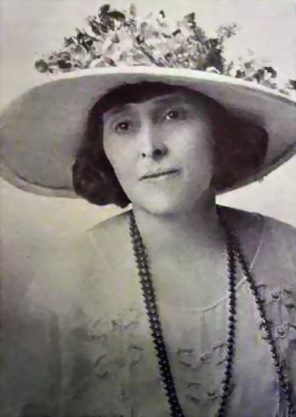
Nashville-born Nellie Griswold was a young girl when her family moved to Minnesota, where she met and married St. Paul attorney William Trevanne Francis in 1893. She founded the Everywoman Suffrage Council and held leadership positions in the Minnesota State Federation of Colored Women, the Urban League, and the NAACP. Enlisting her husband’s assistance in writing anti-lynching legislation after a 1920 incident in Duluth, Nellie shepherded the bill through the state legislature to passage in 1921. This ground-breaking law – be reminded that the United States Congress has never passed anti-lynching legislation! – awarded monetary compensation to victims’ families and established penalties for police who failed to protect prisoners from mobs. Facing discriminatory housing practices in their Minnesota neighborhood, Nellie and her husband moved to Africa in 1927 when President Coolidge appointed William to serve as special minister to Liberia. After yellow fever took William’s life, Nellie brought his body to Nashville for burial, remaining here herself until her death at 95.
Nellie Francis Griswold. (Mary Dillon Foster, Who’s Who Among Minnesota Women (1924), 111.)
____________________
The Greenwood Project is a series of 160-word biographies of individuals who lie at rest in Mt. Ararat and Greenwood cemeteries, two historic African American burial grounds in Nashville, Tennessee. The project, which began in September 2014 (and is still available on Facebook, at https://www.facebook.com/profile.php?id=100064806156276), shares the stories of more than 300 consequential individuals, primarily African American, who changed the course of city, state, and national history through their words and deeds. (All biographies were written by Kathy Lauder unless otherwise noted.)
As you explore the Nashville City Cemetery website, you will come across a link to 19th century City Cemetery burial records that have been made available through the Nashville Public Library. Not only do the records list the name, age, gender, race, and date of death of most individuals buried in the cemetery, but they may also include the cause of death – data that can prove both startling and informative.
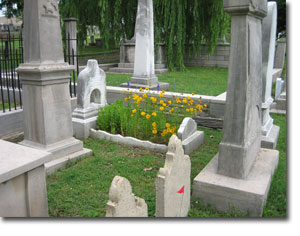
Scene in Nashville’s City Cemetery
A careful reader will notice how profoundly medical terminology has changed since the 19th century, largely because of improved diagnostic procedures. Many older terms (some of which were sublimely imprecise!) have simply fallen out of fashion. For example, among the more frequently listed causes of death in the mid-1800s are apoplexy, or softening of the brain (cerebral hemorrhage or stroke); dropsy (edema or congestive heart failure); catarrh (influenza, the croup, or even a common cold); consumption (tuberculosis); marasmus (a general term for diseases of infants and children, including malnutrition, rickets, and tuberculosis); dysentery or flux (intestinal inflammation); scrofula, or the King’s evil (tuberculosis of the lymphatic glands, particularly those in the neck), La Grippe (influenza); mortification (gangrene, which killed a disturbing number of small boys); and erysipelas, or St. Anthony’s fire (a streptococcal infection typified by severe inflammation of the skin or mucous membranes).
A few illnesses appeared so frequently at certain times of the year, they were named for the associated seasons: winter fever was almost always pneumonia. The summer complaint (cholera infantum) was food poisoning caused by improperly stored food, especially milk and meats.
Many once-fatal diseases have been largely eliminated. Today’s children are routinely vaccinated against the most common childhood diseases of their parents and grandparents: measles, mumps, and chicken pox. Other deadly diseases swept through 19th century communities in frightening epidemics. Five thousand Memphis residents died of yellow fever in 1878, but vaccination has proved greatly effective against it in recent times. Cholera, spread by contaminated water and poor hygiene, killed nearly 1,500 people a year in New Orleans alone in the early 1850s, but it can now be successfully treated if diagnosed early. (Hundreds of people in the Nashville City Cemetery died of cholera.) As many as 17,000 American children died of diphtheria each year before a vaccine was developed in the early 1900s; today diphtheria, pertussis (whooping cough), and tetanus (lockjaw) are seldom found anywhere in the industrialized world, thanks to infant vaccination programs. Smallpox, which killed up to 500 million people during the 20th century, is now considered to be completely eradicated. Polio, which peaked in the 1940s and 1950s, paralyzing and killing over half a million people throughout the world each year, has now been virtually eliminated from the Western Hemisphere.
Hundreds of polio victims during the 1950s and 1960s were forced to stay in tank respirators, known as iron lungs, in order to breathe.
Some of the “diseases” named in the burial registers tell their own sad tales: childbed . . . smothered (tragically common among infants, who often slept in beds with other family members . . . found dead in a well (11-year-old) . . . hung himself (12-year-old slave boy) . . . kicked by a horse (young woman, 18) . . . burned by accident (6-year-old girl) . . . and found dead at wash landing (infant). Spelling can sometimes be a challenge when deciphering the lists: dispepsey . . . fever . . . numonia . . . stabed . . . appoleptick . . . and dearhaera are all found in these records.
In 1894 dentist M. Thrasher wrote, “So deadly has teething become, that one-third of the Human Family die before the twenty deciduous teeth have fully appeared.” However, teething, once regularly blamed for infant deaths, was often innocent. Nineteenth-century doctors overlooked the reality that teething babies were exposed to many life-threatening illnesses, including influenza, tetanus, and meningitis, and that lethal rashes, fevers, and diarrhea often had other causes than dentition. Nursing mothers were likely to wean teething babies, switching from breast milk to dairy, which spoiled quickly without adequate refrigeration. Even medical treatments to soothe teething infants could cause illness – consider such practices as blistering, bleeding, or lancing gums (sometimes with the fingernails!), applying leeches, or prescribing medications containing opium, morphine, or mercury. Before 1970 paregoric could be purchased without a prescription, and loving parents who dutifully rubbed it on their babies’ swollen gums would have been horrified to learn that the licorice-flavored tonic was a mixture of opium and alcohol!
Teething baby
Teething and hives were both high on the list of common causes of death in the mid-19th century, obviously a case of mistaking a symptom for the true illness. Other entries on the burial lists leave us wishing for just a little more information: complicated . . . died in Virginia . . . cramps . . . intemperance . . . and the blithely simplistic died suddenly. And, of course, there are always a few items on the list that simply mystify us: worms . . . insanity . . . gravel in blades . . . found dead on Tower Island . . . and shot by Judson. Anyone who takes a look at the City Cemetery burial records will discover a compelling chronicle of life and death in earlier times. (2010)
Previously published in Monuments & Milestones, the Nashville City Cemetery newsletter.



 Nashville Historical Newsletter