Civil Rights Timeline, 1624 – 2012

Part Four: 1961-1965.


1961 Jan          In Selma, Dallas County, Alabama, more than 80% of the African-American population live below the poverty line, and less than 1% of eligible blacks are registered to vote.

1961 Feb         Nine young African-American men are jailed in Rock Hill, South Carolina after staging a sit-in at a McCrory’s lunch counter. They are the first to use the “jail, no bail” strategy, which will lighten the financial burden of civil rights groups across the country. The tactic also keeps cities from profiting from the arrests of civil rights protesters, who further contend that paying bail and fines indicates acceptance of an immoral system and validates their own arrests.

1961 May 4     Organized by members of SNCC, the Freedom Rides will test the enforcement of Boynton v. Virginia. The first bus of thirteen Freedom Riders (7 blacks, 6 whites) leaves Washington, D.C. In Rock Hill, South Carolina, their first stop in the Deep South, two men (one is John Lewis, who will later become a U.S. Congressman) are beaten by a white mob.

A Freedom Riders bus is attacked and burned by white supremacists.

1961 May 14   One of the Freedom Riders buses is burned in Anniston, Alabama. As a second bus pulls into the Trailways Station in Birmingham, riders are attacked and badly beaten by a mob of Ku Klux Klan members. Sheriff Bull Connor orders Birmingham police to stay away. The wounded Freedom Riders eventually escape to New Orleans when Attorney General Robert Kennedy orders a plane to take them there.

1961 May 17   Unwilling to allow the KKK to defeat them, Tennessee activists take a bus from Nashville to Birmingham; Bull Connor arrests them and dumps them by the side of the road, just over the Tennessee border. They make their way back to Birmingham, but they cannot find a bus driver willing to risk driving them any further.

1961 May 20   Under orders from Robert Kennedy, the Alabama governor provides a Highway Patrol escort, and the bus roars toward Montgomery at 90 mph. At the city limits the police guards disappear, under Bull Connor’s orders, and the riders are set upon and brutally beaten by a mob of KKK supporters, who have as much as 20 uninterrupted minutes to attack the Riders with bats and iron bars before the police arrive and drive the growing mob away with teargas. Many riders are left bloody and unconscious, including reporters (the mob has quickly destroyed the cameras) and Justice Department official John Seigenthaler, who is found lying unconscious in the street. Local black citizens eventually rescue the wounded and take them to hospitals.

1961 May 21   Martin Luther King and James Farmer of CORE (who is already recruiting more Freedom Riders) speak to 1200 people in Rev. Ralph Abernathy’s Montgomery church, while a mob outside throws rocks at the windows, overturns cars, and starts fires. Over the next several days, more Freedom Riders arrive; most are jailed. By the end of the summer, more than 60 Freedom Rides have come south, and more than 300 individuals have been jailed, including many local supporters of the Riders.

1961 Winter    The Loyola University (Chicago) basketball team puts four black players on the floor at one time, breaking an unwritten rule of college sports.

1962                Darryl Hill is recruited by coach Lee Corso at the University of Maryland. He is the first African-American football player in the Southwest Conference (SWC). The only black player on the team until his senior year, he sets two receiving records that stand for decades.

1962 Sep 30    James Meredith is escorted onto the University of Mississippi (Oxford) campus by a convoy of Federal Marshals. In the riots that follow, two people are killed and many others injured.

1963 Jan          Alabama Governor George Wallace declares, “Segregation now, segregation tomorrow, segregation forever.”

Sidney Poitier wins an Oscar for Lilies of the Field.

1963 Apr 8      Sidney Poitier is the first African American to win the Academy Award for Best Actor. Starring in three major films, he is also the top box office star of the year.

1963 Apr 16    Jailed for his protest activities, Martin Luther King writes his “Letter from a Birmingham Jail,” which quickly becomes a classic document of the Civil Rights struggle with its assertion that individuals have a moral right to disobey unjust laws.

1963 May        Civil rights activists, including children, march in Birmingham. By the end of the first day, 700 have been arrested. When 1000 more youngsters turn out to march peacefully on May 3, Commissioner of Public Safety Bull Connor turns police dogs and high-pressure fire hoses on them. Within five days, 2500 are in jail, at least 80% of them children. After 38 days of confrontation and public outcry from across the nation, Birmingham city officials and business leaders agree to desegregate public facilities. Governor George Wallace’s refusal to accept the plan will lead to violent confrontation.

1963 Jun 11     Governor George Wallace stands in the doorway of Foster Auditorium at the University of Alabama, blocking the enrollment of two black students. Later, confronted by Federal Marshals and Deputy Attorney General Nicholas Katzenbach, he stands aside.

Deputy U. S. Attorney General Nicholas Katzenbach (right) confronts Gov. George Wallace, who is blocking the entrance to a University of Alabama building.

1963 Jun 12     NAACP activist Medgar Evers is shot to death outside his home in Jackson, Mississippi. His assailant, KKK member Byron De La Beckwith, will not be found guilty of his murder until 1994.

1963 Jul 26     The true fulfillment of Executive Order 9981 (1948)—equality of treatment and opportunity for all military personnel—requires a change in Defense Department policy, which finally occurs with the publication of Department Directive 5120.36, issued fifteen years to the day after Truman’s original order. This major policy shift, ordered by Secretary of Defense Robert J. McNamara, expands the military’s responsibility to eliminate off-base discrimination detrimental to the military effectiveness of black servicemen.

1963 Aug 28   250,000 civil rights supporters take part in the March on Washington for Jobs and Freedom. The highlight of the event occurs when Martin Luther King Jr. delivers his “I Have a Dream” speech from the steps of the Lincoln Memorial.

1963 Sep         Voter registration volunteers in Selma, Alabama, face arrests, beatings, and death threats. Thirty-two black schoolteachers who attempt to register to vote are fired by the all-white school board. After the September 15 church bombing, students begin lunch counter sit-ins – 300 are arrested, including John Lewis of SNCC.

1963 Sep 15    Four young girls, ages 11 to 14, are killed when a bomb explodes in the basement of the Sixteenth Street Baptist Church in Birmingham, Alabama. Many other people are injured.

1963 Nov 22   President John F. Kennedy is assassinated in Dallas, Texas. Lyndon B. Johnson becomes President.

1964 Jan 3       Dr. Martin Luther King Jr. is Time Magazine’s Man of the Year.

1964 Jan 23     The 24th Amendment abolishes the poll tax, employed in Southern states since Reconstruction to make it difficult for poor blacks to vote.

1964 Jun 14     Freedom Summer (also called the Mississippi Summer Project) begins with training sessions in Ohio. This effort to register black voters, mostly in Mississippi (in which only 6.2% of eligible blacks were registered to vote) is spearheaded by SNCC, along with the NAACP, CORE, and the SCLC. Dr. Staughton Lynd, a history professor at Yale University, directs the Freedom Schools project.

1964 Jun 21     Three young civil rights workers – James Chaney, Michael Schwerner, and Andrew Goodman – are arrested in Neshoba County, Mississippi. and then disappear.

FBI poster asking for information about the three missing civil rights workers. It was 44 days before their bodies were found.

1964 Jul 2       President Johnson signs the Civil Rights Act of 1964. The law prohibits discrimination of all kinds based on race, color, religion, or national origin; it also provides the federal government with the authority to enforce civil rights legislation. To Johnson’s dismay, the passage of this law will be followed by a year of violence as white supremacists attempt to undo any gains in registering black voters. Johnson turns his attention to passing a Voting Rights act.

1964 Aug 4     The bodies of James Chaney, Michael Schwerner, and Andrew Goodman are found, buried in an earthen dam. Schwerner and Goodman have been shot; Chaney was beaten to death. The state of Mississippi refuses to charge anyone with the murders. Seven people are eventually tried for Federal crimes, but none will serve more than six years in jail.

1964 Aug 25   By the end of the 10-week Freedom Summer project, four workers have been killed, four others critically wounded, 80 beaten, and 1000 arrested. Thirty black homes or businesses and 37 churches have been bombed or burned. Many of these crimes are never solved. Since Mississippi still requires a literacy test for voter registration, of 17,000 Mississippi blacks trying to register, only 1,600 succeed.

1964 Oct 14    Dr. Martin Luther King Jr., 35, becomes the youngest person ever to receive the Nobel Peace Prize. He will deliver his powerful acceptance speech on December 10 in Oslo: “Nonviolence is the answer to the crucial political and moral question of our time – the need for man to overcome oppression and violence without resorting to violence and oppression.”

1964 Nov        Archie Walter (A. W.) Willis Jr. is elected to the Tennessee General Assembly. When he takes his seat in January 1963, he becomes the first African American to serve in the Tennessee House of Representatives since Reconstruction.

1965 Feb 18    Jimmie Lee Jackson, 26, is shot during a peaceful protest in Marion, Alabama, as he tries to protect his mother and grandfather from a beating by Alabama State Troopers. Jackson, shot at very close range, dies a week later. An Alabama Grand Jury refuses to indict James Bonard Fowler, the trooper who shot him. (See May 10, 2007.)

1965 Feb 21    Black nationalist leader Malcolm X (born Malcolm Little in Nebraska in 1925) is assassinated during a speech in Manhattan. Three members of the Black Muslim organization are accused of his murder.

1965 Mar 7     SCLC leader James Bevel organizes a 55-mile march from Selma, Alabama, to the state capitol in Montgomery – a demonstration on behalf of African-American voting rights. On the outskirts of Selma, just after crossing the Edmund Pettus Bridge, the 600 marchers are brutally assaulted, in full view of TV cameras, by heavily armed state troopers & deputies. ABC interrupts its broadcast of Judgment in Nuremberg, a Nazi war crimes documentary, to show footage of the violence. John Lewis, 25, and the Rev. Hosea Williams, 39, leading the march are clubbed to the ground, as are many others. A widely-published photograph shows 54-year-old Amelia Boynton Robinson lying unconscious on the bridge. Fifty marchers are hospitalized. The event will come to be known as “Bloody Sunday.”

Alabama troopers confront peaceful demonstrators on the Edmund Pettus Bridge. John Lewis walks at the head of the marchers (wearing light-colored trench coat, right center).

1965 Mar 9     Martin Luther King leads a second march across the Pettus Bridge. The marchers kneel in prayer, then turn back around, obeying the court order that prohibits them from going on to Montgomery. After the march, three white ministers are attacked and beaten – one (James Reeb, from Boston) dies in Birmingham, after Selma’s public hospital refuses to treat him. On the same day, demonstrations condemning “Bloody Sunday,” as the March 7 incident has come to be called, take place in 80 cities across the nation.

1965 Mar 15   President Lyndon B. Johnson makes what most consider his greatest speech to Congress as he calls for a Voting Rights bill: “It is wrong—deadly wrong—to deny any of your fellow Americans the right to vote in this country . . .. What happened in Selma is part of a far larger movement which reaches into every section and State of America. It is the effort of American Negroes to secure for themselves the full blessings of American life. Their cause must be our cause too. Because it is not just Negroes, but really it is all of us, who must overcome the crippling legacy of bigotry and injustice. And we shall overcome.”

1965 Mar 16   A Federal judge rules in Williams v. Wallace: “The law is clear that the right to petition one’s government for the redress of grievances may be exercised in large groups . . .. These rights may . . . be exercised by marching, even along public highways.” Granting the protesters their First Amendment rights to march also means the State of Alabama can no longer obstruct them.

1965 Mar 21   Nearly 8,000 people, of all races, begin the third march from Selma to Montgomery. The 5-day march covers a 54-mile route along the “Jefferson Davis Highway”(U.S. 80). Protected by 4,000 troops (U.S. Army, FBI agents and Federal Marshals, and the Alabama National Guard under Federal command), the marchers average around ten miles a day and will finally arrive at the Alabama Capitol building on the 25th.

1965 Mar 23   The marchers pass through cold, rainy Lowndes County, where, although African Americans make up 81% of the population, not one is registered to vote, whereas the 2240 white registrants on the voting rolls constitute 118% of the adult white population!

1965 Mar 25   Martin Luther King speaks to the marchers in Montgomery (“How Long, Not Long”) and they are entertained by Harry Belafonte, Tony Bennett, Peter, Paul & Mary, Sammy Davis Jr., and others in a “Stars for Freedom” rally.

1965 Apr         Fannie Lou Hamer and other SNCC members help found the Mississippi Freedom Labor Union to organize cotton workers.

1965 May 19   Patricia Harris becomes the first African American since Ebenezer Bassett (1869, Haiti) to serve as an American ambassador (Luxembourg).

1965 Aug 6     President Johnson signs the Voting Rights Act of 1965. This bill, urgently sought by Johnson, along with Dr. King and other Civil Rights leaders, eliminates such devices as poll taxes and literacy tests, and it authorizes federal registrars to register qualified voters.

President Lyndon B. Johnson hands Martin Luther King Jr. the pen with which he has just signed the 1965 Voting Rights Act (Library of Congress photograph).

1965 Aug 11   A large-scale race riot begins in the Watts area of Los Angeles, sparked by a traffic arrest. As community leaders try to restore order, rioters block fire-fighters from burning buildings, and vandalism and looting take place throughout the area. Nearly 14,000 National Guardsmen are sent in to help restore order. By the time the violence ends six days later, 34 people have been killed, 1,032 are injured, and 3,952 are arrested. Nearly 1,000 buildings have been damaged or destroyed, and the city is left with $40 million in property damage.

1965 Sep 15    The first episode of the television series I Spy is broadcast. This is the first drama series on American television to feature a black actor (Bill Cosby) in a starring role.

1965 Sep 24    President Johnson issues Executive Order 11246, which requires government contractors to “take affirmative action” toward prospective minority employees in all aspects of hiring and employment.


Adapted from a timeline created by Kathy B. Lauder for the TN State Library and Archives, 2013.

Civil Rights Timeline, 1624 – 2012

Part Three: 1957-1960.


1957 Jan 10     The Southern Christian Leadership Conference (SCLC) is organized in Atlanta, its stated goal to coordinate and support non-violent direct action as a method of desegregating bus systems across the South. Martin Luther King Jr., 28, is chosen its first president.

1957 Mar        Tennessee State University defeats Southeast Oklahoma at the NAIA Basketball Tournament, 92-73, to become the first black college to win a white-dominated national title.

1957 Spring    Of the 517 black students eligible to attend Little Rock Central High School, 80 express an interest in doing so and go through a series of interviews with school officials. Of the 17 students who are selected, 8 decide to remain at the all-black Horace Mann High School, leaving a group at Central who will become known as the “Little Rock Nine.”

1957 May 17   On the third anniversary of Brown v. Board of Education, Bobby Cain graduates from Clinton High School in Clinton, Tennessee, becoming the first African-American graduate of a state-supported public integrated high school in the South.

1957                Tennis player Althea Gibson wins both singles and doubles titles at the U.S. Open, the Australian Open, and Wimbledon.

1957 Aug 27   During the summer, opponents of school integration have organized into groups, the most vocal being the Capital Citizens Council and the Mothers League of Central High School. On this date one of the mothers files a motion in Chancery Court asking for a temporary injunction against school integration. Pulaski County Chancellor Murray Reed grants the injunction “on the grounds that integration could lead to violence.” Three days later Federal District Judge Ronald Davies nullifies the injunction.

1957 Sep 2      On Labor Day, Arkansas Governor Orval Faubus calls out the Arkansas National Guard to protect the school against extremists. The next day, Judge Ronald Davies orders that integration begin on September 4. This will be the first important test of Brown v. Board of Education of Topeka.

Young Elizabeth Eckford attempts to enter Little Rock Central High School through a menacing crowd, September 4, 1957.

1957 Sep 4      The nine enrolled black students attempt to enter Little Rock Central High School but are turned away by National Guardsmen.

1957 Sep 9      On March 11, 1956, President Eisenhower, responding to the racial unrest that follows Brown V Board of Education and following the recommendations of President Truman’s 1947 Civil Rights Committee, urges Congress to pass the first civil rights legislation since Reconstruction. House Speaker Sam Rayburn and Senator Lyndon B. Johnson, both Texans, guide the Civil Rights Bill through Congress, despite the objections of many Southern politicians (most notably Strom Thurmond, whose 24-hour-18-minute filibuster still stands as the Senate record). Despite the uproar over its passage, the bill is much weaker than Eisenhower has hoped – it does little more than to expand the authority of the U.S. Justice Department to enforce civil rights and voters’ rights, and to add a new assistant attorney general to oversee the division of a new Justice Department division responsible for civil rights issues.

1957 Sep 20    Judge Davies rules that Gov. Faubus has used the National Guard to prevent the students from entering the school and not to protect them. The Guardsmen are removed, and the Little Rock Police Department takes responsibility for keeping the school peaceful.

1957 Sep 23    Nine African-American teenagers enter Little Rock Central High for the first time, out of sight of an angry crowd of 1000 protesters. In a short while they are removed for their own safety when the mob grows unruly. The following day the mayor asks the president for help.

1957 Sep 25    President Eisenhower sends 1000 members of the 101st Airborne Division to Little Rock and federalizes the Arkansas National Guard. The nine black students return to school with a military escort.

1958 Mar        The Nashville Christian Leadership Conference (NCLC) holds its first workshop on non-violent tactics against segregation under the leadership of the Reverend Kelly Miller Smith. The workshops will continue into 1960.

1958 May 27   Ernest Green becomes the first African American student to graduate from Little Rock Central High School. With police and Federal troops standing by, the graduation ceremony takes place in peace and dignity.

1959-1962       Throughout the 1950s very few African Americans have been registered to vote in Fayette and Haywood counties, Tennessee, and Democratic party leaders declare the primaries to be “whites only.” In 1959 John and Viola McFerren, Harpman Jameson, and other young black leaders form the Fayette County Civic and Welfare League, register black voters, and file a federal lawsuit to end restricted primaries. In response, the White Citizens Council publishes lists of black voters and their white supporters. Merchants and others refuse to sell them food, clothing, gasoline, insurance, or medical care. Banks and land owners evict scores of black share-croppers, hoping they will leave the area. However, farmers Shepherd Towles and Gertrude Beasley offer space on their land for a “tent city.” An unnamed white merchant provides the first 14 tents, and, when the local Red Cross chapter refuses to help, the AFL-CIO, UAW, SNCC, Southern Conference Education Fund, Society of Friends, and National Baptist Convention provide aid and support to the “Freedom Villages.” The Justice Department’s lawsuit to halt the evictions and other retaliation against voters and their sympathizers is finally successful in 1962.

1959 Nov        James Lawson, a Vanderbilt University divinity student, and Kelly Miller Smith, the young minister of the First Colored Baptist Church on 8th Avenue North, continue the workshops to train Nashville high school and college students in the techniques of nonviolence and peaceful protest.

Student activist Diane Nash with the Rev. Kelly Miller Smith

1959 Dec         Lawson, Smith, and student leaders John Lewis, Diane Nash, Bernard Lafayette, Marion Barry, and others make early, though unsuccessful, attempts to desegregate the lunch counters at Harvey’s and Cain-Sloan department stores in Nashville.

1960 Feb 1      Four African-American college freshmen bring attention to the unequal treatment of the races when they take seats at a Woolworth’s lunch counter in Greensboro, North Carolina. More students arrive the next day, and news services begin to take interest in the story.

1960 Feb 13    Nashville students begin their first full-scale sit-ins at downtown businesses. Convening in the Arcade on 5th Avenue shortly after noon, they move out to the Kress, Woolworth’s, and McClellan’s stores, where they make purchases and then take seats at the lunch counters. Two hours later the stores close their lunch counters, and the students leave without incident.

1960 Feb 19    Thirty Chattanooga high school students (most from Howard High School) take seats at the lunch counters of three downtown variety stores. Their hand-written rules, circulated to all the participants, include “please be on best behavior,” “no loud talking,” “no profanity,” and “try to make small purchase.” They continue the sit-ins throughout the month of February, drawing more student participants each time.

1960 Feb 27    White students attack the Nashville lunch-counter demonstrators. Police arrest the black students, but others move in quickly to take their seats. The students are represented in court by Nashville city councilman and attorney Z. Alexander Looby with his associates Avon Nyanza Williams and Robert E. Lillard. By Mid-May lunch counters will be opened to customers of any race; by October Looby will have convinced a judge to dismiss the charges against 91 students for conspiracy to disrupt trade and commerce.

1960 Mar 3     James Lawson, whom Martin Luther King has called “the leading strategist of non-violence in the world,” is expelled from Vanderbilt University for his efforts in organizing the Nashville sit-ins. (He will complete his degree program at Boston University.) The dean and faculty members of the Vanderbilt Divinity School resign in protest.

James Lawson with Martin Luther King

1960 Apr 17    The Student Non-Violent Coordinating Committee (SNCC) is founded at a series of student meetings led by Ella Baker at Shaw University in Raleigh, North Carolina. Baker insists on a two-part organization – one part for direct action (sit-ins) and one part for voter registration. Marion Barry is the first chairman; other early members are Diane Nash, John Lewis, James Lawson, James Bevel, Charles McDew, Julian Bond, and Stokely Carmichael.

1960 Apr 19    After Z. Alexander Looby’s Nashville home is destroyed by a dynamite blast, 2,500 students and community members stage a silent march to City Hall, where Mayor Ben West meets them on the steps. Student leader Diane Nash asks him, “Do you feel it is wrong to discriminate against a person solely on the basis of their race or color?” West says yes, later explaining, “It was a moral question – one that a man had to answer, not a politician.”

1960 May 6     President Eisenhower introduced a second civil rights bill in late 1958, in reaction to violence against Southern schools and churches. Once again Southern politicians react against what they see as Federal interference in state business – 18 Southern Senators form a filibustering “team” and produce the longest filibuster in history: over 43 hours. Majority leader Lyndon Johnson holds the Senate in 24-hour session until the Civil Rights Bill of 1960 is passed. Eisenhower signs the bill into law on May 6, thus creating a Civil Rights Commission, establishing federal regulation of local voter registration polls, and providing penalties for anyone interfering with a citizen’s effort to vote or to register to vote.

1960 May 10   Six Nashville lunch counters begin serving black customers.

1960 Jul 31     Elijah Muhammad, leader of the Nation of Islam, calls for the establishment of a separate state for blacks.

1960 Sep 7      Wilma Rudolph from Clarksville, Tennessee, is the first American woman, black or white, to win three gold medals in the Olympics, winning the 100-meter dash, the 200-meter dash, and the 400-meter relay, in which she runs the anchor leg.

Thurgood Marshall, first African American to serve on the U.S. Supreme Court (1957 photo)

1960 Oct 12    Thurgood Marshall, who will later become a Supreme Court justice himself, pleads the case of Boynton v. Virginia before the Court. The case involves a black interstate bus passenger who was arrested for refusing to leave a whites-only section of a bus station restaurant. Marshall claims such arrests violate the Interstate Commerce Act and the Equal Protection Clause of the U.S. Constitution.

1960 Dec 5      In Boynton v. Virginia the Supreme Court rules that restaurant facilities in bus terminals that primarily exist to serve interstate bus passengers cannot discriminate based on race according to the Interstate Commerce Act. The decision is a landmark event because it ties the future of the Civil Rights movement to the Federal Government.

1960 Dec 31    By the end of 1960, 70,000 people have participated in sit-ins, and 3,600 have been arrested.


Adapted from a timeline created by Kathy B. Lauder for the TN State Library and Archives, 2013.

Civil Rights Timeline, 1624 – 2012

Part Two: 1947-1956.


1947 Apr 15    Jackie Robinson becomes the first African American to join a white professional baseball team when he is hired by the Dodgers. He will win the first MLB Rookie Award later the same year, and the Major League MVP Award in 1949.

Jackie Robinson, 1950

1947 Fall         Indiana University integrates its basketball team when it adds William Garrett to its roster. He is the first black player in the Big Ten and will be named an All-American in 1951. As other schools follow Indiana’s lead over the next few years, an unspoken “gentlemen’s agreement” evolves, limiting to three the number of black players on the floor at any one time.

1947 Dec         President Truman’s Civil Rights Committee issues its report, “To Secure These Rights,” which positions America’s harsh treatment of its black citizens against our criticism of Communism’s destruction of its citizens’ individual rights. Among other things, the report, which at the time is considered quite radical, calls for segregation to be abolished (first and foremost in government and the military), for lynching to become a federal crime, for poll taxes to be outlawed, for voting rights to be guaranteed for all citizens, and for a United States Commission on Civil Rights to be established.

1948 May 3     Sipes v. McGhee, a Michigan case, leads to Shelley v. Kraemer, in which the Supreme Court rules that, although no statute prohibits racially restrictive covenants in property deeds [written to block Asians, Jews, or African Americans from purchasing property in a neighborhood], no state or federal court can enforce them.

1948 Jul 26     President Harry S Truman signs Executive Order 9981, which establishes the President’s Committee on Equality of Treatment and Opportunity in the Armed Services. It is accompanied by Executive Order 9980, creating a Fair Employment Board to eliminate racial discrimination in federal employment. [This will require an additional change in Department of Defense policy. See entry for July 26, 1963.]

1949                William Henry Hastie is the first African American to be appointed a federal judge, when President Truman names him judge of the Third U.S. Circuit Court of Appeals. Hastie, a native of Knoxville, graduated first in his class from Amherst and took his law degree at Harvard University. One of his law students at Howard University was Thurgood Marshall.

1950-1960       During this decade over 100 Native American tribes are legally terminated, resulting in federal takeover of native lands, relocation of thousands of Indians, and the weakening of tribal governments nationwide. One example is the powerful Catawba Indian Nation of South Carolina, which was recognized by Congress in 1848 and 1854. In 1959 the federal government terminates them as a tribe. Not until 1993 is this decision reversed, after they win a settlement for longstanding land claims they have disputed since 1904, and they are established once again as a Federal Tribe with full treaty status.

1950                African-American diplomat Ralph J. Bunche receives the Nobel Peace Prize for mediating the Arab-Israeli truce. He had also played a critical role in the formation and administration of the United Nations, chartered in 1945.

1950                Gwendolyn Brooks is the first African-American writer to receive the Pulitzer Prize for poetry.

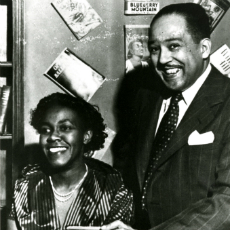
Poets Gwendolyn Brooks and Langston Hughes, 1949 (photo courtesy of Chicago Public Library)

1950 Nov 1     Chuck Cooper becomes the first African-American professional basketball player when he takes the floor with the Boston Celtics against the Fort Wayne Pistons.

1951                The University of Tennessee admits its first African-American students.

1952                The first year since 1881 without a recorded lynching. However, lynchings will continue to occur in America, the last on record being that of Michael Donald in Mobile, Alabama, in 1981.

1952                The Association of American Law Schools (AALS) passes a resolution introduced by the Yale Law School faculty two years earlier, making racial integration a requirement for membership in the organization.

1953 Fall         Vanderbilt University admits its first African-American student.

1954 May 17   The unanimous decision on Brown v. Board of Education overturns previous rulings, beginning with Plessy v. Ferguson(58 years earlier, almost to the day), by ruling that state laws establishing separate public schools for black and white students deny equal educational opportunities to the black children – “Separate educational facilities are inherently unequal.” The decision bans segregation in public schools.

1954 Sep 30    The last remaining all-black units are disbanded by the U.S. Military.

1955 Mar 2     Claudette Colvin, a 15-year-old African American is arrested in Montgomery, Alabama, for refusing to give up her bus seat to a white passenger. Local black leaders consider using this as the test case for a major protest movement, but reject the idea when Colvin becomes pregnant.

1955 Mar        Black basketball players K. C. Jones and Bill Russell lead the University of San Francisco to the NCCA championship.

1955 May 24   The Little Rock School Board votes unanimously to adopt Superintendent Virgil Blossom‘s plan of gradual integration, to start in September 1957 at the high school level and add the lower grades over the next six years. Mr. Blossom is named “Man of the Year” by the Arkansas Democrat for his work on desegregation.

1955 July        Rosa Parks receives a scholarship to attend a school desegregation workshop for community leaders. She spends several weeks at the Highlander Folk School in Monteagle, TN, later saying that the workshop was the first time in her life she had felt a sense of being in “an atmosphere of equality with members of the other race.”

Educator Septima Clark with Rosa Parks at Highlander Folk School, Monteagle, Tennessee, 1955. (Ida Berman photograph) Rosa Parks Papers, Prints and Photographs Division, Library of Congress (023.00.00)

1955 Aug 28   On a dare, 14-year-old Emmett Till, visiting relatives near Money, Mississippi, flirts with a white woman in a general store. Later he is beaten to death by a group of men, including the woman’s husband. Soon after the two men tried for murdering Till are acquitted by a local jury, they sell a story to Look magazine in which they confess to the murder.

1955 Sep 3      Emmett Till’s mother, schoolteacher Mamie Till Bradley, insists on keeping Emmett’s casket open during his funeral, even though his face is so swollen and disfigured by the beating that he is unrecognizable: “Let the people see what I have seen. I think everybody needs to know what happened to Emmett Till.”

1955 Nov 7     In Sarah Keys v. Carolina Coach Company the Interstate Commerce Commission outlaws segregation on interstate buses.

1955 Dec 1   Rosa Parks is arrested for refusing to give up her seat on a Montgomery, Alabama, bus. The next day JoAnn Robinson and other community activists make and distribute flyers encouraging the African-American community to boycott city buses.

1955 Dec 5      On the first day of the bus boycott, the Montgomery Improvement Association (MIA) is established. Members elect a young minister, the Reverend Martin Luther King, 26, as president.

1956 Jan 30     Dr. King’s home is bombed. Over the next two months, MIA attorneys file a federal suit challenging the constitutionality of segregated seating on public buses; a Grand Jury indicts 90 MIA members for breaking an anti-boycott law; Dr. King is convicted and fined $1,000. The MIA’s appeal draws nation-wide media attention.

1956 Mar        The Southern Manifesto, opposing racial integration in public places, is signed by 101 Senators and Congressmen, all from Southern states. Refusing to sign are Senators Albert Gore Sr. and Estes Kefauver from Tennessee and Lyndon B. Johnson from Texas. Other Congressmen who elect not to sign are Representatives William C. Cramer and Dante Fascell of Florida; Richard Chatham, Harold D. Cooley, Charles Dean, and Charles R. Jonas of North Carolina; Howard Baker Sr., Ross Bass, Joe Evins, J. Percy Priest, and B. Carroll Reece of Tennessee; and seventeen members of the Texas delegation, including Speaker Sam Rayburn. Their decision to oppose the Southern Manifesto will cost several of these individuals any chance of reelection.

1956 Jun 5       A Federal court rules bus segregation unconstitutional. Montgomery city officials quickly appeal the decision to the Supreme Court. Meanwhile, the bus boycott continues, and city officials concentrate on finding a legal way to prohibit the MIA’s carpool system, a home-grown network of alternative transportation provided by drivers both black and white.

Tennis champion Althea Gibson, 1956.

1956 Summer African-American tennis player Althea Gibson reaches the finals of the U.S. Open. She wins both singles and doubles in the French Open, becoming the first African American to win a Grand Slam tennis title.

1956 Aug 28   After 27 African-American students fail in their efforts to register in the all-white Little Rock city schools, the NAACP files a lawsuit on their behalf. On this date, Federal Judge John E. Miller dismisses the suit, stating that the Little Rock School Board has acted in “utmost good faith” in following its announced integration plan. Although the NAACP appeals, a higher court upholds Miller’s ruling. Meanwhile, during the same period of late summer, the city’s public buses are quietly desegregated.

1956 Fall         Although Vanderbilt University Law School has enrolled Native American, Asian, and Hispanic students for decades, new students Frederick T. Work and Melvin Porter are the first African-Americans admitted to a private law school in the South. Both will graduate in 1959.

1956 Nov 13   In Browder v. Gayle, the Supreme Court upholds the lower court ruling finding Montgomery’s bus segregation unconstitutional. On December 20, U.S. marshals officially serve the Supreme Court order on Montgomery city officials.

African American residents of Montgomery, Alabama, walk to work during the bus boycott.

1956 Dec 21    The Montgomery bus boycott comes to a successful end. After 381 days and the combined efforts of 50,000 people, black residents of Montgomery are now free to choose any seat on city buses.


Adapted from a timeline created by Kathy B. Lauder for the TN State Library and Archives, 2013.
Civil Rights Timeline, 1619 – 2012

Part One: 1619-1947.

Note: This timeline includes a considerable amount of information that relates to the history of the Civil Rights movement throughout the entire United States, but the primary emphasis is on Tennessee history.


1619 The first documented Africans in America arrive in Virginia from the kingdom of Ndongo in Angola, West Central Africa. Captured during war with the Portuguese, none of these first Africans are free. The practice of enslaving Africans for life will not become common practice until after the mid-century, with black slaves gradually replacing the primarily white indentured servants as the primary source of unpaid labor.

1624                The first slaves are brought to New York.

1688                Philadelphia Quakers organize the first protest against slavery.

1763 Jul 7       In early 1763 Indians lay siege to Fort Pitt, near Pittsburgh. The fort’s commander asks Col. Henry Bouquet, for help, stating also that a smallpox epidemic is raging inside the fort. Bouquet writes to British commander Sir Jeffrey Amherst, who responds on this date, suggesting, “Could it not be contrived to send the Small Pox among those disaffected tribes of Indians?” He reiterates the idea in a subsequent letter: “You will do well to try to inoculate the Indians by means of blankets, as well as to try every other method that can serve to extirpate this execrable race.”

1830                Congress passes the Indian Removal Act, requiring Native Americans to move west of the Mississippi River.

1831                In Cherokee Nation v. Georgia, the Supreme Court rules that Indian tribes are not sovereign nations, but also that tribes are entitled to their ancestral lands and cannot be forced to move from them.

1831-1838       The U.S. Army forces as many as 60,000 Native Americans from their homes, moving them to areas west of the Mississippi River designated as Indian Territory. A Choctaw chief called the removal a “trail of tears and death.” Among the five tribes on the Trail of Tears (Choctaw, Creek, Seminole, Chickasaw, and Cherokee, along with thousands of black slaves), historians estimate that as many as one-fourth of those who set out died before reaching their destination. (maps)

The removal of the Cherokee nation by the U.S. Army, 1838. Painting, The Trail of Tears, by Robert Lindneux, 1942. (public domain)

1832                In Worcester v. Georgia, the Supreme Court rules that whites may not enter tribal lands without the permission of the tribe. White Georgians ignore the Court’s decision, and President Andrew Jackson refuses to enforce it.

1857 Mar 6     In Dred Scott v. Sanford the Supreme Court finds that slaves are property, that they are not and cannot become citizens, and thus that they have no rights of citizenship, such as the right to sue.

1861-1865       The American Civil War begins on April 12, 1861, with the Confederate bombardment of Fort Sumter, South Carolina. Confederate General Robert E. Lee’s surrender to General Ulysses S. Grant at Appomattox Courthouse, Virginia, on April 9, 1865, is usually considered the end of the war. However, a few other Confederate commanders surrendered in the next few weeks, and the terms of amnesty and parole still needed to be negotiated. President Andrew Johnson officially proclaimed the war to be over on August 20, 1866.

1865 Dec 6      The 13th Amendment is ratified, making slavery illegal.

1866 Apr 9      Both Houses of Congress overturn President Johnson’s veto of the Civil Rights Act of 1866, which prevents state governments from discriminating on the basis of race.

1866 May 1-3 A race riot in Memphis results in 48 deaths, 5 rapes, many injuries, and the destruction of 90 black homes, 12 schools, and 4 churches.

1868 Jul 28     The 14th Amendment is ratified. It characterizes citizenship as the entitlement of all people born or naturalized in the United States and increases federal power over the states to protect individual rights, while leaving the daily affairs of the states in their own hands.

1870 Feb 17    The 15th Amendment is ratified, guaranteeing that “race, color, or previous condition of servitude” will not be used to bar U.S. male citizens from voting. Tennessee will not ratify it until 1997.

1875 Mar        The Tennessee Legislature passes House Bill No. 527 authorizing racial discrimination in transportation, lodging, and places of entertainment. The Bill receives Senate approval before the end of the month and becomes law (Chapter 130 of the Tennessee Code) It is Tennessee’s first Jim Crow law.

1884 Nov 3     In Elk v. Wilkins the U.S. Supreme Court rules that the 14th Amendment (1868), granting citizenship to former slaves, does not apply to Native Americans.

1887-1888       Elected to the 45th Tennessee General Assembly are Monroe W. Gooden of Fayette County, Styles L. Hutchins of Hamilton, and Samuel A. McElwee of Haywood. After their term ends in January 1889, no more African Americans are elected to the Tennessee legislature until A. W. Willis, Shelby County, takes his seat in the Tennessee House in January 1965, 76 years later!

1890 Nov 1     The Mississippi Plan becomes law. It uses literacy and “understanding” tests to disenfranchise minority voters. Other Southern states soon adopt similar practices to prevent blacks from exercising their right to vote: violence, voter fraud, gerrymandering, poll taxes, literacy tests, white primaries, grandfather clauses, etc.

1896 May 18   In Plessy v. Ferguson the Supreme Court rules that state laws requiring separate-but-equal accommodations for blacks and whites are reasonable and do not imply the inferiority of either race. The 7-1 decision (Justice John Marshall Harlan dissents) will serve as legal justification for segregation for 58 years, until it is finally overturned by Brown v. Board of Education in 1954.

1902 Dec 1      In Cherokee Nation v. Hitchcock (Ethan Allen Hitchcock was U.S. Secretary of the Interior at the time.), the U.S. Supreme Court held that the United States has the power to overrule Cherokee laws.

1903 Jan 5       In Lone Wolf v. Hitchcock, a case involving land allotment on Kiowa land, the Supreme Court established the right of Congress to modify or terminate treaties without Native American consent. The Court declared the Indians to be “an ignorant and dependent race” that must be governed by the “Christian people” of the United States.

1906 Dec 24    In March Noah Parden and Styles Hutchins, two African-American lawyers from Chattanooga, convince Supreme Court Justice John Marshall Harlan to grant an appeal to Ed Johnson, a black man wrongly convicted of rape. Meanwhile, a mob drags Johnson from the jail and lynches him. The Court, its authority challenged, finds the defendants (the sheriff, deputies, and members of the mob) guilty of contempt of court in United States v. Shipp. Their own lives now in grave danger, Parden and Hutchins flee the state forever.

1909 Feb 12    The National Association for the Advancement of Colored People (NAACP) is founded in New York by a group of 60 men and women, both black and white. Among its founders are W.E.B. Du Bois, Ida B. Wells, Archibald Grimké, and Florence Kelley.

Ida B. Wells Barnett (1862–1931) journalist, educator, and early civil rights leader

1912 Jul 4       Hadley Park is dedicated in Nashville. Originally part of the John L. Hadley plantation (Hadley was a well-known supporter of freedmen’s activities after the Civil War), this is the first public park in the United States for African Americans. Located near Tennessee State University, the park continues to honor the community’s cultural heritage.

1920 Aug 18   The 19th Amendment is ratified, with Tennessee, in a razor-thin vote, becoming the 36th state needed for ratification. Women, both black and white, can now legally vote.

1924 Jun 2       President Calvin Coolidge signed the Indian Citizenship Act, granting citizenship to Native Americans born within the U.S., along with the right to vote in national elections. At this time most were still denied voting rights by state or local laws, despite the fact that they had already fought in three wars for the U.S. (Canada did not grant citizenship to Indians until 1960.)

1932 Nov 1     The Highlander Folk School opens near Monteagle, Tennessee. It supports the labor and Civil Rights movement with classes in labor education, literacy training, leadership development, non-violent methods, and voter education.

1934  Jun 18      The Indian Reorganization Act (also called the Wheeler-Howard Act) returns to Native Americans the right to reestablish tribal governments on their own reservations, write their own constitutions, and manage their own lands and resources, while also providing funds for education and development of their own businesses. The Johnson-O’Malley Act authorized contracts with states to administer educational, medical, and welfare programs on Indian reservations. It was not until 1974 that Johnson-O’Malley would be amended to encourage Indian administration of these programs.

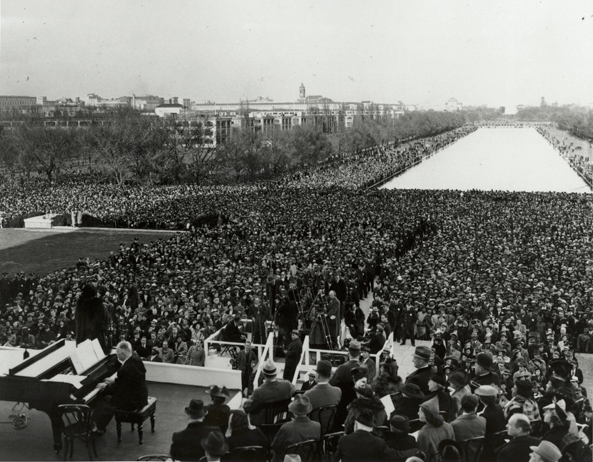
1939 Apr 9      African-American contralto Marian Anderson performs at the Lincoln Memorial on Easter Sunday before a crowd of 75,000 people and a radio audience of millions. After Anderson was denied permission to perform in the D.A.R. Auditorium, Eleanor Roosevelt herself arranged the Lincoln Memorial concert.

Marian Anderson (in dark coat near the piano) sings from the Lincoln Memorial.

1940 Feb 29    Hattie McDaniel wins the Academy Award for Best Supporting Actress for her role as Mammy in Gone with the Wind. She is the first African American, male or female, to win an Academy Award.

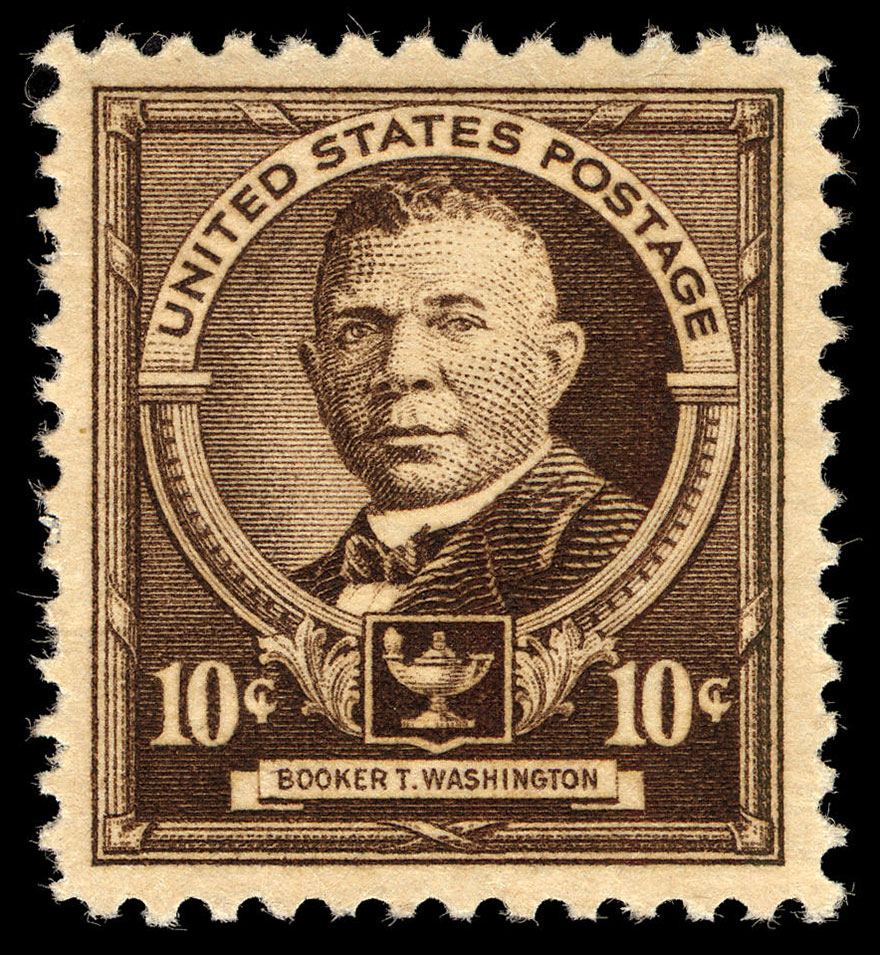
1940 Apr 7      Booker T. Washington becomes the first African American depicted on a postage stamp.

1940 Oct         Benjamin O. Davis Sr. is promoted to Brigadier General. He is the first black soldier to hold the rank of general. (See also May 16, 1960.)

1942 Apr         The Congress of Racial Equality (CORE) is established in Chicago by James L. Farmer Jr., George Houser, and Bernice Fisher. Having evolved from the Fellowship of Reconciliation, the group espouses the principles of pacifism and believes that non-violent civil disobedience is the appropriate method by which to challenge racial segregation in the United States.

1943                Rosa PARKS joins the NAACP, having served as youth advisor for the Montgomery Chapter since the mid-1930s. She works with the state president to mobilize a voter registration drive in Montgomery. Later that same year she is thrown off a city bus, coincidentally by the same driver who will have her arrested in 1956.

1944                Representatives from various tribal groups organized the National Congress of American Indians (NCAI) to monitor federal policies. The organization today consists of more than 250 member tribes who work together to secure the rights and benefits to which they are entitles, to maintain rights granted by treaties, and to promote the common welfare of American and Alaskan natives.

1945 Oct 23    Baseball executive Branch Rickey announces that he has signed Jackie Robinson to the Brooklyn Dodgers’ minor-league affiliate Montreal Royals. Robinson will make his debut with the Royals in Daytona Beach on March 17, 1946.

1946                Zilphia Horton, music director at the Highlander Folk School, adapts the lyrics from a gospel hymn by the Rev. Charles Tindley (1851-1933) and creates the song “We Shall Overcome,” which will become the anthem of the Civil Rights movement.

1946                African-American football players Kenny Washington and Woody Strode are signed by the Los Angeles Rams, and Marion Motley and Bill Willis join the Cleveland Browns.

1946 Dec 5      President Truman establishes a Committee on Civil Rights, whose task is to study violence against African Americans in the country.


Adapted from a timeline created by Kathy B. Lauder for the TN State Library and Archives, 2013.

The Peabody Student Protest of 1883

Excerpted from Minute Book #55 of the State Board of Education, pages 145-155, transcribed by Kathy B. Lauder.

At the end of the nineteenth century, the role of the Tennessee State Board of Education was to oversee the finances and administration of Peabody Normal College, formerly the University of Nashville. The Board met in the office of the governor, who served as board president. Members included Governor William Brimage Bate, John Berrien Lindsley, Frank Goodman, W. P. Jones, J. W. Hoyte, George H. Morgan, and Leon Trousdale. Eben S. Stearns, Chancellor of the University of Nashville and President of the Peabody Normal School from 1875 to 1887, was also present on this occasion.

Office, State Supt. of Public Instruction, Oct. 27, 1883.

The Board met at 3 o’clock P.M.  Present, Gov. Bate, W.P. Jones, Geo. H. Morgan, Leon Trousdale and Frank Goodman, also Dr. Stearns by invitation . . ..

William Brimage Bate (1826-1905), Governor of Tennessee (1883-1887), U.S. Senator (1887-1905) — portrait by George Dury (courtesy of Tennessee State Museum)

Gov. Bate stated that the graduating class of last year had called on him in a body and asked to be allowed to present a memoreal [sic] in the interest of the College. — The Senior Class of this year had made a like request.  He had told them they must present their memoreal in the most respectful terms and furnish a copy to Dr. Stearns. They had done so, and a committee representing the Alumni and another the present Senior Class, had asked the privilege of appearing before the Board, and were now in waiting; he therefore favored admitting the Chairman of each committee and allowing him to read his petition before the Board.

Dr. Jones thought no notice should be taken of the petitions and moved they be laid upon the table. Lost, for want of a second . . .. Dr. Stearns also opposed hearing the students, as he thought it would encourage insubordination and asked the Board if it was going to allow the students to be judges. Col. Trousdale thought they should be heard, as did also Gov. Bate and Messrs. Morgan and Goodman, and on motion of Senator Morgan the Board ordered the petitioners be heard, through their chairmen. Dr. Jones voted in the negative and prepared [a] protest in writing . . ..

The Board then admitted Mr. J. C. Shirley who represented the Alumni.  He read the following:

Memoreal of the Alumni of State Normal College

To the State Board of Education. — Gentlemen.

We the undersigned members of the graduating class of 1883 of the State Normal College, would respectfully present to you as follows:

First. — That as to the past we have been more or less disappointed in the College in every respect.

Second. — That as to the present we feel deeply aggrieved by the action of the College toward us as students.

Third. — That as to the future we are without home as to the success and permanence of the institution unless immediate and radical changes are made.

Eben S. Stearns (1849-1855), President of Framingham State University, Chancellor of University of Nashville, President of Peabody Normal College.

Therefore, in all humility as becomes our youth and with the greatest consideration for Chancellor Stearns, for whom we have the highest personal regard, and with a deep and abiding interest in the welfare of our Alma Mater, we ask — nay in the name of right and justice we demand the following measures:

First. —  That only teachers of well known reputation, experience and ability be employed – those who are not only specialists in their several departments, but those who enter heart and soul into the Public School and Normal School work. – representative teachers of the new education and the Public school spirit of the times, – men and women of the highest attainment and the broadest culture.

Second. —  A supply of text books suitable to the needs of a Normal College, plenty of text and reference books of the most approved kinds and a reasonable adherence to them in instruction, in place of random lectures or stereotyped note-taking.

Third. —  A supply of apparatus to enable students to prosecute successfully, the study of the sciences; and at the same time access to the cabinet and library, and that the library be to represent the advanced spirit of education in all departments pertaining to our professional work.

Fourth. —  Facilities for publishing a paper, either by the faculty of the college or by its students and alumni, this especially, that the gross ignorance, which breeds a deep and almost unconquerable prejudice against our college may be removed.

Fifth. —  That co-operation and harmony be secured between the various boards of trust connected with college.

Sixth. —  That the immediate administration of affairs be placed in the hands of a regular faculty of eminent professors.

Seventh. —  That co-operation and harmony be secured between the President and teachers and that regular and frequent meetings of the faculty be held in order to secure such result.

Eighth. —  That co-operation and harmony be secured between the students and the teachers and that facilities be provided for daily as well as social intercourse between pupils and teachers.

Ninth. —  That measures be taken to secure the co-operation and sympathy of the community and general public.

Tenth. —  That measures be taken to secure the co-operation and influence of the alumni of the College.

Eleventh. —  That stricter regulations be had in order to secure benefits of the college to professional teachers only.

Twelfth —.  That the so-called teaching exercise be either abolished or entirely changed.

Thirteenth. —  That the Literary Societies be recognized and given proper encouragement.

Fourteenth. —  That the standing and marking of examination papers be made known to the students respectively.

Fifteenth. —  That measures be taken to extend the benefits of the college to a wider circle and to a greater number.

Sixteenth. — That a suitable course of study and lectures be provided in Pedagogics and kindred subjects.

Seventeenth — In a word, that our College be made what the people, its students and the times demand – the center of Public Schools – and Normal education in the South and South West.

And, finally, we ask a favorable and early consideration of the above petition and have requested a reply from Chancellor Stearns, in writing, to each specification before a lapse of time should make it necessary for us to seek elsewhere for reforms, in regard to which we have already been silent too long.” 

Second Ave. entrance to University of Nashville/Peabody Normal College

After Mr. Shirley had finished reading the above, the Chairman asked Dr. Stearns if he had any questions to ask Mr. Shirley; as he had none, several members of the Board questioned Mr. Shirley, after which he retired. –

Mr. Brandon of N.C. a representative of the present Senior Class was admitted and read the following memoreal which was signed by every male member of the class except one who was sick. – it was as follows:

Memoreal of Senior Class, 1883.  State Normal College

To the Honorable State Board of Education. –

Gentlemen. —  We the undersigned, members of the Senior Class of 83-4 of the State Normal College of Tenn. Do hereby respectfully memorealize your honorable body in regard to the status of affairs of said Institution.     

First. — However, we desire to say that we are actuated by no spirit of malice, dissention or insubordination whatever. For the Chancellor and Faculty, personally we have the highest regard. We are moved only by a desire to see the College raised to that position which it should of right occupy, so that those who come after us may have and enjoy the advantages of which, we feel, we have been deprived.

It is an open secret that there has existed all the while great dissatisfaction and discontent among the students of said College, and why?

1st.  Because the College is not what the catalogue advertises it to be.

        (a)  The course of instruction is said to include the general management of classes and schools, organization, government and discipline &c. (catalogue p 6). In these most essential particulars we have had no instruction whatever, either from the chancellor, any member of the Faculty, or any paid Lecturer.
	(b)  The following studies have never been taught according to catalogue since our connection with the College; to wit: Moral Sciences, Spherical Geometry and Trigonometry, Calculus, French.
	(c)  A system of espionage is practiced in times of examination, and constant aspersions are cast upon the honor of those “who are expected to conduct themselves as cultivated ladies and gentlemen.”
	(d)  The Library of the University has been entered by only one member of our class. There is no Librarian, nor has the Library been opened to the College since our connection with it. Hence we have access to no technical books, pertaining to our profession, pedagogical or otherwise.
	 (e)  The “large collection of well selected apparatus” is actually insufficient to afford us any practical knowledge of the sciences, first, – because there is a lack of such apparatus, and secondly, – because what there is, is old and imperfect.
	(f)  The Museum has never been open to us for class purposes.

2nd.   An excessive amount is charged for the use of text books and for incidental fee.  In regard to text books, there is not a sufficient number of the kinds in use, while many of those furnished are not suited to Normal class purposes.

3rd.  Because of the anonalous [sic] attitude assumed by the Chancellor toward the Literary Societies. These are regarded as in no wide factors in college work, have never been taken under its auspices, and hence have never received any sort of official recognition or support. — The use of the College audience room for public literary exercises is denied us; also the privilege of securing a suitable hall elsewhere. Thus, the Literary Societies are without the College and yet within the reach of its authority.

We would respectfully submit these as a few of the grounds for dissatisfaction and discontent, and while we are not disposed to quibble at small matters, yet these and other things have served to break down class enthusiasm and college spirit, thereby rendering successful work well nigh impossible.

We, as members of the outgoing Senior Class, and as parties to a contract, feel that the conditions, on part of the college are carried out, not as we could wish nor as we feel we have a right to expect. — Hence we memorealize your honorable body to the end, that the evils herein set forth may be righted as seems best to your wisdom. —  Your most earnest consideration of the matter we pray &c.

(Signed by 21, of the 22 male members of Senior Class.)

Photo by Ken Smith

After Mr. Branson finished reading the above, and Dr. Stearns having no questions to ask or anything to say, each member of the Board questioned Mr. Branson closely, and elicited suggestions from him.

No action was taken in reference to the papers; but the chairman of the Board suggested that Dr. Stearns should carefully examine the papers and see what remedies could be had and report to him in writing.

The Board suggested that it would be well for Dr. Stearns and the chairman to consider the suggestions embraced in the petitions, before appropriating the money in the Treasury, as hertofore [sic], and make their first expenditures accordingly.

Having been in session nearly three hours, the Board adjourned to meet at the call of the President.

Buchanan’s Station and Cemetery

by Mike Slate.

Buchanan’s Station was a fortified settlement established about 1784 during the pioneer era of Nashville, Tennessee. Located on a bluff overlooking Mill Creek in today’s Donelson, the homestead was founded by Major John Buchanan who lived there with his family and other settlers until his death in 1832.1 The station is best known as the site of the famous Battle of Buchanan’s Station, which occurred on September 30, 1792.2

In addition to being situated along one of Nashville’s earliest roads, originally called the Lower Trace3 and later described as the road to Buchanan’s Mill,4 the fort was also near the old Nickajack Trail5 as well as what has been called the First Holston Road.6 Eventually the road by Buchanan’s Station became the southern artery to Andrew Jackson’s Hermitage estate and, by about 1869, the approximate route of the old Tennessee & Pacific Railroad.7

Young reenactor at a 2012 Buchanan’s Station Cemetery event. The orange flags near her mark recently identified graves. (NHN photo)

The fort is known to have been positioned precisely at the northwest corner of today’s Elm Hill Pike and Massman Drive, and a state historical plaque marks the spot.8 A large commercial building now covers the site. Not seen from Elm Hill Pike but clearly visible from Massman Drive is the extant Buchanan’s Station Cemetery, the only vestige of the original settlement and one of the oldest pioneer graveyards in Middle Tennessee. Buried here are Major John Buchanan (1759-1832) and his wife Sarah “Sally” Ridley Buchanan (1774-1831), along with about 65 other family members, affiliated settlers, and possibly slaves. Many graves are marked only by anonymous fieldstones.9 Notably, historical circumstances indicate that at least five frontiersmen who were killed by Indians are probably buried in the cemetery: Samuel Buchanan,10 Cornelius Riddle,11 John Buchanan Sr.,12 William Mulherrin,13 and John Blackburn.14

Largely because it was the venue of the remarkable 1792 Indian attack, Buchanan’s Station has been frequently mentioned or discussed by both amateur and professional historians for well over two centuries.15 Buchanan’s Station was, and continues to be, an archetypal intersection of pioneer culture, involving migration dynamics, settlement formation, land acquisition, conflict with Native Americans, and integration into the developing American West.


1 According to author Laurence Trabue, Richard Buchanan (a son of Major John Buchanan) sold the Buchanan’s Station location to Ralph Smith in 1841. Thus, the station remained with the Buchanan family until that year. I use the 1832 date in order to delineate the years that John Buchanan himself lived there. See Laurence O. Trabue, “Early Nashville Homes, 1780-1830,” in Graham, Eleanor, and Mary Glenn Hearne, Nashville Families & Homes: Paragraphs from Nashville History Lecture Series, 1979-81 (Nashville: The Nashville Public Library, 1983), 111.

2 See the “Battle of Buchanan’s Station” article.

3 Buchanan’s Station was situated on North Carolina land grant #83. The survey warrant for that grant located the land “on Mill Creek Where the Lower Trace Leading to Stones River Crosses Sd Creek.” Apparently, today’s Elm Hill Pike, or a portion thereof, was originally known as “the Lower Trace,” indicating an old buffalo trail. The warrant is transcribed in Drake, Masters, & Puryear, Data Supplement 1 for Founding of the Cumberland Settlements: The First Atlas, 1779-1804 (Gallatin TN: Warioto Press, 2009), 136-137.

4 See the “Major John Buchanan” article, note 7.

5 The Nickajack Trail, which was a segment of the old Cisca and St. Augustine Indian Trail, ran from Chickamauga Indian country near today’s Chattanooga northwest to Nashville. The Indians who attacked Buchanan’s Station in 1792 probably approached the station via this trail, or portions thereof. Today’s Murfreesboro Road may follow the original route of the Nickajack. As the trail entered Nashville it came very close to Buchanan’s Station. Regarding the Nickajack and other trails, see William E. Meyer, Indian Trails of the Southeast (Davenport IA: Gustav’s Library, 2009, reprint from the “Forty-second Annual Report of the Bureau of American Ethnology” 1924-25), especially page 848 and the included maps.

6 The term “First Holston Road” is used in Masters & Puryear, Thoroughfare for Freedom: The Second Atlas of the Cumberland Settlements, 1779-1804 (Gallatin TN: Warioto Press, 2011), especially pages 96-97. Created in the spring of 1788, this was the first trail blazed from Nashville across the Cumberland Plateau to Knoxville. It preceded the Cumberland Road (also called Avery’s Trace) that was soon afterwards built on the north side of the Cumberland River. The First Holston Road proceeded from Nashville “via Buchanan’s Station” according to pioneer William Martin’s account in Paul Clements, Chronicles of the Cumberland Settlements (Nashville: self- published, 2012), 288.

7 The southern or lower road to the Hermitage appears on Matthew Rhea’s 1832 map of Tennessee, and the route of the Tennessee & Pacific Railroad appears on Wilbur Foster’s 1871 map of Davidson County, Tennessee.

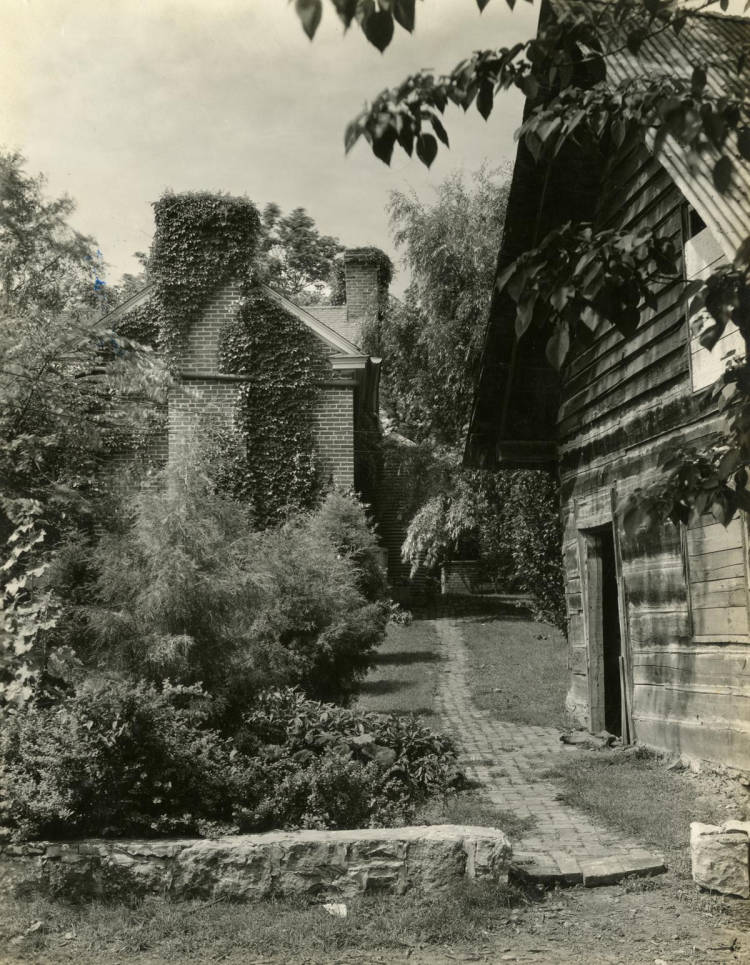
19th century house on the site of Buchanan’s Station, Elm Hill Pike at Massman Drive. The log building (right) is a remnant of the original 1780 fort. These structures were later demolished and replaced by an industrial park. (1936 photo courtesy of TN State Library & Archives)

8 Several sources nicely align to present almost incontrovertible proof of the precise location of the Buchanan’s Station main structure. One of the most important is Roberta Brandau, ed., History of Homes and Gardens of Tennessee (Nashville: Parthenon Press, 1964 edition of the 1936 original), 142-144. In the entry therein titled “Buchanan Station,” Ralph Smith’s “Mansion House” is pictured and captioned as “on the site of the original Buchanan structure.” Smith’s mansion became the Knapp Farm Clubhouse (owned by George Peabody College), the exact location of which is known to many contemporary Nashvillians since it was not torn down until shortly after 1980. Brandau aligns with Trabue, 111.

9 See archeologist Dan Allen’s report: Dan S. Allen, “Archaeological Survey of the Buchanan’s Station Cemetery” (Murfreesboro: Dan S. Allen & Associates, 2013), 31.

10 Samuel was the second of Major John Buchanan’s brothers to be killed by Indians (the first was Alexander during the “Battle of the Bluff”). Harriette Simpson Arnow reports that Samuel was killed on May 8, 1786, while out ploughing in the field near the creek, apparently at Buchanan’s Station. See Harriette Simpson Arnow, Flowering of the Cumberland (Lincoln: University of Nebraska Press, 1996, new edition of the 1963 original), 241-242. Samuel may have been the first person to be buried in the Buchanan’s Station Cemetery.

11 Cornelius Riddle was killed in November 1786 near Buchanan’s Station while hunting turkeys. See Clements, 249. Harriette Simpson Arnow speaks of Riddle (she calls him “Ruddle”) as living at Buchanan’s Station with his wife (the former Jane Mulherrin), and Arnow goes so far as to describe the couple’s cabin at the station. See Harriette Simpson Arnow, Seedtime on the Cumberland (Lincoln: University of Nebraska Press, 1995, new edition of the 1960 original), 366.

12 John Buchanan Sr. was hacked to death with a tomahawk, in the presence of his wife (Jane Trindle Buchanan), inside Buchanan’s Station in 1787. See Arnow, Flowering of the Cumberland, 6. The foremost account of this tragedy is in G.W. Featherstonaugh, Excursion through the Slave States, Vol. I (London: John Murray, 1844), 205. John Sr. and his wife Jane are believed to be buried in the rocked-in plot in the Buchanan’s Station Cemetery.

The two large stones at center front mark the graves of Major John and Sally Buchanan. John Buchanan Sr. and his wife Jane are believed to be buried in the rocked-in plot on the right. (Photo by Tim Slate)

13 William Mulherrin was killed at Buchanan’s Station during the same 1787 incident in which John Buchanan Sr. was killed. See pioneer Robert Weakley’s account in Clements, 244.

14 John Haywood reports that John Blackburn was killed in 1789 at Buchanan’s Station. The Indians left a spear sticking in his body. See John Haywood, The Civil and Political History of the State of Tennessee (Knoxville: Tenase Company, 1969, reprint of the 1891 edition which was itself a reprint of the original 1823 edition), 257.

15 See the “Battle of Buchanan’s Station” article.


FUNDAMENTAL SOURCES

Allen, Dan S. “Archaeological Survey of the Buchanan’s Station Cemetery.” Murfreesboro, Dan S. Allen and Associates, 2013.

Arnow, Harriette Simpson. Flowering of the Cumberland. Lincoln, University of Nebraska Press, 1996 edition of the 1963 original.

Arnow, Harriette Simpson. Seedtime on the Cumberland. Lincoln, University of Nebraska Press, 1995 edition of the 1960 original.

Clements, Paul. Chronicles of the Cumberland Settlements. Nashville, self-published, 2012.

Drake, Masters, & Puryear. Founding of the Cumberland Settlements: The First Atlas, 1779-1804. Gallatin TN, Warioto Press, 2009.

Haywood, John. The Civil and Political History of the State of Tennessee. Knoxville, Tenase Company, 1969 edition of the 1823 original.

Masters & Puryear. Thoroughfare for Freedom: The Second Atlas of the Cumberland Settlements, 1779-1804. Gallatin TN, Warioto Press, 2011.


The True History of the “Ivy Rock”

by Carol Kaplan.

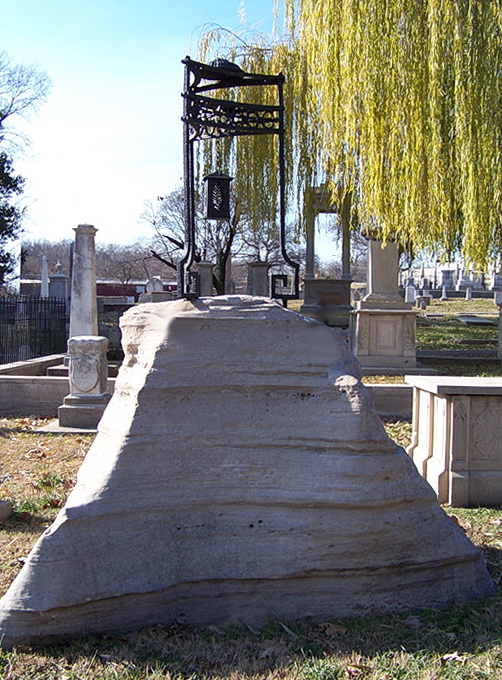
The large ivy-covered boulder, so different from other grave markers at Nashville City Cemetery, has excited curiosity for more than 150 years. As the true story was forgotten, romantic tales of love and tragedy, each sadder and less realistic, swirled around “The Rock.”

The “Ivy Rock” (photo courtesy of Nashville City Cemetery Association

Did a lover’s quarrel cause a young lady to drown herself in the Cumberland River? Or perhaps a young bride was killed in a carriage on the way to her wedding. In every fanciful variation of this tragic death, the bereaved suitor or husband had the “trysting rock” where the young lovers met brought to her gravesite. The grieving young man allowed no name or date: he knew, and that was enough. One variation said the young lady was afraid of the dark, so a lantern was placed on top. Perhaps there had been an identifying inscription, but it had worn away. No one remembered who was buried under the boulder.

In 1959 a plaque was attached bearing the inscription “Ann Rawlins1 Sanders, 1815-1836.” As shall be shown, this attribution was an error.

Who was Ann Rawlins Sanders? Do her life and death reflect any part of these fanciful stories?

No, they do not. Far from being a suicide or a casualty on her wedding day, Ann was a loved and respected Nashville community member. She was married to Charles H. Sanders by the Reverend William Hume on August 29, 1832, in Nashville, and she attended the First (now Downtown) Presbyterian Church. On April 1, 1836, a local newspaper lamented her death: “A soul of bliss winged its way to mansions on high. Too pure to remain here below, it returned to its maker after a sojourn of twenty-one winters. She was a happy representative of the Church. Her lovely expression was a magnet to the lukewarm and the skeptic.” So there was no scandal or tragedy here, but just the sadness of a young life cut short. The first survey of the City Cemetery, in 1908, labeled the box tomb next to the “Ivy Rock” as belonging to Ann.

The box tomb of Ann Rawlins Sanders is adjacent to the Ivy Rock. (Photo courtesy of the Nashville City Cemetery Association)

If Ann Rawlins Sanders isn’t buried under the Rock, then who, if anyone, is?

Nashville City Cemetery Association researchers have made every effort to read and transcribe, from microfilm, all articles about the history of the cemetery. In 2013 the discovery of one story refuted all the tragic tales. On August 14, 1882, The Daily American let readers know this:

“Some months since, a part of the ivy was cut away on two sides where the inscriptions were said to be. There the rough letters were, but nearly worn away; with care and painstaking they were finally deciphered.

“On the south, the side towards her former home was: ‘Lucy Rawlins Steele / Died May 9, 1847.’

“On the east was carved: ‘1848 / THE DEAD / The only beautiful that change no more.’”

Photo courtesy of Nashville City Cemetery Association

The reporter learned the truth from the City Cemetery Sexton, who remembered that a gentleman named Mr. Steele had had the stone carried to the cemetery a year after his wife’s death. At that time Edward G. Steele was serving as Secretary of the Building Commission for the new State Capitol. For the building construction stone was being cut, by prisoners from the State Penitentiary, at a nearby quarry. According to the Sexton, “Mr. Steele had the stone brought out in a high wagon drawn by eight mules, and six convicts were taken along to aid in unloading it. He then put it there and then spoiled nature by putting that iron on the top, as I told him at the time. But there isn’t any truth in all those romances that young people are so fond of telling and believing about the ivy stone.”

With her name discovered, what more could be found about Lucy’s life? Davidson County marriage records show that Lucy was married to Edward Steele on November 24, 1832, by Reverend William Hume2. She was baptized at Christ Church, the first Episcopal Church in Nashville, on October 13, 1837, and two days later the Steeles’ baby, Albert Wagner Steele, was baptized. Parish records list Lucy’s death in May 1847.

The City Cemetery Interment book shows that Lucy, wife of E. G. Steele, died of consumption and was buried on May 6, 1847. One month after her death, Mr. “Steel” bought Lot 9 in Section 18 where Ann and Lucy are buried. As they have the same maiden name, it is possible they were sisters. The entry, deciphered with difficulty, states that Lucy died May 9, a date which is a few days different from that in the interment book. The name Steel/Steele was variously spelled in 19th century records.

Less than two years after Lucy’s death, Edward G. Steele resigned his position as Secretary of the Building Commission and left Nashville. With his departure, Lucy’s name was lost to memory.

The lantern which once adorned the “Ivy Rock” has since been taken down. (NCCA photo)

The “Ivy Rock” is now correctly marked. The cast iron ornament placed there by Edward Steele remains, but the lantern, added years later, has been removed. The “Ivy Rock” stands again as the memorial to Lucy Rawlins Steele that her loving husband intended, so many years ago.


1 Ann’s surname, “Rawlins,” is spelled “Rawlings” in several records. Sources have consistently used the spelling “Rawlins” for Lucy’s name.

2 Three months after the marriage of Ann Rawlins and Charles H. Sanders by the same pastor.


Fletch Coke’s research contributed to this story.

Funeral Customs of the 1800s

by Kathy Lauder.

Most burials in the Nashville City Cemetery took place during the 19th century. It was a period, perhaps more than any other, when people obeyed formal rules of behavior, and there were very particular rules regarding death.

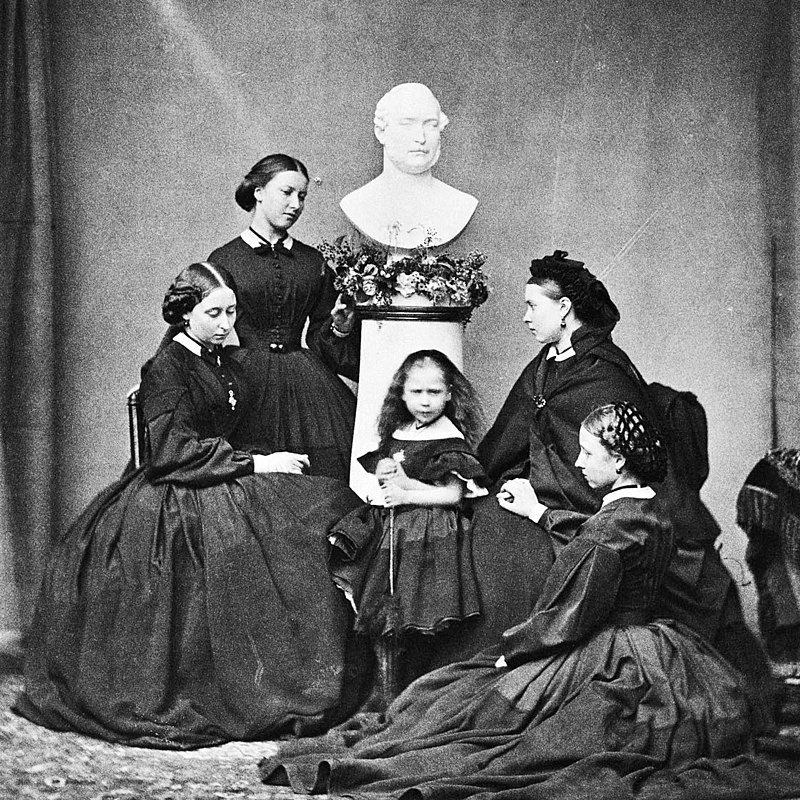
Queen Victoria’s daughters in mourning for their father, 1862

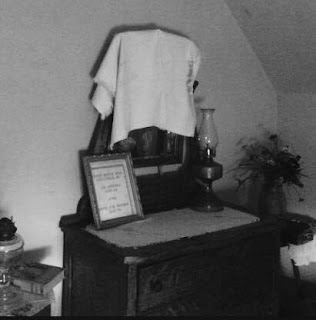
When a Victorian family member died, people in the household carefully followed certain customs to honor the departed and to inform others of the death. The bereaved family would close the curtains, stop all the clocks in the house at the time of death, cover mirrors with black crepe or other veiling (in order, as some believed, to prevent the spirit from being trapped in the looking glass), and turn family photographs face-down (to prevent the spirit from possessing others in the household). Families commonly hung a black bow, a wreath of laurel, or a bundle of yew branches on the front door to let neighbors and visitors know there had been a death. Flowers and candles throughout the house lent a somber touch, but also, of course, scented the air, a particular comfort in the days before embalming – burial might not take place for as many five days after death in order to allow distant family members to arrive.

A covered mirror indicates that the household is in mourning (photo from Appalachian Mountain Roots)

The position of the body in its coffin also held significance. Coffins were carried out of the house feet first in order to prevent the spirit of the dead from looking back and beckoning someone else in the household to follow. In many cemeteries the graves are still placed with the head to the west and feet to the east to correspond with the Christian belief that the final Call to Judgment will come from the east.

For at least a year after the death, close relatives would dress in black, using stationery and handkerchiefs with a black border. Widows wore mourning for two years or even longer, and many would not leave their homes without covering their faces with a dark veil. Many widows dressed not only themselves but also their servants in black, leaving home only to attend church services. Some restricted their jewelry to what was called “mourning jewelry.” This was limited to black (primarily jet) stones and featured lockets, bracelets, or brooches woven or braided from the hair of the deceased. Men’s mourning practices were a little less restrictive. They could generally go about their lives and jobs, sometimes wearing a black arm band to signify their loss.

Mourning brooch made from human hair (from the permanent collection of the Children’s Museum of Indianapolis)

 19th Century Superstitions about Death, Funerals, and Cemeteries

  • Cover your mouth while yawning to keep your spirit from escaping or prevent the devil from entering your body.
  • If rain falls on a funeral procession, the deceased will go to heaven.
  • It is bad luck to meet a funeral procession head-on. If you cannot turn around, hold onto a button until it passes.
  • A clap of thunder after a burial means the soul of the deceased has arrived in heaven.
  • Never wear anything new to a funeral, especially shoes.
  • If a dog howls at night when someone in the house is sick, it is a bad omen. You can reverse the bad luck it by reaching under the bed and turning a shoe over.
  • If you spill salt, throw a pinch of it over your left shoulder to prevent a death.
  • You must hold your breath when passing a cemetery, or you will not be buried.
  • If the deceased has lived a good life, flowers will bloom on her grave; if not, only weeds will grow there.  (2009)

Previously published in Monuments & Milestones, the Nashville City Cemetery newsletter.

A “New” Image of General James Robertson?

by Kathy Lauder.

It was an unexpected setting for a significant moment in Tennessee history. Sailboats bobbed in the harbor of the charming Maine seaside village, and visitors in casually expensive shorts and sandals strolled past with their rescued greyhounds and canvas bags from L.L. Bean. But behind the oak and granite walls of a York Harbor pub, a descendant of Nashville founder James Robertson (1742-1814), was unwinding tissue paper from a family treasure.

The Llewellyn portrait, believed by his family to be a likeness of Gen. James Robertson (photo by author)

Dr. Henry J. Llewellyn is a 60-something radiologist who lives and works in the Boston area. A man of great dignity and charm, he has, since the recent death of his sister, begun to consider the fate of various family treasures he holds in trust. What he was carrying with him on this September day in 2002 was a small watercolor sketch, in profile, of a man generations of his family have believed to be a young General James Robertson. Dr. Llewellyn had recently contacted Mike Slate, editor of the Nashville Historical Newsletter, saying he would like to share this heirloom with the public.

The enormity of this find, should the face be Robertson’s, would challenge and delight Nashville and Tennessee historians. Although one confirmed portrait of Robertson does exist, experts agree it was produced after his death. That portrait was painted by artist Washington Bogart Cooper (1802-1888), who arrived in Nashville in 1830 and had become quite a popular artist here by 1838. According to James A. Hoobler of the Tennessee State Museum, Robertson’s widow Charlotte called her children together and commissioned Cooper to paint the portrait by combining, not unlike pieces of a jigsaw puzzle, the facial traits “of various family members whose features resembled their father.” Charlotte loved the painting and “swore that it looked just like James had.” It is important to remember, however, that Charlotte Robertson was in her mid-80s by that time, and that her husband had been dead for more than twenty years.

1835 James Robertson portrait attributed to Washington B. Cooper (courtesy of Tennessee State Museum)

At least some of the Robertson images that appear in various history texts seem to have been copied from the Cooper painting. One other painting, attributed to artist Henry Benbridge (1743-1812), accompanies many modern-day accounts, including the James Robertson entry in the Tennessee Encyclopedia of History and Culture. Still another portrait once believed to be of James Robertson has been identified as that of a kinsman. If Dr. Llewellyn’s miniature is, in fact, a portrait of the General drawn from life, it is very likely the only one in existence. Indeed, the story that has come down through the family, passed from parent to child for eight generations, maintains this to be the only likeness ever made of Robertson during his lifetime.

James Robertson portrait attributed to Henry Benbridge (courtesy of Tennessee State Museum)

The picture itself is small and imperfect. The oval frame, made in Bryn Mawr, Pennsylvania, is probably not much more than one hundred years old. It is badly cracked. Almost a quarter of the picture has been torn off, in a line running down the right side from top to bottom, and another deep crease runs vertically through the entire figure. A small section of the back of the head, where the page is torn, has been drawn onto the backing paper below by a less artistic hand. Stains and age spots discolor much of the page.

It is very small: the oval frame is four and a half by six inches; the image of the man himself is only three inches high. But it is startlingly beautiful. Less like our conception of a rugged frontiersman than a graceful illustration for a Jane Austen novel, the profile of a handsome young man is outlined in a few delicate strokes. The skin tones are subtle and lifelike; the hair, except for the awkward smear on the backing paper, has an almost palpable softness. It is a lovely piece of historical art that merits further study.

Nashville historians who have viewed the portrait agree that the clothing and other stylistic details of the painting are inconsistent with the period of James Robertson’s youth, and that the young man’s profile is quite different from that of the Cooper portrait. A few individuals have also pointed out that stories passed down through families are subject to the same process we remember from our childhood game of “Telephone,” in which a sentence whispered from person to person transforms into something quite different by the time it reaches the last player. Nevertheless, it is entirely probable, since the portrait has been so carefully tended through the years, that it is indeed a likeness of one of Dr. Llewellyn’s ancestors, perhaps even another member of the Robertson family.  (2002)


Robertson Line, General James Robertson to Dr. Henry J. Llewellyn from Sarah Foster Kelley. Children of Nashville. Nashville: Blue & Gray Press, 1973.

Henry Jerome Llewellyn II (15 Jun 1937 – 13 Feb 2009)

            b Philadelphia, PA; d Brookline, MA

            Father: Clinton F. Llewellyn

            Mother: Mabelle Ann Johnson Llewellyn

            Spouse: Paige E. Llewellyn

Clinton Llewellyn (5 Dec 1903 – 13 Jan 1944)

            b Philadelphia, PA; d Philadelphia, PA

            Father: Henry J. Llewellyn (NY)

            Mother: Pauline Drescher (PA)

            Manager at H. J. Llewellyn Co., his father’s bakery supply company.

Whatever the Cost to Ourselves: Nashville Women’s Civil War

by Carol Kaplan.

When the Civil War began, Nashville’s women were eager to take whatever role available to them.  An article in the Confederate Veteran explains that, “with no rules or formulas to guide them except the instinctive promptings of patriotic love and mercy,” they organized a system of service to provide for the medical needs of the wounded and sick.

The Confederate Veteran was a monthly Nashville-based publication (1893-1932). It contained letters, editorials, and first-hand accounts of battles submitted by former Confederate soldiers.

Led by the tireless Felicia Grundy Porter, the Soldiers Relief Society of Tennessee was organized to gather and send hospital supplies to Virginia.  Soon it became obvious that they would be needed in Nashville itself.  Dr. David Yandell, appointed the medical director of the Army of the West, organized these hospitals: State Hospital, First College Street Hospital, Front Street Hospital, Cedar Street Hospital, and Elliott Hospital. Elliott Hospital had been the Nashville Female Academy, closed by the superintendent, Collins D. Elliott, at the beginning of the war. 

The Nashville Female Academy (image courtesy of Tennessee State Library & Archives)

The hospitals were poorly equipped, and the Relief Society requested contributions of blankets, flannels, underclothing, provisions, and especially money.  Anesthesia was almost unavailable and medicines were scarce.  Hospitals were places of misery and sadness, and brave and strong women came to help.  They stood by during amputations, bent over the dying, received their last messages to loved ones at home and attended their interments.

It is not recorded how many Nashville women actually served as nurses, but three are known who paid with their lives for their care of others. 

Lucy Butler Lanier was a loving, faithful and beloved teacher at the Nashville Female Academy for thirty-three years.  Her childhood was spent in wealth, but after the death of her father, Presbyterian minister Edmond Lanier, financial reverses caused Lucy, at age sixteen, to assume the support of her mother Emma and a younger brother and sister.  She taught first in Columbia and four years later began her career at her alma mater, Nashville Female Academy. According to her lengthy obituaries, one in the Morning Bulletin or April 1, 1862, and another in the Banner of March 5, 1862, Lucy had no superior as a teacher: she was just and exact, delightful, and affable.  In 1860 she was head of the Collegiate Department, while her sister Ann, two years younger, taught the Primary Department.  When the Academy became the hospital, she was “constant in her attentions upon the sick and wounded.”  Resting for a moment, Lucy complained of a sudden and severe pain in her head; a fit of apoplexy followed and she died within an hour. “She passed away like a brilliant cloud across a sunset, her glory shines no more.”  Lucy Lanier was buried at City Cemetery March 5, 1862.  There is no marker on her grave.

A nurse tends to ill and wounded soldiers. Two-thirds of the 620,000 military deaths during the Civil War were due to infection or disease.

Two other women, sisters, who did “beautiful hospital service and are worthy of special memorials” were Mrs. John B. Nichol and Mrs. Alfred Hume.  Evelina Nichol and Louisa Hume were daughters of Revolutionary War veteran John Bradford and his wife Elizabeth Blackwell.  Evelina was the 11th and Louisa the 12th of the Bradford children.  Both women were widowed by 1853 and shared a home with their children on South Vine Street.  Evelina and Louisa both caught pneumonia and camp fever while caring for the sick and wounded and died within days of each other.  Separated in death as they never were in life, Evelina Nichol was buried at Mt. Olivet on December 18, 1861, and Louisa next to her husband Alfred on December 22, 1861, at City Cemetery.

As the Confederate Veteran (v.25, P.558-560) says “Wherever woman could serve were recorded deeds of sacrifice and heroism, a bit of history that should be known, because it is unwritten history and history that counted.”  (2012)

Lindsley Hall, University of Nashville, as it appeared during the Civil War when used as an officers’ hospital by the U.S. Army. It had a capacity of 200 beds. (photo courtesy of Tennessee State Library & Archives)