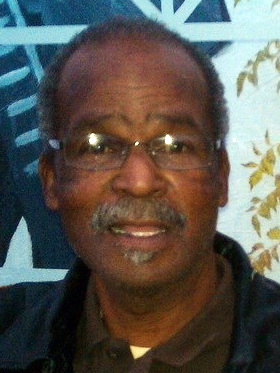
Jefferson Street dominated Nashville’s 1960s R&B scene. Charlie Fite, Frank Howard, and Herschel Carter performed there as The Marquees, soon catching the eye of DJ/entrepreneur “Hoss” Allen, who renamed them Frank Howard & The Commanders, featured them on The!!!!Beat, and produced their earliest records. They became R&B royalty, performing alongside Earl Gaines, Etta James, and Ray Charles. Jimi Hendrix (still “Jimmy” then), who came down from Fort Campbell to perform in the clubs, recorded with the Commanders. R&B ruled . . . until Interstate 40 slashed through the music landscape, changing it forever. The Soul scene faded. Musicians took other jobs. But the Country Music Hall of Fame’s 2005 retrospective, Night Train to Nashville, brought The Commanders and others out of retirement. When Charlie Fite lost his house to the 2010 flood, Frank Howard and other musicians produced a benefit to help him rebuild. Charlie’s gone now, but a little Jefferson Street magic still survives in a few local venues.
Charlie Fite, about 2010 (family photo)
Frank Howard and the Commanders, about 1965; Charlie is on the left. (Photo courtesy of the Country Music Hall of Fame and Museum)
The Greenwood Project is a series of 160-word biographies of individuals who lie at rest in Mt. Ararat and Greenwood cemeteries, two historic African American burial grounds in Nashville, Tennessee. The project, which began in September 2014 (and is still available on Facebook, at https://www.facebook.com/profile.php?id=100064806156276), shares the stories of more than 300 consequential individuals, primarily African American, who changed the course of city, state, and national history through their words and deeds. (All biographies were written by Kathy Lauder unless otherwise noted.)
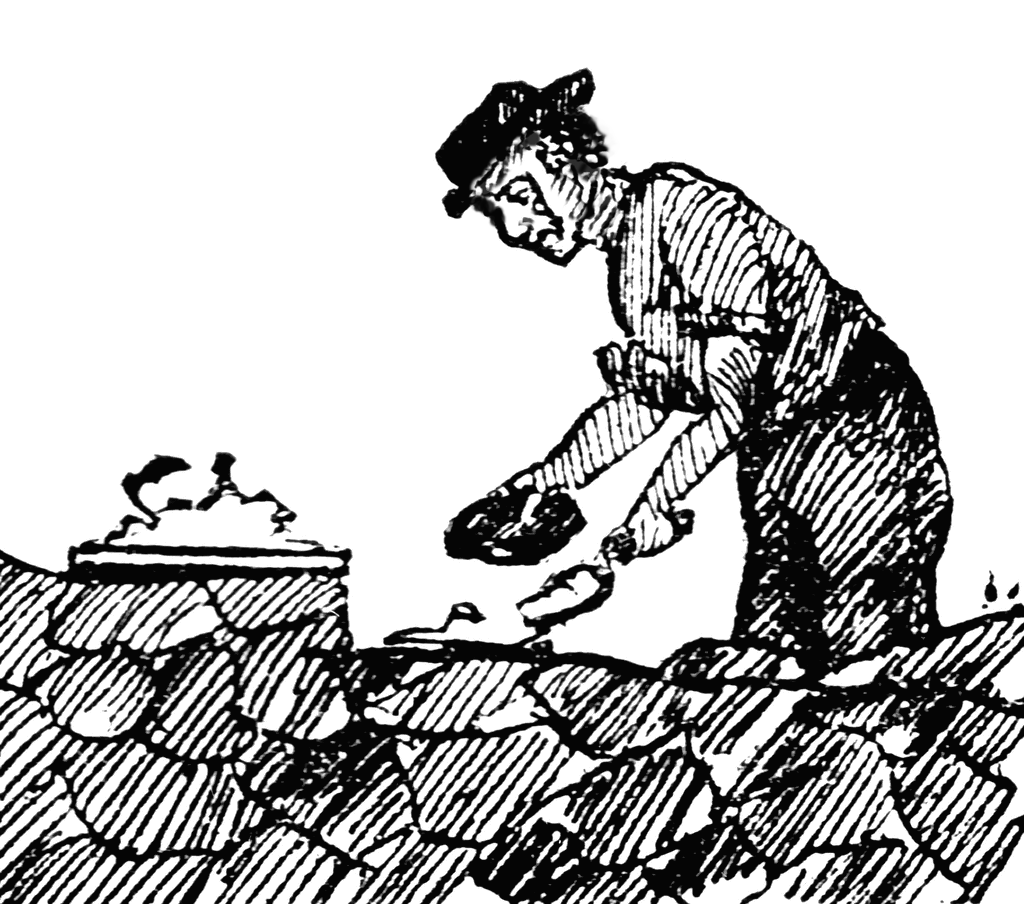
Born a slave in Virginia, young Salem Mason lost his wife and two children when their owner moved out of the state . . . and he never saw them again. Salem himself was one of 23 slaves purchased by the city of Nashville in 1830 and brought to Tennessee to lay pipe for the city’s first water system. He helped grade the Square (where the courthouse now stands) when it consisted of four frame buildings and a weed-covered field crossed by cow paths, and he headed the crew laying the cornerstone of the old state penitentiary, which opened in 1831. Salem was one of only three workers kept on by the city after the completion of the waterworks. He continued as a city employee after emancipation, barely surviving an attempt by the Board of Public Works to strip him of his $10 monthly pension. He died at age 104, four days short of having lived in three different centuries!
Illustration of stoneworker courtesy of the Florida Center for Instructional Technology
____________________
The Greenwood Project is a series of 160-word biographies of individuals who lie at rest in Mt. Ararat and Greenwood cemeteries, two historic African American burial grounds in Nashville, Tennessee. The project, which began in September 2014 (and is still available on Facebook, at https://www.facebook.com/profile.php?id=100064806156276), shares the stories of more than 300 consequential individuals, primarily African American, who changed the course of city, state, and national history through their words and deeds. (All biographies were written by Kathy Lauder unless otherwise noted.)
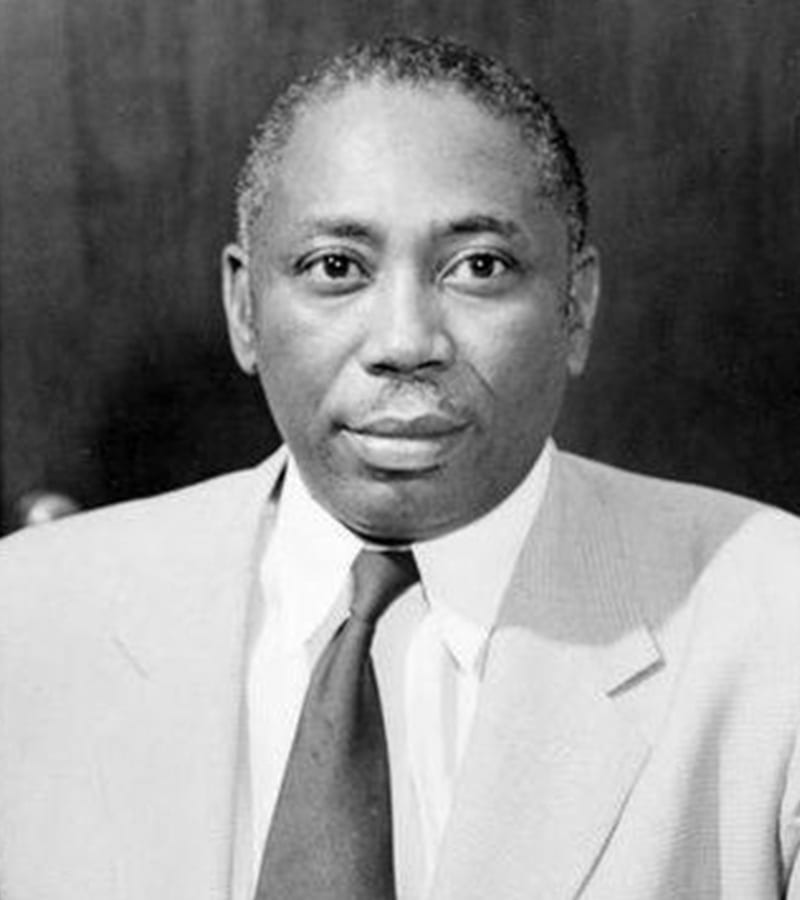
Dr. Matthew Walker is said to have trained more black surgeons – as many as half of those practicing at the time he died – than anyone else in the world. The son of a Pullman porter, he worked his way through New Orleans (later Dillard) University and graduated from Meharry Medical College with honors (1934), also studying at Howard University and the Mayo Clinic. He was a diplomat of the American Board of Surgeons, a fellow of the International College of Surgeons (1947), and a member of many other professional organizations. A former president of the National Medical Association, he received their distinguished service award in 1959. Walker taught surgery, gynecology, orthopedics, and pathology at Meharry, and, against the advice of his colleagues, welcomed Dr. Dorothy L. Brown and other women into the surgical residency program. The Matthew Walker Comprehensive Health Centers, honoring his name and his philosophy, continue to provide health care for the poor and uninsured of all races.
Dr. Matthew Walker Sr. (Photo from Tennessee Health Care Hall of Fame)
The Greenwood Project is a series of 160-word biographies of individuals who lie at rest in Mt. Ararat and Greenwood cemeteries, two historic African American burial grounds in Nashville, Tennessee. The project, which began in September 2014 (and is still available on Facebook, at https://www.facebook.com/profile.php?id=100064806156276), shares the stories of more than 300 consequential individuals, primarily African American, who changed the course of city, state, and national history through their words and deeds. (All biographies were written by Kathy Lauder unless otherwise noted.)
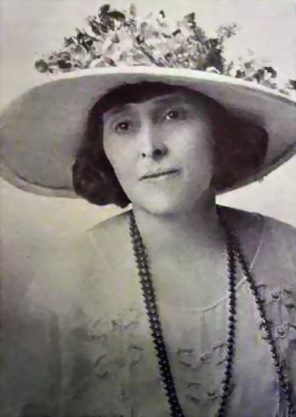
Nashville-born Nellie Griswold was a young girl when her family moved to Minnesota, where she met and married St. Paul attorney William Trevanne Francis in 1893. She founded the Everywoman Suffrage Council and held leadership positions in the Minnesota State Federation of Colored Women, the Urban League, and the NAACP. Enlisting her husband’s assistance in writing anti-lynching legislation after a 1920 incident in Duluth, Nellie shepherded the bill through the state legislature to passage in 1921. This ground-breaking law – be reminded that the United States Congress has never passed anti-lynching legislation! – awarded monetary compensation to victims’ families and established penalties for police who failed to protect prisoners from mobs. Facing discriminatory housing practices in their Minnesota neighborhood, Nellie and her husband moved to Africa in 1927 when President Coolidge appointed William to serve as special minister to Liberia. After yellow fever took William’s life, Nellie brought his body to Nashville for burial, remaining here herself until her death at 95.
Nellie Francis Griswold. (Mary Dillon Foster, Who’s Who Among Minnesota Women (1924), 111.)
____________________
The Greenwood Project is a series of 160-word biographies of individuals who lie at rest in Mt. Ararat and Greenwood cemeteries, two historic African American burial grounds in Nashville, Tennessee. The project, which began in September 2014 (and is still available on Facebook, at https://www.facebook.com/profile.php?id=100064806156276), shares the stories of more than 300 consequential individuals, primarily African American, who changed the course of city, state, and national history through their words and deeds. (All biographies were written by Kathy Lauder unless otherwise noted.)
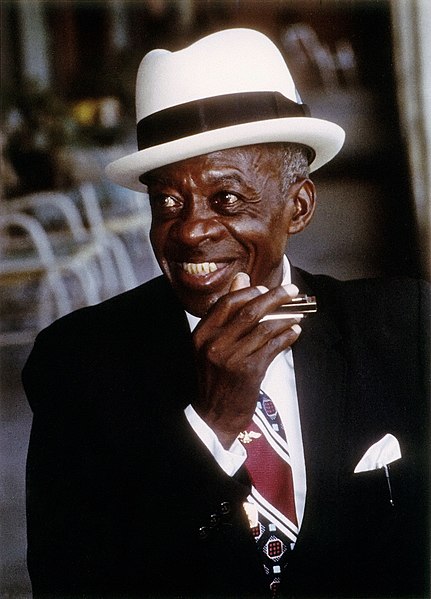
A musician who achieved national fame as the “Harmonica Wizard,” DeFord Bailey (1899-1982) was a founding member of the Grand Ole Opry, as well as being its first African American member. Born near Carthage, Tennessee, this grandson of slaves and survivor of childhood polio learned to play the harmonica as a schoolboy. Although he had to deal with racist attitudes throughout his career, he became as much a part of the Opry as Roy Acuff or Bill Monroe, sometimes playing as much as a 25-minute set during the three-hour WSM radio show. He was best known for “Pan American Blues,” “Fox Chase,” and “Ice Water Blues/Davidson County Blues,” and he recorded for Columbia, Brunswick, and Victor Records. However, WSM had released him by 1941, and he opened a busy shoe-shine shop at 12th Ave. S. and Edgehill. He re-emerged as a performer during the Civil Rights era and appeared at the Grand Old Opry House as late as April 3, 1982, three months before his death.
The Greenwood Project is a series of 160-word biographies of individuals who lie at rest in Mt. Ararat and Greenwood cemeteries, two historic African American burial grounds in Nashville, Tennessee. The project, which began in September 2014 (and is still available on Facebook, at https://www.facebook.com/profile.php?id=100064806156276), shares the stories of more than 300 consequential individuals, primarily African American, who changed the course of city, state, and national history through their words and deeds. (All biographies were written by Kathy Lauder unless otherwise noted.)
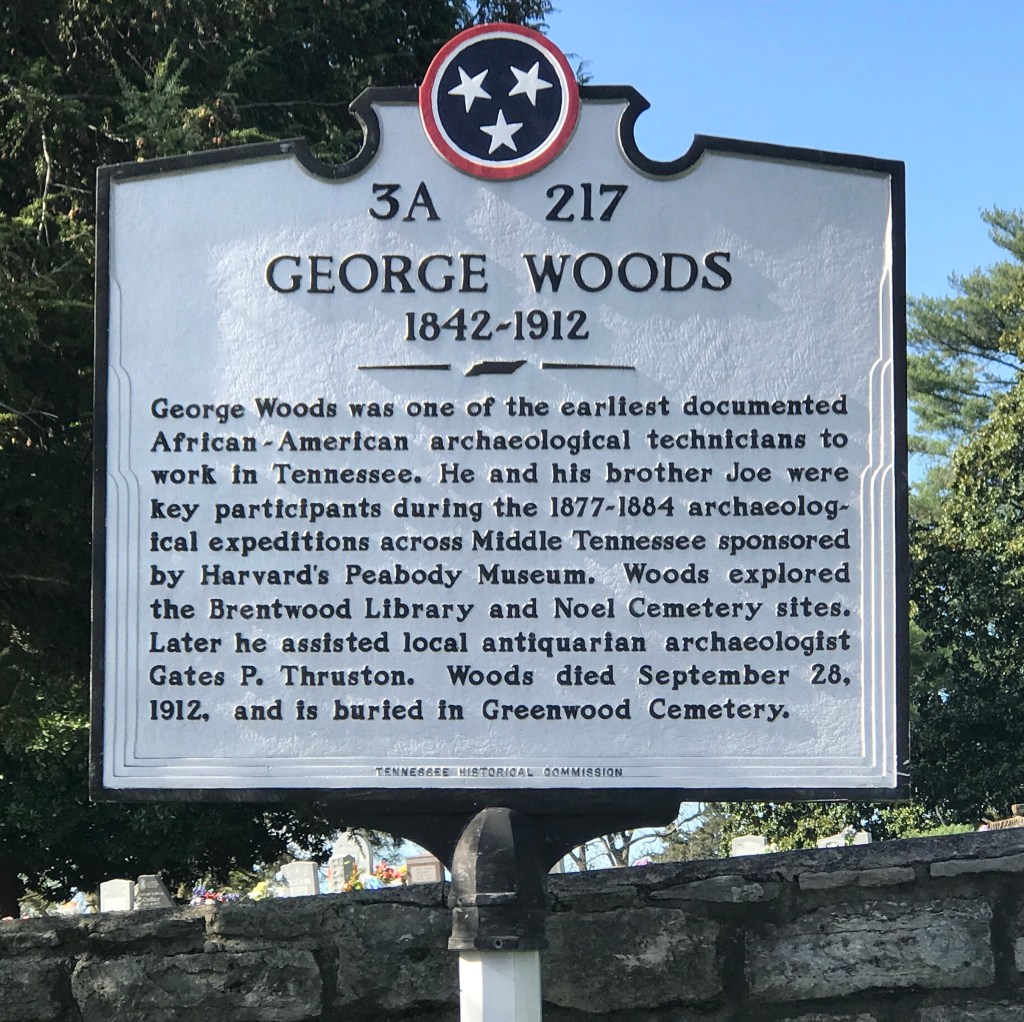
George Woods, memorialized on a historical marker near the Greenwood Cemetery entrance, was almost certainly Tennessee’s first African American archaeological technician. When Harvard University’s Frederic Ward Putnam came to Tennessee to excavate Davidson and Wilson County sites for the Peabody Museum (1877), his foreman Edwin Curtiss hired brothers George and Joe Woods as laborers on the project. The Woods brothers acquired a reputation for competence and dependability, and, after Curtiss’s sudden death, Professor Putnam himself began to correspond with George Woods about continuing Harvard’s archaeological efforts in Tennessee. In 1882 Putnam hired Woods as foreman on the Jarman and Hunt digs, and, after he returned to Harvard, arranged for Woods to continue digging and collecting artifacts for the Peabody from those two excavations as well as the Noel and Cooper Farm digs (1885-1890). In the Tennessee State Museum’s Gates Thruston Collection are several artifacts collected by George Woods, who, in later years, worked as a blacksmith, railroad porter, and quarryman.
There are no known photographs of George Woods. This historical marker stands near the main entrance of Greenwood Cemetery, on Elm Hill Pike at Spence Lane, in Nashville, Tennessee. (Photo by Duane and Tracy Marsteller: https://www.hmdb.org/m.asp?m=147556ttps://www.hmdb.org/m.asp?m=147556)
____________________
The Greenwood Project is a series of 160-word biographies of individuals who lie at rest in Mt. Ararat and Greenwood cemeteries, two historic African American burial grounds in Nashville, Tennessee. The project, which began in September 2014 (and is still available on Facebook, at https://www.facebook.com/profile.php?id=100064806156276), shares the stories of more than 300 consequential individuals, primarily African American, who changed the course of city, state, and national history through their words and deeds. (All biographies were written by Kathy Lauder unless otherwise noted.)
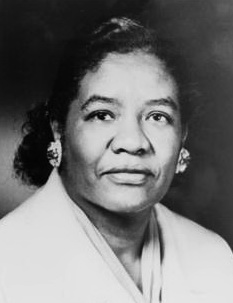
Although abandoned by her mother and raised in foster homes, Dorothy Brown became valedictorian of her high school graduating class. However, she could not afford college until a Methodist women’s group for whom she worked as a housekeeper paid her tuition at Bennett College. She graduated with honors, then worked in a defense plant to earn money for medical school, entering Meharry in 1944. After the Harlem hospital where she interned denied her a surgical residency, she convinced Meharry surgical chief Matthew Walker to allow her a residency in Nashville. In 1954 Brown became the first African American female surgeon in the South when she was named attending surgeon at Hubbard Hospital, chief of surgery at Riverside, and professor of surgery at Meharry. In 1956 she became the first single woman in Tennessee to adopt a child, and in 1966 she won a seat in the Tennessee House, becoming the first African American woman to serve in the state legislature.
Dr. Dorothy L. Brown, M.D. (Department of Interior photo, public domain)
____________________
The Greenwood Project is a series of 160-word biographies of individuals who lie at rest in Mt. Ararat and Greenwood cemeteries, two historic African American burial grounds in Nashville, Tennessee. The project, which began in September 2014 (and is still available on Facebook, at https://www.facebook.com/profile.php?id=100064806156276), shares the stories of more than 300 consequential individuals, primarily African American, who changed the course of city, state, and national history through their words and deeds. (All biographies were written by Kathy Lauder unless otherwise noted.)
The Civil Rights Movement in Nashville was led, for the most part, by college students and their instructors in the techniques of nonviolent protest. The Nashville sit-ins became a model for many other successful desegregation efforts across the nation. However, working in the background to support the protestors were some remarkably gifted individuals. Lawyers, journalists, educators, and many other local citizens donated their time and their skills to support the movement.
Z. A. Looby (from Tennessee Portrait Project)
Attorney Z. Alexander Looby (1899-1972), who became a powerful force behind the protestors, came to the U.S. from Antigua at 15. He earned degrees from Howard (A.B., 1922), Columbia (LL.B., 1925), and NYU (J.D., 1926). Following his move to Nashville, he taught economics at Fisk University, passed the Tennessee bar, and became legal director of the NAACP. In 1946, when Thurgood Marshall came to Columbia, Tennessee, to represent 25 black citizens after an outbreak of racial violence, he requested Looby’s help in mounting their defense. They successfully won acquittals for nearly all of them. After State Senator Ben West, soon to become mayor of Nashville, guided a charter reform bill through the General Assembly, which allowed voters to elect city council members from individual districts, rather than choosing all of them at large. As a result, in 1951 local black residents were able to elect the first two African American council members since 1911 – attorneys Z. A. Looby and Robert Lillard. Five years later Looby and Avon Williams were the plaintiff’s attorneys in Kelley v. Nashville Board of Education, which ultimately ended Nashville school segregation. Looby, Williams, Robert Lillard, Coyness Ennix, and Adolpho Birch led the volunteer legal team for student protesters during the 1960 Nashville sit-ins. When Looby’s house was dynamited in April 1960, nearly 3,000 demonstrators marched to the court house to confront Mayor Ben West, whose unprecedented support soon (May 10 1960) ended lunch counter segregation in Nashville. By October, Looby’s legal team managed to have all the charges “for conspiracy to disrupt trade and commerce” dismissed against 91 student protesters. Looby was a city/Metro councilman for 20 years and a founder of Kent College of Law.
Avon N. Williams Jr. (courtesy of Williams family)
Looby’s partner in many of his precedent-setting legal events was his former intern, Avon Nyanza Williams Jr. (1921-1994). A native of Knoxville, Williams earned an L.L.B. (1947) and an L.L.M. (1948) from Boston University. After interning with Looby in Nashville, he set up a law practice in Knoxville, often working closely with the NAACP Legal Defense Fund. Williams filed Tennessee’s first school desegregation case (Anderson County, 1950), and his lawsuit to admit African American students to the UT graduate school (1951) was one of seven discrimination cases he argued before the U.S. Supreme Court. In 1953 he moved to Nashville, partnered with Looby, and took an active (and mostly unpaid) role in civil rights cases ranging from lunch counter and school desegregation to housing discrimination. A founder of the Davidson County Independent Political Council and the Tennessee Voters Council, he was one of Tennessee’s first two African American state senators, serving from 1969-1990. His lawsuit to merge UT Nashville with TSU led to a landmark legal decision and the renaming of the downtown campus after him.
The attorneys in court: front row from left, Adolpho Birch, Robert Lillard, Coyness Ennix, and Avon Williams (Nashville Banner Archives, Special Collections, Nashville Public Library)
Alabama teenager Coyness Loyal Ennix Sr. (1901-1984) came to Nashville to attend Roger Williams University. Later, having graduated from Howard University Law School (1931), he returned to Nashville, where he and Z. Alexander Looby founded Kent College of Law to train other African American attorneys. Known for his flamboyant style of dress, Ennix was well known as a civic and political leader in Nashville’s black community. In the late 1940s he founded The Solid Block, a political organization which helped abolish Tennessee’s poll tax and supported African American candidates. Ennix himself ran for City Council (1951) but lost to Looby and Robert Lillard, Nashville’s first black councilmen in 40 years. Ennix was the first African American to serve on the Nashville Housing Authority and the Nashville Auditorium Commission. He was also the first black member of the Board of Education, serving during the arduous school desegregation process. One of thirteen volunteer defense attorneys for students arrested during the February 1960 Nashville Sit-ins, he was an active member of First Baptist Church, Capitol Hill, site of many Civil Rights training sessions.
Robert E. Lillard (photo courtesy of African American Registry)
Commercial college graduate Robert E. Lillard (1907-1991) worked as a garage attendant in order to take night classes at Kent College of Law, while also organizing the 15th Ward Colored Voters and Civic Club. After being admitted to the bar (1936), he opened a law practice and drove a fire truck for Engine Company No. 11. In 1951, ignoring bribes and threats, he ran for city council, joining Alexander Looby as the first black council members since Solomon Harris (1911). During his 20 years of service, Lillard never missed a regular council meeting. He assisted in desegregating the Parthenon and helped make Cameron High School the city’s second African American secondary school, and he joined other black lawyers volunteering their legal services during the 1960 sit-ins. The first African American vice mayor pro tem (1967), he was admitted to plead in the U.S. Court of Appeals, Sixth Circuit Court, and U.S. Supreme Court, and he served as judge of the First Circuit Court, Tenth Judicial District.
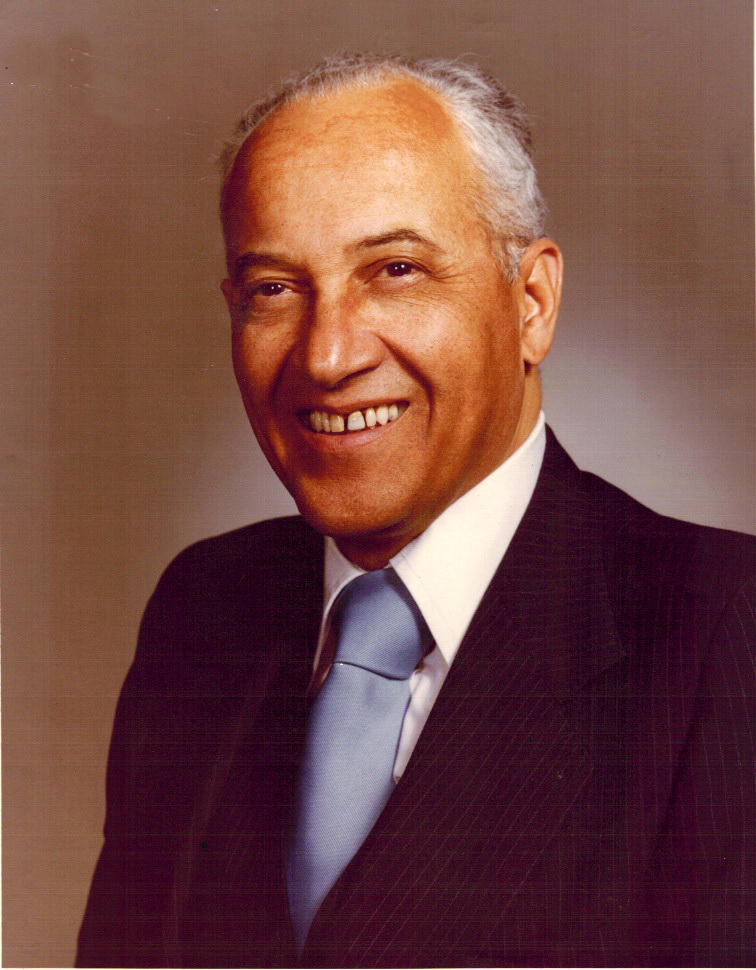
Chief Justice Adolpho A. Birch Jr.
Adolpho A. Birch (1932-2011), the son of an Episcopal priest, grew up in Washington, D.C., and earned both his B.A. and J.D. from Howard University. During his term of service in the U.S. Navy, he studied for and passed the bar exam (1957), a year before his honorable discharge. After moving to Nashville (1958), he opened a private law practice with Robert Lillard, also teaching law courses at Meharry Medical College, Fisk University, and Tennessee A&I (now Tennessee State University). He was part of the volunteer legal team who defended student protestors during the Nashville Sit-ins. He was named assistant public (1963); assistant district attorney (1966 – the first black prosecutor in Davidson County); General Sessions Court judge (1969); Criminal Court judge (1978); and first black presiding judge over the Trial Courts of Davidson County (1981, the same year he became an instructor at the Nashville School of Law). The only person, black or white, to serve in every level of the Tennessee judiciary system, he was appointed to the Court of the Judiciary (1983) and the Tennessee Court of Appeals (1987). In 1990 he became only the second African American to sit on the Tennessee Supreme Court. Four years later his fellow justices selected him as Chief Justice (October 1994-May 1996), making him the first African American to hold that position. After being confirmed for another eight-year term, he again served as Chief Justice (July 1997-August 1998 and September 1999-August 2001). He retired at the end of his second term (September 2006). He received many awards during his years of service, including a Lifetime Achievement Award from the American Civil Liberties Union of Tennessee, who called him a “beacon for equality.” He died of cancer on August 25, 2011. The Davidson County Criminal Courts now meet in the A. A. Birch Criminal Justice Building, dedicated in his honor in 2006.
Robert Churchwell Jr. (photo courtesy of Afro-American Historical & Genealogical Society)
It was not only attorneys who assisted the protestors in the Nashville civil rights movement. Newsman Robert Churchwell Sr. (1917-2009) graduated from Pearl High School (1940) before being drafted (1942) and assigned to a WWII engineering unit. Suffering terribly from misdiagnosed PTSD, he graduated from Fisk in three years by attending both Fisk and Tennessee A&I. His earliest publishing attempts were unsuccessful, but they eventually brought his talents to the attention of the Nashville Banner editor, a racial separatist who disdained African Americans but realized he needed to sell papers in the black community for economic reasons. When Churchwell reluctantly took the job writing “Negro news,” he became one of the first black journalists on any white Southern municipal newspaper. He had to carry his stories into the news office from home – he worked there for five years before he had a desk in the newsroom. He authored articles about Nashville school desegregation, interviewing both black and white educators, and he covered the 1960 sit-ins, but the Banner refused to publish stories about the protests. After Churchwell’s 1981 retirement, his pioneering efforts finally won appropriate recognition, including the establishment of Nashville’s Robert Churchwell Museum Magnet Elementary School (2010).





 Nashville Historical Newsletter