
by Allen Forkum.
During October 1847 Nashvillians were alarmed by newspaper reports of numerous fires in the city, some caused by accident, some by “incendiaries” (i.e., arsonists). But on the evening of October 12, 1847, something much worse happened when a strong thunderstorm passed over the city.

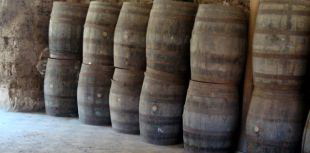
A newspaper editor wrote of hearing a thunderclap, then a “terrific report—a lifting up sensation, as if something had exploded in the interior of the earth, with the effects of an earthquake.” He was in an office on the Public Square about one-half mile from the source of the explosion: a brick building storing gunpowder just west of Capitol Hill. The “powder magazine,” which reportedly contained over 500 kegs of gunpowder, had been struck by lightning. The building was completely blown from the site, sending brick missiles throughout the city.

The shock wave and debris broke almost every pane of glass in the city, some two miles away. More than fifty nearby houses were destroyed or rendered unfit for occupation, particularly on the streets Gay, Spruce (today’s Rosa L. Park Avenue) and High (today’s 6th Avenue North). Three people were killed instantly and at least one other person died later; many more were wounded. One newspaper account described a 100-pound rock going through the roof and into the cellar of the Nashville Inn on the Public Square.
Within a week of the explosion, city officials took measures to relocate another powder magazine away from the city, and the owners stationed a guard by it “day and night” until it could be moved. An attempt was made in the Tennessee House of Representatives to pass a resolution giving the city $1,000 from the State Treasury “for distribution among the sufferers.” The resolution did not make it to the Senate.
Lawsuits for damages were filed against the owners of the powder manufacturing company, Sycamore Powder Mill. One case went all the way to the Tennessee State Supreme Court, which found that “powder houses” placed in populated areas constitute a “nuisance.” During the Civil War, the memory of the 1847 explosion prompted the Nashville Dispatch to call for the removal of powder and ammunition stored downtown, a recommendation with which Federal authorities complied.
Sources:
Nashville Whig, October 7, 1847, “DISTRESSING AFFAIR,” regarding an explosion at a house on Market Street where fireworks were being manufactured.
Nashville Whig, October 9, 1847, “FIRES,” regarding “several fires during the present week.”
Nashville Whig, October 12, 1847, “MORE FIRES.”
Nashville Daily Union, October 13, 1847, “TERRIBLE CATASTROPHE.”
Republican Banner, October 13, 1847, “Explosion of a Powder Magazine by Lightning,” which also includes a reprint of a detailed article from the Orthopolitan titled “DREADFUL ACCIDENT” containing a house-to-house description of damage.
Nashville Whig, October 14, 1847, “FRIGHTFUL CALAMITY, A POWDER MAGAZINE EXPLODED!!!”
Nashville Daily Union, October 14, 1847, “FURTHER PARTICULARS OF THE DISTRESSING CALAMITY,” regarding the 100-pound rock and other stories.
Republican Banner, October 18, 1847, “The Powder Magazine Below the City.”
Republican Banner, November 19, 1847, “Corporation of Nashville.” Attributes three deaths to the “Explosion of a Powder Magazine.”
Journal of the House of Representatives of the State of Tennessee, at the Twenty-Seventh General Assembly, Held at Nashville, 1847-8. Pages 79 and 80, Resolution No. 26.
Republican Banner, May 22, 1851, “Suit for Damages.”
Reports of the Cases Argued and Determined in the Supreme Court of Tennessee, During the Years 1851–2, Volume 1 (1853), pages 213–217, Cheatham et als. vs. Shearon, Trustee, &c.
Nashville Dispatch, June 4, 1863, “Whether justly entertained or not, there is no little uneasiness among the citizens of Nashville in regard to the large quantity of powder and ammunition of various kinds believed to be stored in the city for the military authorities.”
Nashville Dispatch, December 18, 1863, “Removal of Powder.”
 Nashville Historical Newsletter