The Duelists: Jackson and Dickinson

by Kathy B. Lauder.

Charles Henry Dickinson was born around 1780, the year Andrew Jackson, a scrappy 13-year-old, ran off to fight in the American Revolution. The two youngsters could hardly have been more different. Dickinson was born into wealth and privilege on a Maryland plantation; Jackson’s parents were immigrant Irish pioneers. When young Dickinson arrived in Nashville in 1801, he carried a letter of introduction from Chief Justice John Marshall. By late spring 1806 he owned a thriving law practice; had married Jane Erwin, the daughter of a prosperous Nashville family; and was the proud father of a two-month-old son. Jackson, 39, a self-taught lawyer married to the former Rachel Donelson (who had come to Nashville in 1780 with the town’s founding families), had already become a key figure in regional politics: he had been a judge and district attorney in the Mero District; had taken part in the state constitutional convention; had served in the U.S. House and Senate; was Major General of the State Militia; and had spent six years on the Tennessee Supreme Court. He also raised cotton on his plantation, The Hermitage, and bred racehorses. It was apparently a conflict over a horse race that led to Jackson’s fatal duel with Dickinson on May 30, 1806.

Horse racing in the 19th century

The details of the argument vary with the storyteller, but it seems that Jackson took offense at an insult (directed at his wife, his horse, or his integrity) uttered by Joseph Erwin, the father of Dickinson’s wife. Dickinson, who some think may have tipped the balance with a cruel comment aimed at Rachel, took up the challenge in Erwin’s stead. Jackson himself later told a friend, “I had no unkind feeling against Mr. Dickinson . . . My quarrel had been with his father-in-law, Col. Erwin.” Since dueling was illegal in Tennessee, the two men and their companions set out on horseback to Logan County, Kentucky, near the Red River. Afterward Jackson admitted to being “badly frightened” – “I knew Dickinson to be the best shot with the pistol I ever saw.  I therefore went upon the ground expecting to be killed.”

Dickinson would shoot first. To alter his profile, Jackson, who was six feet tall but weighed only 145 pounds, wore a large, bulky coat with a rolled collar, and apparently turned his thin frame sideways. Dickinson aimed and shot. When Jackson did not fall or cry out, Dickinson, startled, believed he had missed. Then, very steadily, Jackson took aim and fired. Later someone would claim that the gun had misfired and that Jackson broke the rules by re-cocking and firing again, but, in fact, the seconds reportedly accepted the second shot. Jackson himself was quoted as saying, “Under the impression that I was, perhaps, mortally wounded, and upon the impulse of the moment, I fired, and my antagonist fell.” The future president had indeed been shot as well. Surgeons were never able to remove the bullet, which was lodged near his heart. It would cause him intense discomfort for the rest of his life. (Several scholars have suggested that Jackson may finally have died, 39 years later, of lead poisoning from that bullet, so Dickinson’s shot may have been responsible for his death, after all!) Young Dickinson lingered for several hours in excruciating pain before his own eventual death. Jackson would always feel deep remorse over the outcome: in his last years he confessed to his old friend General William G. Harding that he regretted nothing in his life so much as this duel. 

Although dueling was illegal in much of the country, it was nonetheless a popular subject for artists.

Dickinson’s companions carried his body back to Nashville, where he was buried on Joseph Erwin’s estate, six miles west of Nashville, on June 1, 1806. For many years the site was marked by a large box tomb, but around 1926, as the land was being developed for housing construction, the tomb’s marble slabs disappeared, as did, gradually, local memory of the exact site of the grave. Meanwhile, Maryland historians insisted that a faithful slave had carried Dickinson’s body back to Caroline County and buried it in a lead coffin there. Decades later, when a metal casket was discovered on family property, the remains were examined by experts at the Smithsonian, who declared they were likely those of a female. 

Tennessee historians, meanwhile, were convinced that Dickinson was still in Nashville. On May 23, 2006, almost exactly 200 years after the duel, State Archaeologist Nick Fielder conducted a high-tech probe of a West End property and determined there was a “50-50 chance” that the grave was there, but no digging occurred at that time. The obliging new property owners, Mr. and Mrs. James Bowen, sought Chancery Court approval for the archaeological investigation and exhumation of any remains discovered on their land, asking permission, in so many words, for their front yard no longer to be a burial ground! On a cold December 15, 2007, neighbors and historians huddled in the sleet, watching as an archaeology team dug in several promising spots, but with no success. In a subsequent dig, in August 2009, archaeologist Dan Allen, guided by historical documents, located the angular outline of a coffin, a number of rusty coffin nails, a screw, and two small bone fragments, probably finger bones. Dickinson had been found!

A crowd gathers at the site of the first Dickinson dig, December 15, 2007.

Researchers knew that Dickinson’s in-laws, Colonel Andrew Hynes and his wife Ann, had been buried at City Cemetery. (Ann Erwin Hynes was Jane Dickinson’s sister.) On Friday, June 25, 2010, in the presence of more than 300 witnesses, Charles Henry Dickinson’s remains were laid to rest in the Hynes plot at the Nashville City Cemetery. The funeral eulogy was delivered by the Reverend Kenneth Locke, Downtown Presbyterian Church. And great-great-great grandsons of both duelists attended the dedication: Dickinson’s descendant Charles Henry Miller, along with Andrew Jackson VI and his daughter Rebekah. (2010)


The Jackson quotations are taken from “Gen. Jackson as a Duelist,” The Daily American (Nashville), February 18, 1877. 


For another look at this story, you may enjoy Betsy Phillips’s delightful article from the August 1, 2022, edition of the Nashville Scene: “On the Hunt for the Jackson-Dickinson Dueling Site.”


My gratitude to Dr. Wayne Moore, Jim Hoobler, Fletch Coke, Mike Slate, Carol Kaplan, and James Castro for their input.


Previously published in Monuments & Milestones, the Nashville City Cemetery Newsletter.

Luke Lea: A Biographical Sketch

by Doris Boyce.

Luke Lea was born in Nashville in 1879. His grandmother was a descendant of Judge John Overton, law partner of Andrew Jackson. His grandfather, John McCormack Lea, was mayor of Nashville in 1849. His father, Overton Lea, was an attorney. At the time of his birth his parents owned 1,000 acres of land between Granny White and Franklin Pikes known as Lealand, part of the original acreage of Travellers Rest.

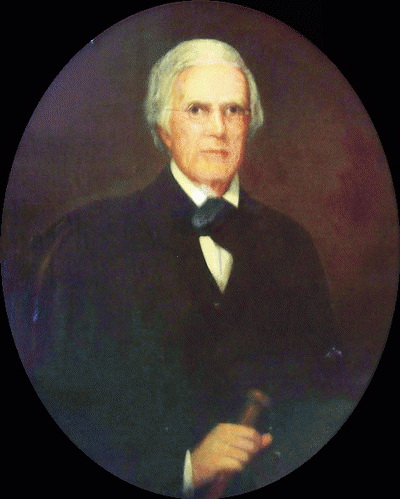
Judge John Overton, 1766-1833 (Tennessee Portrait Project)

Lea enrolled at the University of the South at Sewanee in 1896 and was awarded his master’s degree in 1900. Later that year he travelled briefly in Europe and then entered law school at Columbia University, becoming editor of the Columbia Law Review in 1903. After graduation he opened a law office in the Cole Building in downtown Nashville. In 1906 he married Mary Louise Warner, daughter of Percy Warner, and their sons were born in 1908 and 1909.

Lea organized The Tennessean Company in 1907, and by 1908 the paper was up and running efficiently enough that he was able to return to his law practice. In 1910 he chartered the Belle Meade Company for future real estate development of the 5,000-acre farm of that name, and the company presently donated 144 acres to the golf club which later became the Belle Meade Country Club.

Luke Lea was elected to the U.S. Senate in 1911, at 32 years of age, in office until 1917, at which time he took on the task of recruiting volunteers for the 114th Field Artillery. He served as their colonel until the end of the First World War.

Senator Luke Lea (1911-1917)

When Lea came home from World War I, he shifted his focus toward managing his newspapers, the Nashville Tennessean and the Evening Tennessean. Late in the 1920s he also became publisher of the Memphis Commercial Appeal and the Knoxville Journal, which he jointly owned with Rogers Caldwell.

During that same decade Lea acquired a number of properties, and he built Nashville’s first ramp-style parking garage on Seventh Avenue between Church and Commerce Streets. In 1927 he donated 868 acres for a public park that would be named for his father-in-law, Percy Warner.

In 1929 Tennessee Governor Henry H. Horton appointed Lea to the U.S. Senate to fill an unexpired term, but Lea declined, saying he could “do the greatest good and be of more service to Tennessee as a private citizen.”

Depression-era bank run on the American Union Bank, New York City. April 26, 1932.

The Great Depression brought ruin to Lea’s business affairs because of devalued assets, cash flow problems, and political maneuvering by his enemies. He was convicted of banking law violations in 1931, and his newspapers were silenced. He served two years in the North Carolina State Prison.  

Less than a month after Lea was paroled, backers approached him about running for governor of Tennessee. Still hoping to re-enter the publishing field, he turned them down.

Although Lea eventually regained his health, which had deteriorated while he was imprisoned, he never regained his wealth. When he died in 1945 at age 66, a congressional investigation was underway that might have restored the Nashville Tennessean to him once again. (1997)

Consumption: The Taker of Young Lives

by Carol Kaplan.

In the 19th century consumption, a disease of the lungs we know today as tuberculosis, was a dreaded killer. No cure was available. More than 1,700 of the individuals buried at City Cemetery died of consumption. No respecter of persons, the disease killed a huge number of people, ranging from unnamed slave children to John L. Marling, ambassador to Guatemala (1855-1856). Young women seemed especially vulnerable, sometimes dying quickly but occasionally lingering for years.

Septima, Francis and Mary Rutledge Fogg’s only daughter, became so sick so quickly that her brother Henry*, touring Europe with a group of Nashville friends, did not find out about his sister’s illness until she was already dead. As Randal McGavock noted in his December 1, 1851, account of the group’s travels, “When I returned to the hotel, I found American newspapers . . .. I noticed the death of my old friend Miss Septima Fogg. Her brother left on Saturday with the view of reaching home before the crisis. She was a lady that I estimated very highly and I lament her early dissolution.” Henry Fogg left Naples for home on November 29, a month after Septima’s funeral at Christ Church and her burial at City Cemetery on October 28, 1851.

Araminta Jane “Minta” Wharton’s struggle with the disease was mentioned frequently in the letters of Philip S. Fall, minister of the Nashville Christian Church and former head of the Nashville Female Academy. Minta had been a close friend of two of the Fall daughters, Elizabeth and Caroline. Fall wrote his wife Anne on October 29, 1867, that “our friends her are all well, except dear Minta. She came home yesterday, not expecting to remain long with us in the flesh. She was very ill on Saturday & Dickson [her brother] went up to see her on Sunday, but telegraphed his father that she was better.” However, Minta was not better, and on Tuesday, November 5, Fall wrote, “I went home, and Kate Wharton [Minta’s cousin] told me our dear Minta had just died. I saw her on Sunday morning, and found her as calm and serene as if she were about to compose herself to sleep. She could scarcely speak . . .. We read Psalm 23 and engaged in prayer. I bade her goodbye and she said ‘We shall meet again.’ She then slept and this continued until about 9 o’clock at night when she awoke and called her father and said: ‘Pappy, goodbye, I am gone; God be with you all,” and gently fell asleep in Christ, without a struggle or groan . . .. She was the light of the household and the joy of her father’s heart. He is greatly distressed. She is to be buried tomorrow. At 10 o’clock I have to speak at the church on the occasion. How I can get through with the duty I hardly know. The reflection that Bro Wharton officiated on a like occasion for us almost overcomes me now [their son Albert had been killed at Fort Donelson], and I fear I shall break down wholly. I must cast my care, however, on Him that careth for me, and must endeavor to make such a death following such a life speak to those who may be present.”

Nine days later Philip Fall sent Anne an account of the funeral: “Our beloved Minta was buried yesterday. The body was taken to the Church, where a large & very sympathizing crowd assembled. I tried to speak, and got on tolerably until I had to speak of her, & that was almost impossible. By the request, I suppose, of the family, the plate was removed from over the face, before the service was commenced. I thought, of course, that it was desired that those who wished to see that peaceful face once more were to have the opportunity, and so announced. Remarks were made, of course, in regard to so unusual a procedure by those present. At the grave people seemed to linger, as unwilling to leave one so universally beloved. I have rarely seen an assemblage more deeply moved. It was a death rarely witnesses, so thoroughly was our dear one in her full senses, and yet so calm, so affectionate, so perfectly ready and willing to go to a cherished home.”

Minta Wharton’s grave in Nashville City Cemetery

Thanks to modern medicine, tuberculosis, which once killed so many, has been largely eradicated from our world. As the writer of Ecclesiastes 7:10 reminds us, “Do not ask why were the old days better than these?”  (2013)


Previously published in Monuments & Milestones, the Nashville City Cemetery newsletter.


Author’s note: Philip Fall’s letters are part of the Philip Slater Fall Collection Disciples of Christ Historical Society. I thank the Society Archivist, Sara Harwell, for permission to quote from them.


*Editor’s note: Henry Middleton Rutledge Fogg, the last surviving child of Francis Brimley Fogg and his wife, née Mary Middleton Rutledge, was his father’s law partner at their Cherry Street (4th Ave.) office. During the Civil War Henry served as aide to Confederate Brigadier General Felix K. Zollicoffer, a three-term U.S. congressman from Tennessee. On January 19, 1862, during the Battle of Fishing Creek (also called the Battle of Mill Springs), both Henry Fogg and General Zollicoffer were killed within minutes of each other. Young Fogg’s body was brought back to the family home on Church Street. A Nashville resident who attended the funeral wrote in her diary: “Today attended the funeral of Maj. Fogg . . . I think I never saw such grief & sorrow in any one’s face as in Mr. Fogg’s . . . His mother was wonderfully sustained by the hope she has in his death & her abiding faith in God. She sang at the funeral of her lost child.”  Fogg was buried in Nashville City Cemetery.

Perilous Times in Nashville

Musings by Mike Slate.

Just as in our national history, the question of personal safety has arisen many times in Nashville. For at least fifteen years after our 1780 founding, not a man, woman, or child was safe. Indians devised surprise attacks again and again on the encroaching settlers, and many lives were lost – some, like Jonathan Jennings, through horrific means.

Never has there been a Nashville panic like that of February 1862. After Fort Donelson fell on February 16, it became clear that Union troops would occupy Nashville. Many Nashville secessionists quickly scattered to the winds, while others, determined to remain, hunkered down in fearful anticipation of the arrival of the invading army.

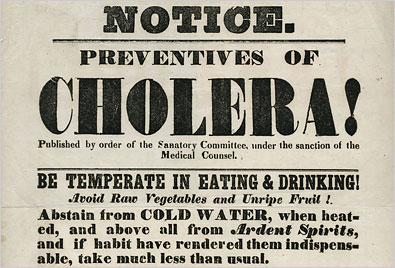
Soon afterwards, as if the Civil War had not brought enough agony, one of several vicious cholera epidemics claimed as many as 800 Nashville lives in the summer of 1866. Seven years later, in 1873, nearly 750 Nashvillians perished in another outbreak of the terrible disease.

By the end of the day on March 22, 1916, about thirty-two square blocks of East Nashville had become a wasteland. A particularly voracious fire, driven by high winds, had devoured nearly 700 buildings and homes. Not many years later, on March 14, 1933, another unwelcome guest—a savage tornado—roared through East Nashville threatening again the very foundations of the community.

Remains of a fire engine from Company #4 near Russell and Fatherland Streets after the 1916 Edgefield fire (TSLA photo)

During the 1960s Nashville was a highly visible stage for the Civil Rights Movement. At times it looked as though our city might self-destruct out of racial tension. Neither whites nor blacks felt safe as the pressures created by mandated integration resulted in legal battles, demonstrations, sit-ins, and riots.

Nashville was left largely to its own devices during the destructive flood of May 2010, when it received more than 13 inches of rain in two days. The fast-rising water displaced 10,000 residents, produced $2.3 billion in property damage, and caused a number of deaths. Receiving little help from outside, neighbors helped neighbors, and volunteers turned out by the hundreds to help with clean-up efforts.

Nashville flood 2010

Late on March 2, 2020, a category-EF3 tornado roared through Nashville and into Mt. Juliet along nearly the same path as the 1933 storm, causing five deaths, over 200 serious injuries, and $1.5 billion in property damage, including a disproportionate number of churches and school buildings. The Covid-19 pandemic had just begun to affect the health of the community as tornado clean-up got underway, and the remainder of the year was consumed by efforts to sustain schools, businesses, and healthcare facilities during a time of unprecedented illness and hardship. And then, just as new vaccines brought hope, the Christmas morning bomb blast on 2nd Avenue downtown shattered our peace once again.

Second Avenue, Nashville, after Christmas bombing 2020

Yet somehow, through these and other perilous times, Nashville has survived, and even thrived. We have always been an industrious lot, constructing landmark public buildings, universities, churches, libraries, businesses, and homes. More important, we have strengthened our collective character and have raised our children to become leaders in business, education, law, politics, medicine, and music. We have produced artists and poets, authors and publishers, factory technicians and practical nurses. We, along with our nation, have become a diversified and enriched society that must continue to mature. We have proudly earned our motto, “Nashville Strong!”

William Driver’s Flag

Primary Source Document from Nashville’s Post Five Legionnaire, July 1956, p. 6.

PRIEST ASKS CONGRESS TO APPROVE FLAG AT DRIVER’S GRAVE

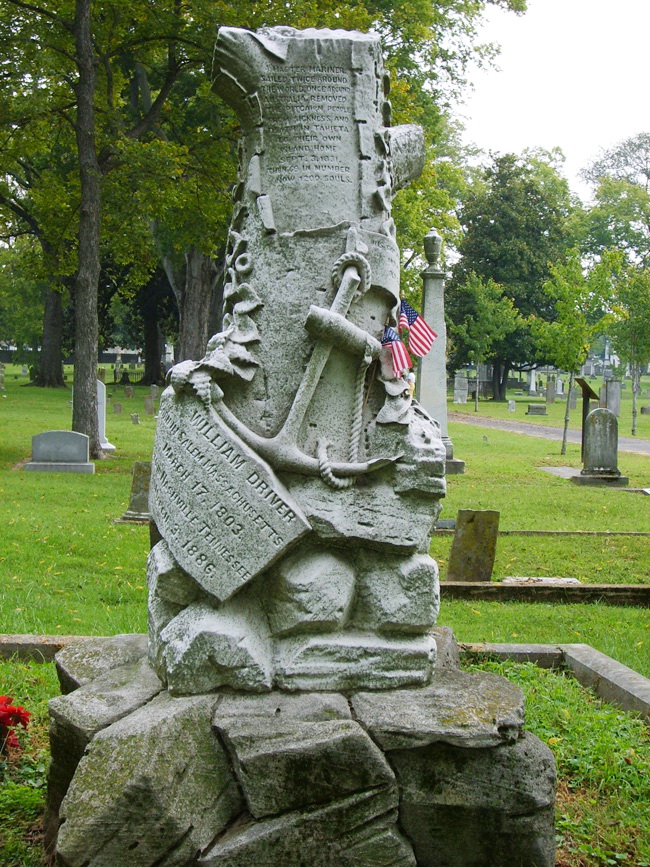
            U.S. Rep. J. Percy Priest has introduced a bill in the House of Representatives to permit an American flag to fly 24 hours daily over the grave of Captain William Driver in City Cemetery at Nashville.

            The bill was introduced at the request of the Post 5 Committee for the erection of a shrine to Captain Driver, who named the American flag “Old Glory.”

William Driver’s monument in Nashville City Cemetery (NHN photo)

            Burr Cullom, Chairman of the Post 5 committee appointed by Commander Lannom, introduced the original resolution last year at a Post meeting and forwarded the Post’s request to Congressman Priest recently.

            Congressman Priest’s H.R. 12092, introduced on July 3, 1956, and referred to the Committee on the Judiciary, follows:

A BILL

            “To permit the flying of the flag of the United States for twenty-four hours of each day over the grave of Captain William Driver in City Cemetery, Nashville, Tennessee.

            “Be it enacted by the Senate and House of Representatives of the United States of America in Congress assembled, That notwithstanding any rule or custom pertaining to the display of the flag of the United States of America as set forth in the joint resolution entitled “Joint resolution to codify and emphasize existing rules and customs pertaining to the display and use of the flag of the United States of America,” approved June 22, 1942, as amended, authority is hereby conferred on the appropriate officer of the State of Tennessee to permit the flying of the flag of the United States for twenty-four hours of each day over the grave of Captain William Driver in City Cemetery, Nashville, Tennessee.”


Previously published in Monuments & Milestones, the Nashville City Cemetery newsletter.

A Place in History: Nashville’s Historic Elliston Place

by Terry Baker.

The Nashville street that connects Church Street with West End Avenue was known as Richland or Harding Pike in 1881 when Ed Buford built a house there and called it “By Ma.” He gave the house that folksy name because it was situated next to Burlington, the estate then owned by Elizabeth Boddie Elliston, Buford’s mother-in-law and widow of W.R. Elliston. As a result of the 1904 changes in street names, Elliston Street became 23rd Avenue North, and Richland was renamed Elliston Place.

Burlington (TSLA photo)

A look at the 1889 Nashville City Atlas gives us some idea of the extent of the Elliston holdings, which included land now occupied by Vanderbilt University. At 23rd and Elliston Place the AT&T building now fronts where “By Ma” once stood. Burlington went up just to the west in two stages, first when former mayor Joseph Thorp Elliston bought the land in 1821 for just under $11,500. When he died in 1856 his youngest son, W.R. Elliston, inherited the property. William F. Strickland, the architect who designed the State Capitol, drew up a plan for the “new” Burlington, at least according to Elliston family lore. Strickland died in 1854, but a floor plan drawing he is said to have made for Burlington has survived.

Joseph Thorp Elliston, 4th Mayor of Nashville (1814-1817); portrait by Washington B. Cooper

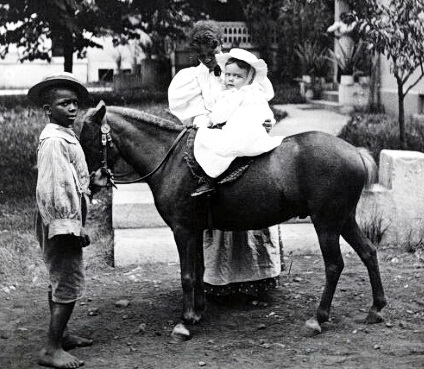
Though not strictly historical, family legends can augment dates and surviving maps. Stories recorded in Burlington: A Memory, published in 1958 by Josephine Elliston Farrell, make the house the scene of several interesting anecdotes of the Civil War. One of W. R. Elliston’s daughters, Louise, is the star of most of the tales, but the most poignant story concerns Willie, Elliston’s youngest son. At the age of five he was taken into custody on the almost laughable suspicion of being involved in espionage. His father was able to secure his release, but not before Willie’s shoes had been cut apart and his clothing searched.

Willie (William Jackson Elliston) on a pony (TSLA photo)

Both Joseph T. Elliston and his son W.R. were slaveholders. W.R. sided with the Confederacy and is even said to have enlisted in 1861, but he was at home in 1862 when Burlington was taken over by the occupying Federals. The family legends tell us of skirmishes on the property and of a wounded Confederate spy hiding out in the house.

The names of W.R. Elliston’s daughters read like a Who’s Who of European royalty. Maria Louisa, usually called Louise, was twenty-three when she married Dr. L.P. Yandell in 1867. Research indicates that he had been a surgeon in the Confederate Army. Josephine married Norman Farrell in 1869. A freshman at Columbia University in New York when the war broke out, Farrell booked passage for Cuba, was put ashore in Florida, and eventually joined Forrest’s cavalry.

Josephine and Louise Elliston (TSLA photo)

Of special interest is the youngest, Lizinka, born in 1851. Her namesake was the widow Lizinka Campbell-Brown, herself named after the Czarina of Russia. In 1875 Lizinka Elliston married Ed Buford, another Confederate veteran.

Lizinka Elliston Buford (courtesy of the author)

W.R. Elliston died in New York City on July 4, 1870. He and his wife Elizabeth had traveled there to seek a specialist’s advice on his abdominal pains. In a bureaucratic irony stemming from the rules governing the census, he was enumerated on the day of his funeral. Buried with him that same day was Medora Thayer Elliston, the eleven-month-old daughter of his son Elijah, who had married Leonora Chapman.

W. R. Elliston (Tennessee Portrait Project)

The widow Elliston left Burlington from 1870 until the 1880s. A house at 52 N High (6th Avenue) was home not only to Elizabeth but also to the Bufords and Farrells, according to the 1880 census. Elliston descendants believe that Elijah took over Burlington for his own use. It was not until 1875 that Elizabeth bought her share of the town house, while G.M. Fogg bought the other half. Norman and Josephine Farrell moved in by 1873, and the Bufords by 1876. The year 1881 would see these families back at the old Elliston lands.

Elizabeth Boddie Elliston “Ma,” 1820 (Tennessee Portrait Project)

A photo database at the Tennessee State Library and Archives contains numerous images of Burlington as well as of the Ellistons, Bufords, and Farrells. In 1901 the widow Elliston posed for a group photo with her three daughters and some of her grandchildren. Seated next to mother Lizinka Elliston Buford is ten-year-old Eddie Buford, who would go on to become Nashville’s WWI flying ace.

Josephine Elliston Farrell, author of Burlington: A Memory (Tennessee Portrait Project)

Burlington was not destined to see the Second World War. The mansion was torn down in 1931, and Father Ryan High School, which has since relocated, went up on the site the next year. A part of the original house was saved and reconstructed on Abbott-Martin Road by Ed Buford’s daughter Elizabeth Shepherd, who died in 1955.

Land will pass from one owner to another, buildings will be torn down and new ones constructed, names will be forgotten, and stories will be embellished over time. Through all that, the Ellistons have maintained a place in history, and the importance of that family is witnessed today by a well-known Nashville street–Elliston Place.


Author’s note: We were never positive that the paper picture used here, taken from a carte-de-visite, was really Lizinka, but based on the two known images of her at the Tennessee State Library and Archives, I’d say the odds are pretty good. This one was taken by C. C. Giers at his Union Avenue studio around 1875, the year Lizinka married Ed Buford. The address on the Giers logo on the reverse side can be shown by city directories to date to 1872-1877.

Dr. Felix Randolph Robertson (1781-1865)

by Jill Farringer Meese.

Felix Randolph Robertson, a man of diverse talents, contributed much to the development of Nashville from its beginnings through the Civil War. Born January 11, 1781, to Nashville founders James and Charlotte Robertson, he was the first Caucasian child born in the new settlement.

Dr. Felix R. Robertson (Tennessee Portrait Project)

Although the son of a pioneer, Robertson earned a medical degree from the University of Pennsylvania in Philadelphia. He studied under Dr. Benjamin Rush (a signer of the Declaration of Independence) and graduated in 1806, specializing in children’s diseases.

Robertson courted Lydia Waters in Maryland but, uneasy about asking Lydia to abandon her comfortable surroundings for a frontier town, returned alone to Nashville to build his home and practice. He erected a two-story building at 129 Cherry Street (near today’s 4th Avenue N. and Church Street) that served him as both office and home, and he became Nashville’s first pediatrician.

Eighteen months later Robertson returned to propose to Lydia, who not only accepted but also arranged to bring her mother and siblings to Nashville. The couple married on October 8, 1808.

Lydia and Felix Robertson had eight children before Lydia’s 1832 death at 44. Felix never remarried, remaining a widower for 33 years.

Dr. Robertson made many contributions to the field of medicine but is probably best known for advocating the use of quinine to treat malarial fevers. Founder and first president of the Nashville Medical Society, he served as president of the Medical Society of Tennessee from 1834-1840. He was a professor of medicine in the University of Nashville Medical Department, served briefly as president of the Bank of Tennessee, and was twice elected mayor of Nashville.

Dr. Felix Robertson, pioneer, physician, Jeffersonian Republican politician, Mayor of Nashville

In 1826 Robertson, as president of the Texas Association, led thirty men to Texas to survey land and start a settlement in what is now Robertson County, Texas. Though he did not stay in Texas, his cousin, Sterling Clack Robertson did. After winning a legal battle with Stephen F. Austin over the land, Sterling surveyed and established Nashville, Texas, on the Brazos River.

Felix Robertson lived alone in his later years after all six surviving children married and settled outside of Nashville. He died in 1865, at the age of 84, from injuries sustained in a buggy accident caused by a runaway horse. The first-born Nashvillian had lived through the War of 1812, the growth and development of “the Athens of the South,” and the devastating Civil War, in which family members fought on both sides.  His positive impact on Nashville is reflected in his tombstone inscription in City Cemetery: “First white child born in Settlement now called Nashville. Distinguished as a physician. Foremost as citizen.”  (2013)

Felix Robertson’s tomb in Nashville City Cemetery

Previously published in Monuments & Milestones, the Nashville City Cemetery newsletter.

Life and Death in the 19th Century

by Kathy B. Lauder.

As you explore the Nashville City Cemetery website, you will come across a link to 19th century City Cemetery burial records that have been made available through the Nashville Public Library. Not only do the records list the name, age, gender, race, and date of death of most individuals buried in the cemetery, but they may also include the cause of death – data that can prove both startling and informative.

Scene in Nashville’s City Cemetery

A careful reader will notice how profoundly medical terminology has changed since the 19th century, largely because of improved diagnostic procedures. Many older terms (some of which were sublimely imprecise!) have simply fallen out of fashion. For example, among the more frequently listed causes of death in the mid-1800s are apoplexy, or softening of the brain (cerebral hemorrhage or stroke); dropsy (edema or congestive heart failure); catarrh (influenza, the croup, or even a common cold); consumption (tuberculosis); marasmus (a general term for diseases of infants and children, including malnutrition, rickets, and tuberculosis); dysentery or flux (intestinal inflammation); scrofula, or the King’s evil (tuberculosis of the lymphatic glands, particularly those in the neck), La Grippe (influenza); mortification (gangrene, which killed a disturbing number of small boys); and erysipelas, or St. Anthony’s fire (a streptococcal infection typified by severe inflammation of the skin or mucous membranes).

A few illnesses appeared so frequently at certain times of the year, they were named for the associated seasons: winter fever was almost always pneumonia. The summer complaint (cholera infantum) was food poisoning caused by improperly stored food, especially milk and meats.

Many once-fatal diseases have been largely eliminated. Today’s children are routinely vaccinated against the most common childhood diseases of their parents and grandparents: measles, mumps, and chicken pox. Other deadly diseases swept through 19th century communities in frightening epidemics. Five thousand Memphis residents died of yellow fever in 1878, but vaccination has proved greatly effective against it in recent times. Cholera, spread by contaminated water and poor hygiene, killed nearly 1,500 people a year in New Orleans alone in the early 1850s, but it can now be successfully treated if diagnosed early. (Hundreds of people in the Nashville City Cemetery died of cholera.) As many as 17,000 American children died of diphtheria each year before a vaccine was developed in the early 1900s; today diphtheria, pertussis (whooping cough), and tetanus (lockjaw) are seldom found anywhere in the industrialized world, thanks to infant vaccination programs. Smallpox, which killed up to 500 million people during the 20th century, is now considered to be completely eradicated. Polio, which peaked in the 1940s and 1950s, paralyzing and killing over half a million people throughout the world each year, has now been virtually eliminated from the Western Hemisphere.

Hundreds of polio victims during the 1950s and 1960s were forced to stay in tank respirators, known as iron lungs, in order to breathe.

Some of the “diseases” named in the burial registers tell their own sad tales: childbed . . . smothered (tragically common among infants, who often slept in beds with other family members . . . found dead in a well (11-year-old) . . . hung himself (12-year-old slave boy) . . . kicked by a horse (young woman, 18) . . . burned by accident (6-year-old girl) . . . and found dead at wash landing (infant). Spelling can sometimes be a challenge when deciphering the lists: dispepsey . . . fever . . . numonia . . . stabed . . . appoleptick . . . and dearhaera are all found in these records.

In 1894 dentist M. Thrasher wrote, “So deadly has teething become, that one-third of the Human Family die before the twenty deciduous teeth have fully appeared.” However, teething, once regularly blamed for infant deaths, was often innocent. Nineteenth-century doctors overlooked the reality that teething babies were exposed to many life-threatening illnesses, including influenza, tetanus, and meningitis, and that lethal rashes, fevers, and diarrhea often had other causes than dentition. Nursing mothers were likely to wean teething babies, switching from breast milk to dairy, which spoiled quickly without adequate refrigeration. Even medical treatments to soothe teething infants could cause illness – consider such practices as blistering, bleeding, or lancing gums (sometimes with the fingernails!), applying leeches, or prescribing medications containing opium, morphine, or mercury. Before 1970 paregoric could be purchased without a prescription, and loving parents who dutifully rubbed it on their babies’ swollen gums would have been horrified to learn that the licorice-flavored tonic was a mixture of opium and alcohol!          

Teething baby

Teething and hives were both high on the list of common causes of death in the mid-19th century, obviously a case of mistaking a symptom for the true illness. Other entries on the burial lists leave us wishing for just a little more information: complicated . . . died in Virginia . . . cramps . . . intemperance . . . and the blithely simplistic died suddenly. And, of course, there are always a few items on the list that simply mystify us: worms . . . insanity . . . gravel in blades . . . found dead on Tower Island . . . and shot by Judson. Anyone who takes a look at the City Cemetery burial records will discover a compelling chronicle of life and death in earlier times.  (2010)


Previously published in Monuments & Milestones, the Nashville City Cemetery newsletter.
Chancery Court, the Adelphi, and Adolphus Heiman

by Linda Center.

The Davidson County Chancery Court dockets located at Metro Archives are a little known and greatly underutilized resource for Nashville history. Established in 1836, Chancery Court for this district was held in Franklin, Williamson County, until 1846. In that year a separate court was created for Davidson County with Terry H. Cahal appointed as Chancellor. In 1997-1998 Archives staff and volunteers took on the task of cleaning, flattening, and indexing dockets dating from 1846 through 1865, and they were able to complete the first five years (through 1851). From those first 800 dockets staffers created a database of over 16,000 entries listing the names of the principals, along with their family members and slaves.

The dockets from these early cases, some of which continued for years, contain a wealth of details about daily life in Nashville and Middle Tennessee. The depositions, exhibits, and supporting papers are lively documents describing personal items of dress, toiletries, medicines, and sometimes even personal appearance. In the depositions themselves, which were phonetically recorded by the clerk, the speech patterns, pronunciations, and idioms of the day come through loud and clear. Many documents contain vivid descriptions of people, places, and buildings long gone. Consider the case of Gilman et al. vs. The Adelphi Theatre Company, filed April 23, 1851.

In 1850 the Adelphi company was incorporated by the state and proceeded to purchase property on North Cherry Street (today’s 4th Avenue). The major stockholders in the company were Anthony Vanleer, J. Walker Percy, and Hugh Kirkman. The company hired Adolphus Heiman to design a “costly and handsome edifice suitable for theatrical performances.” Timothy W. Gilman, of Gilman & Hughes, submitted his bid of $8,000 plus $200 in stock in the company, and he was selected to be chief carpenter and mechanic under Heiman’s supervision. Major Heiman’s design, completed at a cost of $25,000, was indeed handsome and included a two-story arched entrance which led to the brick-paved lobby. A ventilation system and other up-to-the-minute features were highlights of the plan. At the time, the theater was reputed to have the second largest stage in America.

Gilman found Heiman’s supervision arbitrary and his plans “so vague and indefinite as scarcely to form a basis for a contract and so frequently and repeatedly were they departed from when they were specific that they furnish scarcely a shadow of the work after it was completed.” In several instances, Gilman stated, “when the work had been done according to the original design said Heiman would change his plan have it pulled down taken away and something different put in its stead.”

The theater’s opening night, July 1, 1850, was a gala affair. The opening notice ran in the Republican Banner immediately following the Sexton’s report of burials in the city cemetery: five of the seven deaths had been caused by cholera. “The Theatre – Opens to-night . . . and we expect to see a large audience on hand . . . to see the interior of one of the prettiest and best establishments of the kind in the West or South.” Although, as the notice stated, it was not considered “an auspicious time to commence operations,” Nashville’s finest did indeed turn out for the premiere performance.

The epidemic struck with a vengeance that week. The Banner called for the entire city to limit or cancel July 4th celebrations and did not publish on July 5th, but the Adelphi opened every night of its first week.

Johanna Maria “Jenny” Lind (1820-1887), Swedish soprano

In February 1851 after a successful campaign led by the local newspapers, P.T. Barnum was convinced to bring Jenny Lind, the Swedish Nightingale, to sing in the shiny new theater. However, a third tier of box seats was deemed necessary to accommodate the anticipated crowds, and William Strickland was hired to design the added tier. Gilman & Hughes were once again chief carpenters. They agreed and bound themselves “to make the alterations and enlargements of the interior of the Adelphi Theatre according to the plan now furnished by W. Strickland as Architect…to be finished so it can be used comfortably on the night of the 31(st) March present, being the time fixed as the first concert to be given by Jenny Lind.” Gilman & Hughes charged $1,500 for their services: $1,000 from P.T. Barnum, $250 from the Adelphi Theatre Company, and $250 from ticket subscriptions by hotels and other businesses.

The company did not pay its debts in a timely fashion, and in April 1851 Heiman, Gilman, Strickland, and the other contractors sued. The depositions and bills give a vivid picture of the construction and finishing touches to the building. The court clerk’s copy of Heiman’s written “plan and specifications” describes “a ground story of 142 feet by 65 feet front on Cherry Street . . . with a room on each side of the main entrance of 19 by 23 feet, to be furnished with doors and side lights. All the doors of exit and entrance, are to be put upon pivots instead of hinges, so that they may be opened and shut in either way by any pressure from within or without.” All flooring, seats, doors, box fronts, and the roof shingles were “to be made of well-seasoned poplar.” The stage was furnished with four traps and two stairways leading to the rear of the stage from below.

Many of the leading businesses in Nashville filed claims against the theater company. A.G. Payne supplied the stone for the two-foot-thick foundation and completed the masonry work. Samuel Watkins finished the brickwork for $3,437.89. Painters Hutcherson & Flemming used paints purchased from Kirkman & Ellis Hardware – and what remarkable colors they were: sienna, yellow ochre, rose pink, Vandyke brown, Paris green, Prussian blue, Venetian red, chrome yellow, red, and green. From McNairy & Hamilton came books of gold leaf and gallons of lead and turpentine. Claiborne & Macey supplied braces, pulleys, plates, chains, hooks, and brackets. From W. & R. Freeman came gilt frames, yards of damask and gimp [ribbonlike braid or cord used to trim furniture or clothing], silk tassels, a pair of “curtain ornaments,” and 689 feet of gilt molding.

Chancellor A.O.P. Nicholson decreed that the theater should be sold at public auction to pay all debts against the company. Heiman, acting as agent for the creditors, offered the winning bid of $10,000. The property was to be “vested in them as tennants (sic) in common,” the share of each creditor to be in proportion to his claim against the company. After Heiman failed to “execute his notes,” the theater was again put up for sale. This time W.W. Wetmore made the winning bid, and the creditors were paid at last. William Strickland, as a Class III claimant, was paid only after all other debts were satisfied. He received $100 for his services. 

In the 1870’s the ownership changed again, and the Adelphi became the Grand Opera House. The theater was gutted by fire in 1902, but the facade with its arched entry remained standing. The theater was rebuilt and opened once again in 1904 as the Bijou. Because other theaters and businesses on Church Street were drawing the crowds away from Fourth Avenue, the Bijou closed its doors in 1913. However, it was rescued one more time in 1916 when the Bijou Amusement Company opened it as the Bijou Theater for Negroes, one of a chain of theaters throughout the south.

Bijou Theatre

The Bijou was a venue for movies, vaudeville shows, concerts, and boxing matches. Ethel Waters, Bessie Smith, and Ma Rainey entertained to packed houses. Special nights were set aside for white audiences to hear blues greats like Smith and her sister Mamie with her band the Jazz Hounds. The tornado of 1933 lifted the roof and dropped part of it across the street. However, not a performance was missed, and under a temporary roof, the Bijou was open again the next day.

The Adelphi/Grand/Bijou Theater stood at 423 4th Avenue North for over one hundred years through bankruptcy, fire, and storms. In 1957 it fell to the wrecking ball to make way for the new Municipal Auditorium. (1998)

‘Til Death Do Us Part: Love and Devotion at City Cemetery

by Carol Kaplan.

The tales of political and military leaders abound at City Cemetery – these influential citizens are often the focus of our research and knowledge. However, beyond the public and civic life of Nashville, private stories show us another more personal life of love and devotion, loss and memory.

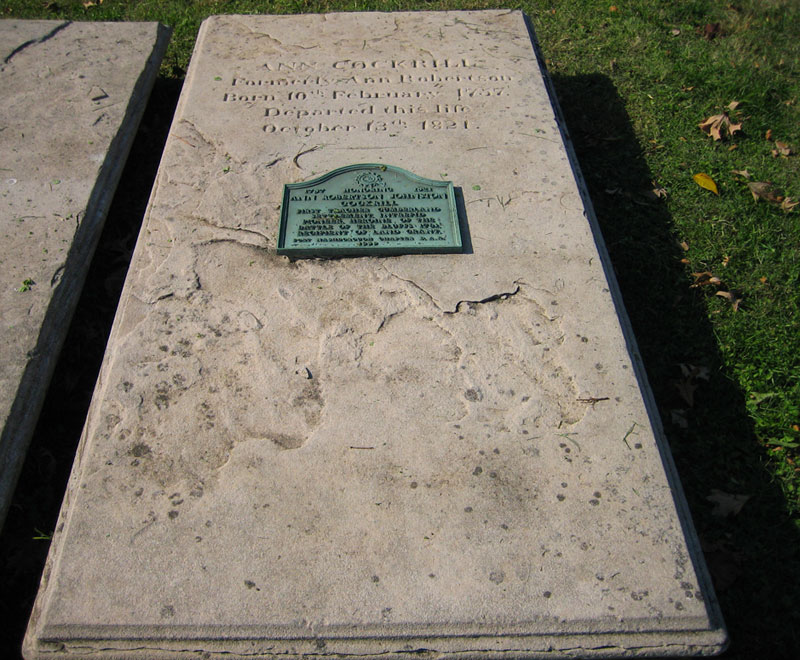
Grave of Ann Robertson Cockrill (Nashville City Cemetery Association)

Two married couples may be found on the Foster family plot in section 29.2. The more famous pair is Ann Robertson Johnston and John Cockrill, who fell in love as they traveled with John Donelson’s party on the flatboat flotilla bringing settlers to Nashville in 1780. Ann, the widowed mother of three little girls, and bachelor John Cockrill were both 23 years old when they were married at Fort Nashborough, where Ann’s brother, James Robertson performed the ceremony. Despite the threat of Indian attacks, everyone celebrated the wedding on that spring day with feasting, dancing, fiddling, and bear meat. Both Ann and John received land preemptions, and they settled where Centennial Park stands today. The parents of eight children, they enjoyed a long life together. Ann died in 1821 at 64 years of age; John lived until 1837. They were originally buried near their home, but due to encroaching development, they were brought together to City Cemetery in the early 20th century.

Maj. John Cockrill (1757-1837) built the first brick house in Nashville (Tennessee Portrait Project)

Ann S. Hubbard Foster and her husband Robert C. rest nearby. They had been married 51 years, 6 months, and 12 days when he died in 1844. His vault was reopened when Ann died in 1850, so that the couple could be buried together as she had wished.

Robert Coleman Foster (1769-1844) (Tennessee Portrait Project)

True love sometimes needs a helping hand, as Margaret Nichol discovered when she fell in love with Robert Armstrong, an aide-de-camp to Andrew Jackson. Her wealthy banker father, Josiah Nichol, forbade their marriage, insisting that the life of a soldier’s wife was not what he and Margaret’s mother wanted for their daughter. Not to be denied, Margaret and Robert eloped in 1814, asking for help from the couple they knew would be on their side: Rachel and Andrew Jackson. At the Hermitage, where the future president and his wife were still living in a log cabin, Old Hickory took command, sending for a pastor to perform the marriage and writing to the bride’s father. Jackson reminded Nichol of their own “lack of fortune” when they first came to Nashville together, and vouched for Armstrong’s character. He encouraged smiles, tranquility, and acceptance of the marriage . . . and then invited everyone to a festive dinner party at the cabin.

Margaret Nichol and her beloved husband Robert Armstrong are buried side by side (Nashville City Cemetery Association)

Two of Nashville’s prominent architects designed monuments at City Cemetery. Adolphus Heiman, just beginning his career in Nashville, carved the marker for Nancy Bailey Maynor in 1836. She and her husband, painter Pleasant Maynor, had been married only eight years. Heiman marked the stone with a butterfly, symbolizing a brief, beautiful life.

Architect Adolphus Heiman created this monument for Nancy Bailey Maynor (Nashville City Cemetery Association)

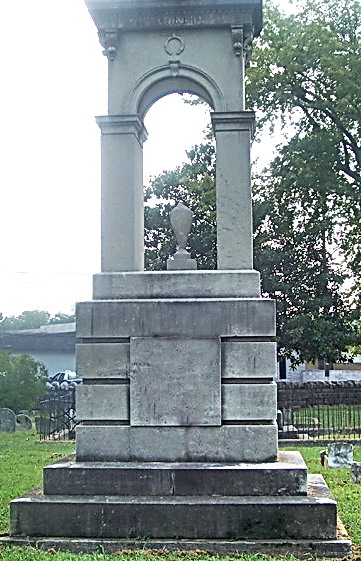
Grieving husband John W. Walker commissioned William Strickland to design a monument for his 28-year-old wife, Sarah Ann Gray. Strickland described the monument as “very elegant . . . constructed of pure white marble from Baltimore . . .. The lachrymal vase is an exact copy of vases found in the ruins of Pompeii.” It was completed in July 1846.

Monument of Sarah Ann Gray Walker, designed by architect William Strickland (Nashville City Cemetery Association)

These stories remind us of the importance of recording the inscriptions and caring for the tombstones of City Cemetery. Without these markers, much of what we know about these people would be lost. The purpose of the monuments, as created by those left behind, was to ensure that their loved ones would always be remembered. Our care of the cemetery keeps that hope alive. (2008)


Previously published in Monuments & Milestones, the Nashville City Cemetery newsletter.

Readers will enjoy exploring the City Cemetery website for tombstone photos, inscriptions, obituaries, and much more:  http://www.thenashvillecitycemetery.org/