Consumption: The Taker of Young Lives

by Carol Kaplan.

In the 19th century consumption, a disease of the lungs we know today as tuberculosis, was a dreaded killer. No cure was available. More than 1,700 of the individuals buried at City Cemetery died of consumption. No respecter of persons, the disease killed a huge number of people, ranging from unnamed slave children to John L. Marling, ambassador to Guatemala (1855-1856). Young women seemed especially vulnerable, sometimes dying quickly but occasionally lingering for years.

Septima, Francis and Mary Rutledge Fogg’s only daughter, became so sick so quickly that her brother Henry*, touring Europe with a group of Nashville friends, did not find out about his sister’s illness until she was already dead. As Randal McGavock noted in his December 1, 1851, account of the group’s travels, “When I returned to the hotel, I found American newspapers . . .. I noticed the death of my old friend Miss Septima Fogg. Her brother left on Saturday with the view of reaching home before the crisis. She was a lady that I estimated very highly and I lament her early dissolution.” Henry Fogg left Naples for home on November 29, a month after Septima’s funeral at Christ Church and her burial at City Cemetery on October 28, 1851.

Araminta Jane “Minta” Wharton’s struggle with the disease was mentioned frequently in the letters of Philip S. Fall, minister of the Nashville Christian Church and former head of the Nashville Female Academy. Minta had been a close friend of two of the Fall daughters, Elizabeth and Caroline. Fall wrote his wife Anne on October 29, 1867, that “our friends her are all well, except dear Minta. She came home yesterday, not expecting to remain long with us in the flesh. She was very ill on Saturday & Dickson [her brother] went up to see her on Sunday, but telegraphed his father that she was better.” However, Minta was not better, and on Tuesday, November 5, Fall wrote, “I went home, and Kate Wharton [Minta’s cousin] told me our dear Minta had just died. I saw her on Sunday morning, and found her as calm and serene as if she were about to compose herself to sleep. She could scarcely speak . . .. We read Psalm 23 and engaged in prayer. I bade her goodbye and she said ‘We shall meet again.’ She then slept and this continued until about 9 o’clock at night when she awoke and called her father and said: ‘Pappy, goodbye, I am gone; God be with you all,” and gently fell asleep in Christ, without a struggle or groan . . .. She was the light of the household and the joy of her father’s heart. He is greatly distressed. She is to be buried tomorrow. At 10 o’clock I have to speak at the church on the occasion. How I can get through with the duty I hardly know. The reflection that Bro Wharton officiated on a like occasion for us almost overcomes me now [their son Albert had been killed at Fort Donelson], and I fear I shall break down wholly. I must cast my care, however, on Him that careth for me, and must endeavor to make such a death following such a life speak to those who may be present.”

Nine days later Philip Fall sent Anne an account of the funeral: “Our beloved Minta was buried yesterday. The body was taken to the Church, where a large & very sympathizing crowd assembled. I tried to speak, and got on tolerably until I had to speak of her, & that was almost impossible. By the request, I suppose, of the family, the plate was removed from over the face, before the service was commenced. I thought, of course, that it was desired that those who wished to see that peaceful face once more were to have the opportunity, and so announced. Remarks were made, of course, in regard to so unusual a procedure by those present. At the grave people seemed to linger, as unwilling to leave one so universally beloved. I have rarely seen an assemblage more deeply moved. It was a death rarely witnesses, so thoroughly was our dear one in her full senses, and yet so calm, so affectionate, so perfectly ready and willing to go to a cherished home.”

Minta Wharton’s grave in Nashville City Cemetery

Thanks to modern medicine, tuberculosis, which once killed so many, has been largely eradicated from our world. As the writer of Ecclesiastes 7:10 reminds us, “Do not ask why were the old days better than these?”  (2013)


Previously published in Monuments & Milestones, the Nashville City Cemetery newsletter.


Author’s note: Philip Fall’s letters are part of the Philip Slater Fall Collection Disciples of Christ Historical Society. I thank the Society Archivist, Sara Harwell, for permission to quote from them.


*Editor’s note: Henry Middleton Rutledge Fogg, the last surviving child of Francis Brimley Fogg and his wife, née Mary Middleton Rutledge, was his father’s law partner at their Cherry Street (4th Ave.) office. During the Civil War Henry served as aide to Confederate Brigadier General Felix K. Zollicoffer, a three-term U.S. congressman from Tennessee. On January 19, 1862, during the Battle of Fishing Creek (also called the Battle of Mill Springs), both Henry Fogg and General Zollicoffer were killed within minutes of each other. Young Fogg’s body was brought back to the family home on Church Street. A Nashville resident who attended the funeral wrote in her diary: “Today attended the funeral of Maj. Fogg . . . I think I never saw such grief & sorrow in any one’s face as in Mr. Fogg’s . . . His mother was wonderfully sustained by the hope she has in his death & her abiding faith in God. She sang at the funeral of her lost child.”  Fogg was buried in Nashville City Cemetery.
William Driver’s Flag

Primary Source Document from Nashville’s Post Five Legionnaire, July 1956, p. 6.

PRIEST ASKS CONGRESS TO APPROVE FLAG AT DRIVER’S GRAVE

            U.S. Rep. J. Percy Priest has introduced a bill in the House of Representatives to permit an American flag to fly 24 hours daily over the grave of Captain William Driver in City Cemetery at Nashville.

            The bill was introduced at the request of the Post 5 Committee for the erection of a shrine to Captain Driver, who named the American flag “Old Glory.”

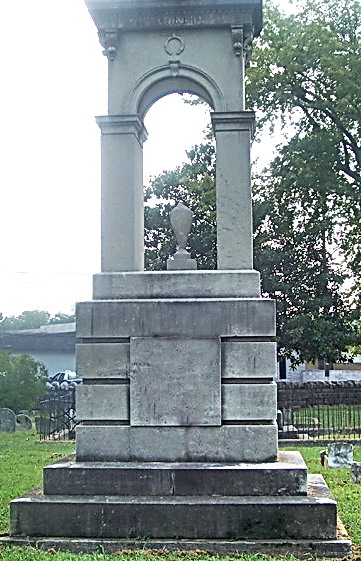
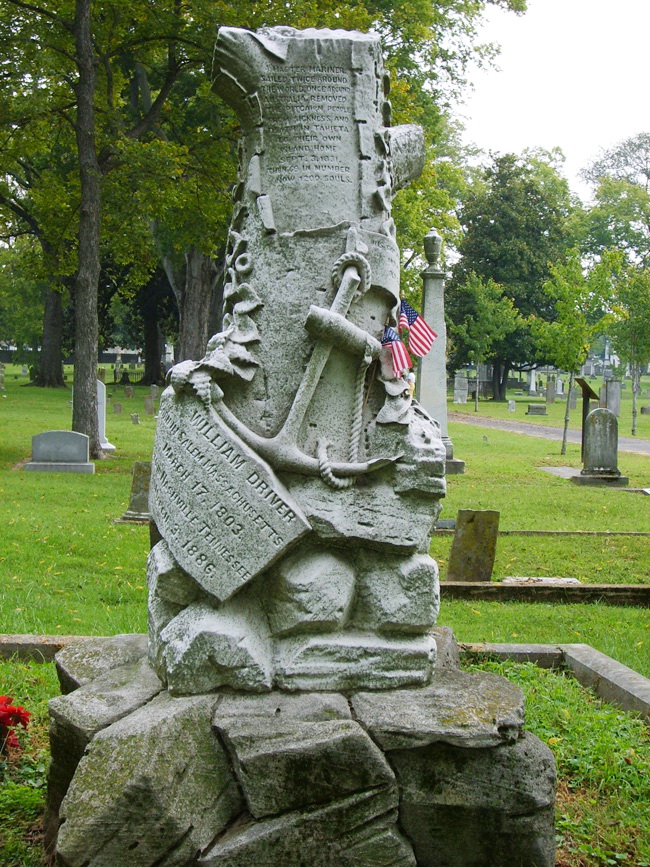
William Driver’s monument in Nashville City Cemetery (NHN photo)

            Burr Cullom, Chairman of the Post 5 committee appointed by Commander Lannom, introduced the original resolution last year at a Post meeting and forwarded the Post’s request to Congressman Priest recently.

            Congressman Priest’s H.R. 12092, introduced on July 3, 1956, and referred to the Committee on the Judiciary, follows:

A BILL

            “To permit the flying of the flag of the United States for twenty-four hours of each day over the grave of Captain William Driver in City Cemetery, Nashville, Tennessee.

            “Be it enacted by the Senate and House of Representatives of the United States of America in Congress assembled, That notwithstanding any rule or custom pertaining to the display of the flag of the United States of America as set forth in the joint resolution entitled “Joint resolution to codify and emphasize existing rules and customs pertaining to the display and use of the flag of the United States of America,” approved June 22, 1942, as amended, authority is hereby conferred on the appropriate officer of the State of Tennessee to permit the flying of the flag of the United States for twenty-four hours of each day over the grave of Captain William Driver in City Cemetery, Nashville, Tennessee.”


Previously published in Monuments & Milestones, the Nashville City Cemetery newsletter.

Dr. Felix Randolph Robertson (1781-1865)

by Jill Farringer Meese.

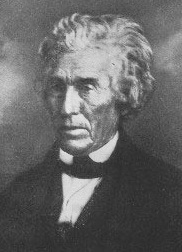
Felix Randolph Robertson, a man of diverse talents, contributed much to the development of Nashville from its beginnings through the Civil War. Born January 11, 1781, to Nashville founders James and Charlotte Robertson, he was the first Caucasian child born in the new settlement.

Dr. Felix R. Robertson (Tennessee Portrait Project)

Although the son of a pioneer, Robertson earned a medical degree from the University of Pennsylvania in Philadelphia. He studied under Dr. Benjamin Rush (a signer of the Declaration of Independence) and graduated in 1806, specializing in children’s diseases.

Robertson courted Lydia Waters in Maryland but, uneasy about asking Lydia to abandon her comfortable surroundings for a frontier town, returned alone to Nashville to build his home and practice. He erected a two-story building at 129 Cherry Street (near today’s 4th Avenue N. and Church Street) that served him as both office and home, and he became Nashville’s first pediatrician.

Eighteen months later Robertson returned to propose to Lydia, who not only accepted but also arranged to bring her mother and siblings to Nashville. The couple married on October 8, 1808.

Lydia and Felix Robertson had eight children before Lydia’s 1832 death at 44. Felix never remarried, remaining a widower for 33 years.

Dr. Robertson made many contributions to the field of medicine but is probably best known for advocating the use of quinine to treat malarial fevers. Founder and first president of the Nashville Medical Society, he served as president of the Medical Society of Tennessee from 1834-1840. He was a professor of medicine in the University of Nashville Medical Department, served briefly as president of the Bank of Tennessee, and was twice elected mayor of Nashville.

Dr. Felix Robertson, pioneer, physician, Jeffersonian Republican politician, Mayor of Nashville

In 1826 Robertson, as president of the Texas Association, led thirty men to Texas to survey land and start a settlement in what is now Robertson County, Texas. Though he did not stay in Texas, his cousin, Sterling Clack Robertson did. After winning a legal battle with Stephen F. Austin over the land, Sterling surveyed and established Nashville, Texas, on the Brazos River.

Felix Robertson lived alone in his later years after all six surviving children married and settled outside of Nashville. He died in 1865, at the age of 84, from injuries sustained in a buggy accident caused by a runaway horse. The first-born Nashvillian had lived through the War of 1812, the growth and development of “the Athens of the South,” and the devastating Civil War, in which family members fought on both sides.  His positive impact on Nashville is reflected in his tombstone inscription in City Cemetery: “First white child born in Settlement now called Nashville. Distinguished as a physician. Foremost as citizen.”  (2013)

Felix Robertson’s tomb in Nashville City Cemetery

Previously published in Monuments & Milestones, the Nashville City Cemetery newsletter.

Life and Death in the 19th Century

by Kathy B. Lauder.

As you explore the Nashville City Cemetery website, you will come across a link to 19th century City Cemetery burial records that have been made available through the Nashville Public Library. Not only do the records list the name, age, gender, race, and date of death of most individuals buried in the cemetery, but they may also include the cause of death – data that can prove both startling and informative.

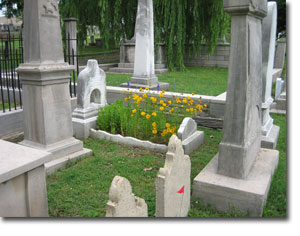
Scene in Nashville’s City Cemetery

A careful reader will notice how profoundly medical terminology has changed since the 19th century, largely because of improved diagnostic procedures. Many older terms (some of which were sublimely imprecise!) have simply fallen out of fashion. For example, among the more frequently listed causes of death in the mid-1800s are apoplexy, or softening of the brain (cerebral hemorrhage or stroke); dropsy (edema or congestive heart failure); catarrh (influenza, the croup, or even a common cold); consumption (tuberculosis); marasmus (a general term for diseases of infants and children, including malnutrition, rickets, and tuberculosis); dysentery or flux (intestinal inflammation); scrofula, or the King’s evil (tuberculosis of the lymphatic glands, particularly those in the neck), La Grippe (influenza); mortification (gangrene, which killed a disturbing number of small boys); and erysipelas, or St. Anthony’s fire (a streptococcal infection typified by severe inflammation of the skin or mucous membranes).

A few illnesses appeared so frequently at certain times of the year, they were named for the associated seasons: winter fever was almost always pneumonia. The summer complaint (cholera infantum) was food poisoning caused by improperly stored food, especially milk and meats.

Many once-fatal diseases have been largely eliminated. Today’s children are routinely vaccinated against the most common childhood diseases of their parents and grandparents: measles, mumps, and chicken pox. Other deadly diseases swept through 19th century communities in frightening epidemics. Five thousand Memphis residents died of yellow fever in 1878, but vaccination has proved greatly effective against it in recent times. Cholera, spread by contaminated water and poor hygiene, killed nearly 1,500 people a year in New Orleans alone in the early 1850s, but it can now be successfully treated if diagnosed early. (Hundreds of people in the Nashville City Cemetery died of cholera.) As many as 17,000 American children died of diphtheria each year before a vaccine was developed in the early 1900s; today diphtheria, pertussis (whooping cough), and tetanus (lockjaw) are seldom found anywhere in the industrialized world, thanks to infant vaccination programs. Smallpox, which killed up to 500 million people during the 20th century, is now considered to be completely eradicated. Polio, which peaked in the 1940s and 1950s, paralyzing and killing over half a million people throughout the world each year, has now been virtually eliminated from the Western Hemisphere.

Hundreds of polio victims during the 1950s and 1960s were forced to stay in tank respirators, known as iron lungs, in order to breathe.

Some of the “diseases” named in the burial registers tell their own sad tales: childbed . . . smothered (tragically common among infants, who often slept in beds with other family members . . . found dead in a well (11-year-old) . . . hung himself (12-year-old slave boy) . . . kicked by a horse (young woman, 18) . . . burned by accident (6-year-old girl) . . . and found dead at wash landing (infant). Spelling can sometimes be a challenge when deciphering the lists: dispepsey . . . fever . . . numonia . . . stabed . . . appoleptick . . . and dearhaera are all found in these records.

In 1894 dentist M. Thrasher wrote, “So deadly has teething become, that one-third of the Human Family die before the twenty deciduous teeth have fully appeared.” However, teething, once regularly blamed for infant deaths, was often innocent. Nineteenth-century doctors overlooked the reality that teething babies were exposed to many life-threatening illnesses, including influenza, tetanus, and meningitis, and that lethal rashes, fevers, and diarrhea often had other causes than dentition. Nursing mothers were likely to wean teething babies, switching from breast milk to dairy, which spoiled quickly without adequate refrigeration. Even medical treatments to soothe teething infants could cause illness – consider such practices as blistering, bleeding, or lancing gums (sometimes with the fingernails!), applying leeches, or prescribing medications containing opium, morphine, or mercury. Before 1970 paregoric could be purchased without a prescription, and loving parents who dutifully rubbed it on their babies’ swollen gums would have been horrified to learn that the licorice-flavored tonic was a mixture of opium and alcohol!          

Teething baby

Teething and hives were both high on the list of common causes of death in the mid-19th century, obviously a case of mistaking a symptom for the true illness. Other entries on the burial lists leave us wishing for just a little more information: complicated . . . died in Virginia . . . cramps . . . intemperance . . . and the blithely simplistic died suddenly. And, of course, there are always a few items on the list that simply mystify us: worms . . . insanity . . . gravel in blades . . . found dead on Tower Island . . . and shot by Judson. Anyone who takes a look at the City Cemetery burial records will discover a compelling chronicle of life and death in earlier times.  (2010)


Previously published in Monuments & Milestones, the Nashville City Cemetery newsletter.

‘Til Death Do Us Part: Love and Devotion at City Cemetery

by Carol Kaplan.

The tales of political and military leaders abound at City Cemetery – these influential citizens are often the focus of our research and knowledge. However, beyond the public and civic life of Nashville, private stories show us another more personal life of love and devotion, loss and memory.

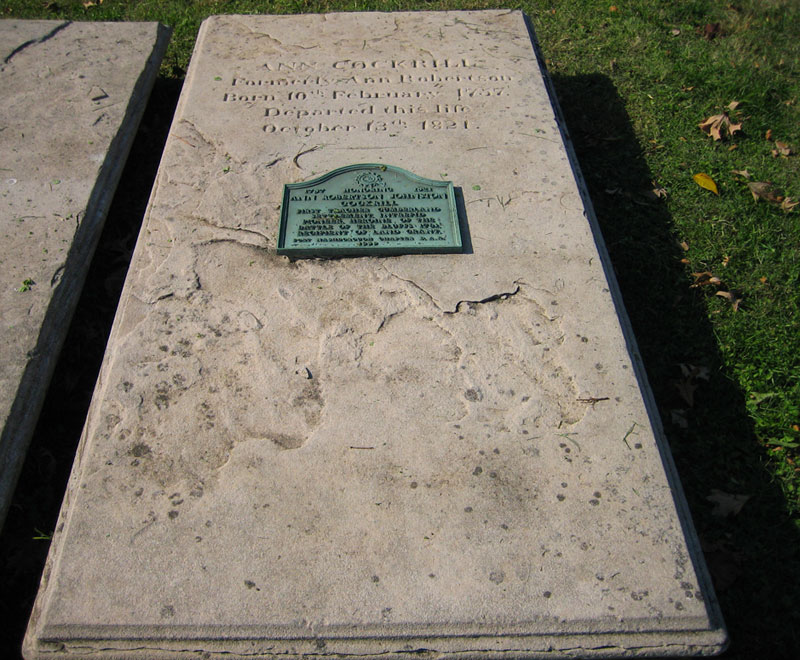
Grave of Ann Robertson Cockrill (Nashville City Cemetery Association)

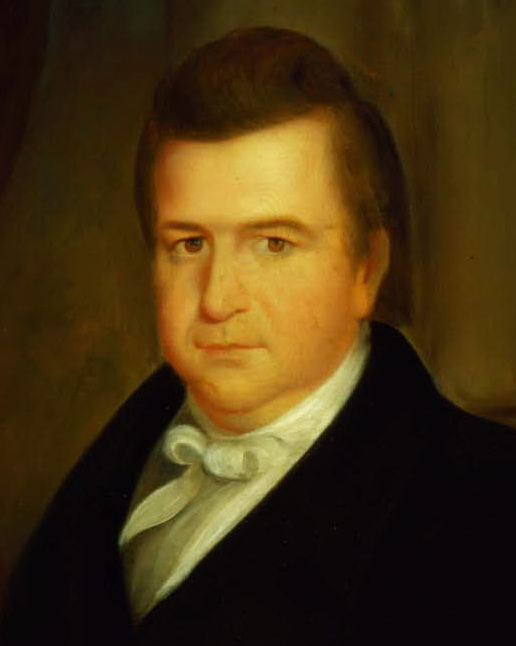
Two married couples may be found on the Foster family plot in section 29.2. The more famous pair is Ann Robertson Johnston and John Cockrill, who fell in love as they traveled with John Donelson’s party on the flatboat flotilla bringing settlers to Nashville in 1780. Ann, the widowed mother of three little girls, and bachelor John Cockrill were both 23 years old when they were married at Fort Nashborough, where Ann’s brother, James Robertson performed the ceremony. Despite the threat of Indian attacks, everyone celebrated the wedding on that spring day with feasting, dancing, fiddling, and bear meat. Both Ann and John received land preemptions, and they settled where Centennial Park stands today. The parents of eight children, they enjoyed a long life together. Ann died in 1821 at 64 years of age; John lived until 1837. They were originally buried near their home, but due to encroaching development, they were brought together to City Cemetery in the early 20th century.

Maj. John Cockrill (1757-1837) built the first brick house in Nashville (Tennessee Portrait Project)

Ann S. Hubbard Foster and her husband Robert C. rest nearby. They had been married 51 years, 6 months, and 12 days when he died in 1844. His vault was reopened when Ann died in 1850, so that the couple could be buried together as she had wished.

Robert Coleman Foster (1769-1844) (Tennessee Portrait Project)

True love sometimes needs a helping hand, as Margaret Nichol discovered when she fell in love with Robert Armstrong, an aide-de-camp to Andrew Jackson. Her wealthy banker father, Josiah Nichol, forbade their marriage, insisting that the life of a soldier’s wife was not what he and Margaret’s mother wanted for their daughter. Not to be denied, Margaret and Robert eloped in 1814, asking for help from the couple they knew would be on their side: Rachel and Andrew Jackson. At the Hermitage, where the future president and his wife were still living in a log cabin, Old Hickory took command, sending for a pastor to perform the marriage and writing to the bride’s father. Jackson reminded Nichol of their own “lack of fortune” when they first came to Nashville together, and vouched for Armstrong’s character. He encouraged smiles, tranquility, and acceptance of the marriage . . . and then invited everyone to a festive dinner party at the cabin.

Margaret Nichol and her beloved husband Robert Armstrong are buried side by side (Nashville City Cemetery Association)

Two of Nashville’s prominent architects designed monuments at City Cemetery. Adolphus Heiman, just beginning his career in Nashville, carved the marker for Nancy Bailey Maynor in 1836. She and her husband, painter Pleasant Maynor, had been married only eight years. Heiman marked the stone with a butterfly, symbolizing a brief, beautiful life.

Architect Adolphus Heiman created this monument for Nancy Bailey Maynor (Nashville City Cemetery Association)

Grieving husband John W. Walker commissioned William Strickland to design a monument for his 28-year-old wife, Sarah Ann Gray. Strickland described the monument as “very elegant . . . constructed of pure white marble from Baltimore . . .. The lachrymal vase is an exact copy of vases found in the ruins of Pompeii.” It was completed in July 1846.

Monument of Sarah Ann Gray Walker, designed by architect William Strickland (Nashville City Cemetery Association)

These stories remind us of the importance of recording the inscriptions and caring for the tombstones of City Cemetery. Without these markers, much of what we know about these people would be lost. The purpose of the monuments, as created by those left behind, was to ensure that their loved ones would always be remembered. Our care of the cemetery keeps that hope alive. (2008)


Previously published in Monuments & Milestones, the Nashville City Cemetery newsletter.


Readers will enjoy exploring the City Cemetery website for tombstone photos, inscriptions, obituaries, and much more:  http://www.thenashvillecitycemetery.org/

Walker, Taylor, and Carr: The Men behind Nashville’s African American Parks and Cemeteries

by Kathy B. Lauder.

Although City Cemetery, Nashville’s first public burial ground (1822) accepted people of all races from the beginning, the rise of the “Jim Crow” South after the Civil War compelled African Americans to look elsewhere for a final resting place. In 1869 black businessman Nelson Walker and the Colored Benevolent Society bought land for Mt. Ararat Cemetery near the Elm Hill-Murfreesboro Pike intersection, directly behind today’s Purity Dairy plant. Walker (1825-1875), a barber at the Maxwell House, became an important figure in African American politics after the Civil War. Elected president of the first State Colored Men’s Convention (August 1865), he was active in the Masonic Order, the Sons of Relief, and the State Colored Emigration Board. Largely self-educated, he became a practicing attorney and later a Davidson County magistrate. An outspoken supporter of the public schools, Walker encouraged his seven children to become well educated – his daughter Virginia was a member of Fisk University’s first graduating class in 1875.

·         The Maxwell House Hotel, built between 1859 and 1869, was partially completed in 1862, when the occupying Federal forces used it as a hospital, a prison, and barracks for Union soldiers. (In 1863 over 100 Confederate soldiers fell five stories when a staircase collapsed, killing up to 45 men and injuring many more.) Maxwell House coffee, introduced by Nashville’s Cheek family, was served in the hotel dining room. The building was destroyed by fire on Christmas night 1961.

When Mt. Ararat burial plots went on sale in May 1869, church leaders urged their parishioners to purchase them. Mt. Ararat received considerable media attention in 1890 when Reverend Nelson Merry’s remains were reinterred there from City Cemetery, and again in 1892, after three heroic African American firemen lost their lives fighting a devastating fire in downtown Nashville. The day of their burial was declared a city-wide day of mourning, and the procession leading from their funeral ceremony at the Capitol to the cemetery was said to be over a mile long. Mt. Ararat (now Greenwood West) became part of the Greenwood Cemetery complex in 1982.

Another key figure in Nashville history was the Reverend Preston Taylor (1849-1931). Born into slavery, he served as a Union Army drummer boy when he was a young teenager. While still in his 20s he founded a Mt. Sterling, Kentucky, church, attracting the largest congregation in the state during his fifteen years there, while also working as a contractor to build several sections of the Big Sandy Railroad. After moving to Nashville, he preached at the Gay Street Christian church and also joined the Masons and the IOOF, holding state offices in both organizations.

Rev. Preston Taylor

As the 19th century ended, Preston Taylor committed himself to improving the social and economic condition of Nashville’s black community. Already well known as a local religious leader and businessman, he opened the city’s first African American mortuary, the Taylor Funeral Company, in 1888, the same year he and three others came together to purchase land for a “first class burial space . . . available at cost” for African American families. After his partners backed out of the project, Taylor alone funded the purchase of a 37-acre site on Elm Hill Pike and Spence Lane, near Buttermilk Ridge (so-called because of the scattering of dairy farms along the big S-curve on Lebanon Road east of Spence). Greenwood Cemetery, still in operation today, opened in 1888. Preston Taylor’s will deeded the cemetery to the Disciples of Christ religious organization, who continue to operate the facility (now merged with Mt. Ararat/ Greenwood West) as a non-profit enterprise. Preston Taylor is buried beneath a striking monument near the entrance to Greenwood. He was also involved in establishing the Lea Avenue Christian Church, the National Colored Christian Missionary Convention, the One Cent Bank (now Citizens Savings & Trust), and Tennessee State A&I Normal School (now Tennessee State University).

Preston Taylor’s monument in Greenwood Cemetery. (photo from NHN collection)

Jim Crow laws barred African Americans not only from cemeteries but also from many entertainment venues. However, in 1905 Preston Taylor responded to these restrictions by opening Greenwood Park north of the cemetery on the large unused portion of his original 37-acre land purchase. The park’s entrance stood just west of the intersection of Lebanon Road and Spence Lane. The first recreational park for Nashville’s black community, its attractions included a merry-go-round, a roller coaster, a shooting gallery, and a skating rink. Visitors could attend events at a baseball park, a bandstand, or a theatre, and if they were hungry, they could eat at a barbecue stand, a lunchroom, or a well-maintained picnic area. The area was spacious enough to include a Boy Scout camp, a racetrack, and a zoo, and it was home to the Colored State Fair, as well as other popular annual celebrations on Labor Day and July 4th. The Barbers’ Union, Masonic Lodges, and USCT veterans scheduled special events in the park. Taylor, who actually lived on the grounds, banned fighting, drinking, or cursing by Greenwood visitors and required them to dress appropriately. When white neighbors complained about Greenwood and its attendant congestion, only Ben Carr’s last-minute appeal to Governor Patterson rescued the park from ruinous legislation. In 1910 a suspicious fire destroyed Greenwood’s large grandstand, but no one was ever charged with the crime. Preston Taylor died in 1931, but the park survived until 1949, superintended by Taylor’s widow.

The Taylor home in Greenwood Park. (photo courtesy of Peggy Dillard)

Benjamin J. Carr (1875-1935) was another remarkable Tennessean, whose concern for his fellow black citizens resulted in the creation of both a second park and a notable educational institution. Born into poverty, Carr grew up working on farms in Trousdale County, Tennessee. He carefully set aside most of his meager earnings (50¢ per day) to purchase his own farm. In time, the frugal young man was able to pay off his mortgage with income from his tobacco crop. Shortly before 1900 Carr came to Nashville, where he was elected porter for the state Supreme Court and became an unexpected friend and ally of Governor Malcolm Patterson (1907-1911), who sent Carr on a lecture tour throughout Middle Tennessee to educate and inspire black farmers. Carr headed the citizens’ organization that brought the Tennessee Agricultural & Industrial State Normal School (Tennessee A&I, known today as Tennessee State University) to Nashville, and he was the school’s first agriculture teacher. He was also the driving force behind the city’s purchase of 34 acres near the college for use as a municipal park. When Mayor Hilary Howse dedicated Nashville’s Hadley Park in 1912, it became the first public park for African Americans in the entire nation.

Ben Carr (TSLA photo from Calvert Collection)

The name given to Hadley Park is still a matter of some dispute. When Major Eugene C. Lewis (chairman of the Nashville, Chattanooga, & St. Louis Railway and director-general of the 1897 Tennessee Centennial Exposition) named the park, many assumed the title was a tribute to John L. Hadley, a white slave owner whose home plantation became the site of Tennessee State University. However, Lewis may have intended instead to honor Dr. W. A. Hadley (1850-1901), a physician-educator with whom he had worked closely during the Centennial Exposition, and for whom the Hadley School was named. A graduate of Meharry Medical College, Dr. Hadley had taught briefly in Davidson County schools before opening his medical practice. In 1880 he was elected secretary of the newly formed State Medical Association, and in 1883 he was chosen as a delegate to the National Convention of Colored Men at Louisville. He founded the Independent Order of the Immaculates and served on the executive committee (with Major E. C. Lewis) of the 1897 Centennial. After practicing medicine for several years, Hadley returned to teaching. At the time of his death, he was principal of Carter Public School in Nashville.


Adapted from the Greenwood Project.

Their Dust Dispersed on Many Fields: The Confederate Circle at Mt. Olivet Cemetery

by Terry Baker.

Eighteen-year-old Private Willis L. McWhirter of Adamsville in McNairy County was mustered into the 27th Tennessee Infantry, CSA, in September 1861. He would not survive the war. A little over three years after his enlistment he was hit by artillery fire at the Battle of Franklin. The missile caused severe damage to his right hip joint, and it is remarkable that McWhirter, by then a corporal, survived as long as he did.

The monument that graces Confederate Circle in Mt. Olivet Cemetery is a granite obelisk topped by a nine-foot statue of a Confederate soldier. Thirteen rows of graves surround the monument: buried in the first six rows are Confederate soldiers from other states; in the seventh row are unknown soldiers; and in the outer rows, the graves of Tennesseans. (photo from NHN collection)

When Hood retreated after the Battle of Nashville, McWhirter remained behind with the rest of those too seriously wounded to be moved. Taken prisoner on December 17, 1864, he was left in the care of Union Army surgeons at the U.S. Army General Hospital #1, on the hill near where Third and Lindsley now meet. McWhirter died of his wounds on January 31, 1865, and was buried the next day at Nashville City Cemetery.

According to his military records, the corporal was assigned two numbers, a hospital patient number and a grave number, the latter also appearing in Nashville mortician W. R. Cornelius‘s burial ledger. The letters “GSW” next to his name there represent the cause of death: “gunshot wound.” Cornelius had contracted with the Union military authorities to bury both the Union dead and their Confederate counterparts. His ledger contains over 15,000 entries, many of them unknown soldiers. 

In 1869 a movement developed to honor fallen Confederates by re-interring them at Mount Olivet Cemetery, in existence then for nearly 15 years. Twenty years later, in 1889, the monument at Confederate Circle was dedicated in a ceremony commemorated by photos in Confederate Veteran Magazine. In the early 1970s, owing largely to the work of the Reverend Florence Redelsheimer of the Mount Olivet staff, markers provided by the United States Veterans Administration (now the Department of Veterans Affairs) were placed around the circle. Flat stones were chosen rather than the more typical vertical stones (which were pointed, allegedly to prevent disrespectful persons from sitting on them). Walking the northern face of the Circle, a visitor can see rows of markers for Alabama soldiers along with Corporal McWhirter’s, one of half a dozen Tennesseans whose markers lie on that side.

Not far from Corporal McWhirter lies the grave of one of only three women buried here. Mary Kate Patterson Davis Hill Kyle was an active member of a Confederate unit known as Coleman’s Scouts.  It was this company to which Sam Davis belonged at the time of his 1863 capture. The story of Davis’s hanging by the Federals is well-known to Middle Tennesseans. Mary Kate, whose first marriage was to Sam’s brother John, died in 1931 at age 97.

In at least one case, a husband and wife were buried together in Confederate Circle: William and Catharine Palmer rest together under upright stones. We see from the inscriptions that William lived to be one hundred years old, and Catharine survived until 1952. Behind an evergreen tree in the outer rows lies J.A. Hankin, a nurse who died in 1863.

It should be noted that Corporal McWhirter is buried under the name William, rather than Willis, as his service records identify him.  Many of the old records are difficult to read, particularly since styles of penmanship have changed; to complicate matters further, some of Mount Olivet’s microfilm records are almost illegible.  Not so the records of Mr. W. R. Cornelius, the mortician, whose hand was quite elegant.

Missing are the pre-1875 records for Mount Olivet, later supplemented by the discovery of some interment books in a building on the cemetery grounds. Also lost was a pre-1952 map, without which it was difficult for the staff to locate the known Confederate graves. Add to that the apparent indifference to standardized name spellings during the Civil War and the high illiteracy rate among rural soldiers, and one can begin to understand why so many names on the markers are oddly spelled.

Close to 1,500 Confederate soldiers are buried in thirteen rows, the overwhelming majority of the soldiers unknown. Those who died in hospitals and prison camps left records of their names, and these can be found on the inner row markers. Unknown soldiers were buried in a trench running completely around the Circle. In the outer rows lie men who died after the war, their names etched in stone for all to read. On the left side of the 45-foot-tall monument is a touching verse, which reads in part, “The muster roll of our dauntless dead is lost and their dust dispersed on many fields.” At least a part of that muster roll has finally been recovered.

This 45-foot monument stands guard over Confederate Circle in Mt. Olivet Cemetery (photo from NHN collection)

The author would like to thank Tim Burgess, researcher into Confederate deaths and burials, who has been instrumental in having markers placed at Confederate Circle in recent years. This essay was composed using material supplied by Mr. Burgess, along with microfilm records at the Tennessee State Library and Archives.


Notes from readers:

1. Mary Kate Patterson Davis Hill Kyle had a brother, Everard Meade Patterson, who was also a Coleman Scout. He, too, is buried in Mt. Olivet Cemetery. Three other Coleman Scouts are also buried there. Everard died in 1932, being the last of the Scouts. My relative Joshua Brown was a Scout, and he, Mary Kate, and Everard are profiled in our new Civil War book, Shadow Soldiers of the Confederacy. (Talley Bailey)

2. I am named for John F. Wheless, First Tennessee Rock City Guard, who is buried in the Circle, He was a friend and business partner of my great-grandfather, Henry Wade, and godfather to my grandfather, Harry Wheless Wade Sr. (Harry Wheless Wade III, Nashville)

Adolphus Heiman’s Cemetery Stone Work

by John S. Lancaster.

At the height of his career in Nashville, 1837 to 1861, Adolphus Heiman designed over 30 structures, ranging from churches and public buildings to residences, forts, and even a bridge. By the mid-1850s his architectural skills and achievements had received so much recognition he was referred to as “Nashville’s Architect.”

Until recently, Heiman’s efforts in designing and creating tombstones and vaults had not been investigated, but three newly identified examples of his work show another side to the talents of this Prussian immigrant.

Located within the Old City Cemetery on Fourth Avenue South are two very different markers. The simpler of the two tombstones was made for Benjamin Sharpe in 1848. It has experienced such severe weathering that the acroteria on the four corners and much of the inscription have eroded away. Chancery Court records of a lawsuit between F. Scott, Adm., vs. Heirs of Benjamin Sharpe provide clear documentation that this stone is a Heiman creation.

Benjamin Sharpe’s tombstone in the City Cemetery. (photo courtesy of the Nashville City Cemetery Association)

As part of the docket evidence now preserved at the Nashville Metropolitan Archives, an entry on an itemized ledger page shows that A. Heiman was paid for a tombstone on September 8, 1848. Also included is a note written in Heiman’s own hand confirming payment from Mrs. Ann Sharpe for the “forty-seven dollars on account of a tomb for Benj. Sharpe deceased.” Heiman seems to have been a friend of the family: his name also appears on the Sharpes’ wedding bond and as an executor of Mrs. Sharpe’s will.

As further documentation is discovered, other tombstones in the Old City Cemetery may also be attributable to Heiman . One such record was recently discovered in the Chancery Court case of J. W. Birdwell & wife vs. William H. Harris: a payment receipt for William Harris’s monument lists the payees as Heiman and Stevenson. (Stevenson was a popular stonecutter in Nashville and signed his name to the Mexican War Memorial in Gallatin, Tennessee.) Although we know Mr. Harris was buried in Old City Cemetery, his stone has yet to be located.

The other Heiman tombstone in City Cemetery marks the grave of Nancy Maynor. The wife of Pleasant Maynor, Nancy passed away on the 28th of May in 1836. Pleasant Maynor remarried on February 21, 1837 to Jane M. Iredale. Of interest is the fact that Heiman is believed not to have arrived in Nashville until 1837. While there is sufficient space to carve another name on the opposite side, only Nancy’s information appears on the monument. This stone also bears the signature “A. Heiman” near the base.

Nancy Maynor’s tombstone in City Cemetery. (photo courtesy of Nashville City Cemetery Association)

Carvers and designers rarely signed tombstones unless the work was unique. The Maynor monument is an above-ground stone box topped with a shaft-like pedestal surmounted by an urn. Two notable details of this piece are the carved butterfly on the pedestal and the anthemion designs on the four corners of the tombstone. In memorial art a butterfly represents the soul and/or resurrection; the anthemion is purely decorative. The use of an above-ground stone vault was common in the Nashville area, but the bodies were buried in the ground beneath rather than inside the vault.

The third and most elaborate example of Heiman’s known stonework was the Franklin Vault in Sumner County, Tennessee. Located on the property of Fairview Farm, the vault was built for the wealthy slave trader Isaac Franklin and his family. Only seven years after marrying the much younger Nashvillian, Adelicia Hayes Acklen, Mr. Franklin died suddenly in Louisiana in 1846 at the age of 57. His wishes were to be returned to Tennessee for burial, and his remains were shipped in a lead-lined casket filled with alcohol. His body was placed in a temporary brick structure until a permanent vault could be constructed. Tragedy struck the Franklin household again only seven weeks after Mr. Franklin’s death when his two oldest daughters, Victoria and Adelicia, succumbed to croup and bronchitis only two days apart.

The loss of her husband and children devastated the young widow, who soon moved back to Nashville. Her father, Oliver Bliss Hayes, was appointed to handle her affairs. It is not clear who hired Heiman to create the Franklin Vault, but he designed it along with an octagonal cast iron fence for $2,500.00. By 1850 the mausoleum still had not been finished. The local builder hired to do the job had subcontracted the work. When the builder died in 1849, the subcontractor, who had not been paid, tried unsuccessfully to sue the trustees of the Franklin estate for monies still owed him.

The Sumner County Chancery Court case of Henley vs. Armfield specifies that the material for the vault was to be solid stone masonry except for the brick interior arches for the ceiling. The dimensions were twenty-eight feet square and fourteen feet high, excluding an obelisk. The walls were to be two feet thick with the outside rubbed and with four interior pillars, two feet square, to assist in the support of the superstructure. Four partition walls would create an eight-foot-wide central passage giving access to six apartments on each side, and two sets of stone shelves that were to be no less than six inches thick. The floor was to be made of “chiseled flagging of stone diamonding with stone of different colors” and the arched brick ceiling was to be “plastered with hydraulic cement.” The outward door was to be made of iron and the inner door of cedar. A window with an iron grate would provide ventilation. The roof was to be made of stone slabs five to six inches thick laid in such a way as to prevent leaks. As cost was not a prohibiting factor, the finest materials available were to be used.

It was specifically noted that Heiman himself was expected to erect the monument on top of the vault and to create the design on the two frontispieces. Some of the details appear never to have been finished, but the design of the frontispiece was completed as an Egyptian motif — an orb flanked by winged serpents. Almost certainly the largest vault Heiman ever designed, it had a style more readily found in the St. Louis Cemetery of New Orleans than on a Sumner County farm in Tennessee. A 1911 picture of the Franklin Vault has been published in Margaret Lindsley Warden’s booklet, The Saga of Fairvue, 1832-1977, p. 10.

In 1912 the vault was struck by a tornado and collapsed. Fortunately, the remains of Franklin and his children had been removed to Mt. Olivet Cemetery in Nashville years earlier. For years the Egyptian-styled lintel remained, lying in the tall grass. Today, with the fence long since removed, the ruins of the vault are threatened by development.

Although not common knowledge, many prominent architects of the early 19th century, including Robert Mills, Gideon Shyrock, and William Strickland, accepted commissions to design tombstones or monuments, in addition to their buildings. Even after the completion of his First Baptist Church project, Heiman continued to rely on stonemasonry as a primary form of income until after his return as a hero from the Mexican War in 1847. Thenceforth, his enhanced status thrust him into the spotlight of Nashville society and he began to be offered commissions for all types of building projects.

Confederate Monument, Mt. Olivet Cemetery (photo from NHN collection)

It is ironic that the favorite architect of ante-bellum Nashville would fade into obscurity. Most of Heiman’s work has now been destroyed, including the majority of his public buildings and private residences. Even his final resting place is uncertain. Adolphus Heiman lies in an unmarked grave beneath the forty-five-foot granite monument in Mt. Olivet Cemetery’s Confederate Circle. (2000)