Nashville Coaches Who Made a Difference

by Kathy B. Lauder.

“A good coach can change a game. A great coach can change a life.” John Wooden

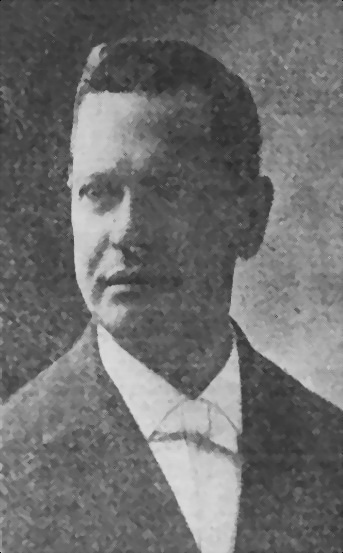
Dr. Walter Strother Davis

WALTER STROTHER DAVIS (August 9, 1905 – October 17, 1979) was born in Canton, Mississippi. After receiving a B.S. from Tennessee A&I (now Tennessee State University), he earned his M.S. (1933) and Ph.D. (1941) from Cornell University. Before completing his doctorate, Davis was employed by TSU in 1933 as head football coach and professor of agriculture. Within ten years he had earned his Ph.D. and was elected the school’s second president, serving in that role for twenty-five years (1943-1968). Under his leadership, university enrollment grew from 1,000-6,000 students. During that same period the school gained university status (1951), constructed 24 new buildings, and established six new schools: Arts & Sciences, Education, Engineering, Agriculture, Home Economics, and a graduate school. In 1958 TSU achieved land-grant status and was also awarded accreditation by the Southern Association of Colleges and Schools. Davis proved his commitment to athletic excellence by hiring superior football coaches like John Merritt and Joe Gilliam Sr., along with other great leaders. Davis retired in 1968 and was named to the TSU Hall of Fame in 1983.

Coach Ed Temple

Another notable achiever Walter S. Davis brought to Tennessee State University was legendary track coach ED TEMPLE, whose talents attracted dozens of stellar athletes to the school. Temple headed the TSU women’s track and field program for 44 years, during which time his Tigerbelles won 23 Olympic medals. Among the 40 Olympic athletes Temple trained were gold medalists Wilma Rudolph (1960 – a former polio patient who became the first American woman to win three gold medals in the same Olympics), Wyomia Tyus (1964 & 1968 – the first person, male or female, to retain the Olympic 100-meter title), and Ralph Boston (1960 – the first man to top 27 feet in the long jump). In addition to their international successes, Ed Temple’s athletes held over 30 national titles. The U.S. Olympic Committee called him “the most prolific women’s track and field coach in the history of the sport.”

Coach John A. Merritt

JOHN AYERS MERRITT (January 26, 1926 – December 15, 1983) was a Kentucky native who moved in with an aunt in order to play football at Louisville’s Central High School. After graduation he enlisted in the U.S. Navy, but when he returned, he won a football scholarship to Kentucky State College. He graduated in 1950 and went on to graduate school at the University of Kentucky, earning his M.A. in 1952. Merritt spent ten years coaching football at Mississippi’s Jackson State University (1952-1962) before Walter S. Davis hired him to be head football coach at Tennessee State University. He moved to Nashville in 1963, bringing along his talented assistants, Joe Gilliam Sr. and Alvin Coleman. Merritt’s career included thirty straight winning seasons, four undefeated seasons, and an NCAA 1-AA playoff victory in 1982. By the time ill health led to his retirement at the end of the 1982-1983 season, he had amassed a cumulative coaching record of 233-67-11. During his long career he coached 23 future NFL players, including six who played on Super Bowl teams. He died less than a year after retiring and in 1994 was inducted posthumously into the College Football Hall of Fame. In 1995 Merritt received the American Football Coaches Association’s Amos Alonzo Stagg Award, presented annually to an “individual, group, or institution whose services have been outstanding in the advancement of the best interests of football.”
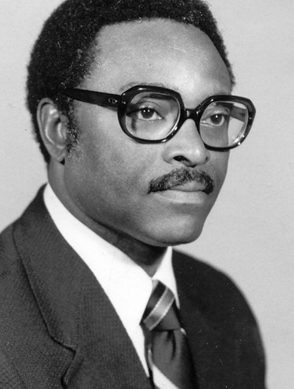
Coach Joseph W. Gilliam Sr.

John Merritt’s able assistant, JOSEPH W. “COACH” GILLIAM SR. (March 26, 1927 – November 14, 2012) had been an All-American quarterback at West Virginia State University. After graduation he coached football and basketball at Oliver High School in Winchester, Kentucky (1952-1954), leading them to a state football championship in 1954 and winning the title of Kentucky High School Football Association Coach of the Year. The following year he joined John A. Merritt’s coaching staff at Jackson State in Mississippi, where the team won a national championship. Gilliam left Mississippi in 1957 to become head coach at Kentucky State, but, having compiled a fairly unimpressive record there, he soon followed Merritt to Tennessee State (1963) as defensive coordinator. During the next 20 years the Merritt-Gilliam combo led the Tigers to four undefeated seasons and seven national titles. Gilliam himself served as head coach at TSU from 1989-1992 and was named Ohio Valley Conference Coach of the Year in 1990. He was inducted into the Tennessee Sports Hall of Fame in 2007. His son, “Jefferson Street Joe” Gilliam (1950-2000) was the starting quarterback at Pearl High School during Nashville’s first season of integrated football. He developed into a football standout at Tennessee State University, was drafted by the Pittsburgh Steelers in 1972, and, after taking the field as starting quarterback in the first six games of the 1974 season, gained recognition as one of the first black quarterbacks ever to start an NFL game.

“Jefferson Street Joe” Gilliam

RONALD R. “Scat” LAWSON SR. (April 26, 1941 – February 6, 2002) was the son of James R. Lawson, Fisk University president from 1967 to 1975, and Lillian Arceneaux Lawson. Young Ronnie attended Father Ryan High School his freshman year (1956-57), but, because its athletic teams were not yet integrated, transferred to Pearl High School in 1957 in order to play basketball under Coach William Gupton. The Pearl Tigers won the Black National High School Championship Lawson’s junior and senior years. Offered basketball scholarships to several universities, Lawson chose UCLA in order to play for Coach John Wooden. The youngster set freshman scoring and rebounding records that stood for six years (until they were broken by freshman Lou Alcindor, better known as Kareem Abdul-Jabbar), and he was named Honorable Mention All-American his sophomore year. In 1962 he transferred to Fisk, earning his B.A in 1963 and his M.A. in 1966. Lawson was hired as head coach of Cameron High School in 1964, while its student body was still entirely African American. He led the school to state championships in 1970 and 1971, with a 61-1 two-season record. After Cameron closed in 1971 and its students were sent to McGavock High School in Donelson, Lawson served as head coach of the Fisk men’s basketball program. He was a 2004 selection of the TSSAA Hall of Fame. 

Ronald R. Lawson Sr.

 JELANI KHALIB OVERTON (December 11, 1980 – November 15, 2008) first appeared in local sports pages (1994) as one of Joelton’s eighth-grade football “players to watch” By 1998 he had earned area-wide recognition as an All-Region Football offensive lineman. Graduating from Whites Creek High School (1999), he enrolled at Tennessee State University, where he played football, earned both bachelor’s and master’s degrees, and even taught a few courses himself. His first job working for Metro Schools was to teach physical education at Napier Elementary School. A short time later he began coaching football, first at Stratford High School and then at Hillwood, where he became a beloved member of the school community. Other Nashvillians got to know the generous and supportive young man through his part-time job at the Northwest YMCA. In March 2008 Jelani’s students and friends were horrified to learn that he had been diagnosed with cancer. The disease took him quickly: only 27 years old, he died eight months after his diagnosis. Hillwood High School, devastated by his loss, named its annual senior athletic retreat in his honor. But even more gratifying were the memorial tributes from his players, whose lives he had clearly touched very deeply: “You were the greatest coach, mentor, and friend I could ever ask for” . . . “I’m doing my best to make you proud” . . . “I thought about what you said and I didn’t drop out I stayd in school” . . . “Im gon keep you alive by doin the right thing.”    

Coach Jelani Khalib Overton

           Adapted from essays in the Greenwood Project.

Walker, Taylor, and Carr: The Men behind Nashville’s African American Parks and Cemeteries

by Kathy B. Lauder.

Although City Cemetery, Nashville’s first public burial ground (1822) accepted people of all races from the beginning, the rise of the “Jim Crow” South after the Civil War compelled African Americans to look elsewhere for a final resting place. In 1869 black businessman Nelson Walker and the Colored Benevolent Society bought land for Mt. Ararat Cemetery near the Elm Hill-Murfreesboro Pike intersection, directly behind today’s Purity Dairy plant. Walker (1825-1875), a barber at the Maxwell House, became an important figure in African American politics after the Civil War. Elected president of the first State Colored Men’s Convention (August 1865), he was active in the Masonic Order, the Sons of Relief, and the State Colored Emigration Board. Largely self-educated, he became a practicing attorney and later a Davidson County magistrate. An outspoken supporter of the public schools, Walker encouraged his seven children to become well educated – his daughter Virginia was a member of Fisk University’s first graduating class in 1875.

·         The Maxwell House Hotel, built between 1859 and 1869, was partially completed in 1862, when the occupying Federal forces used it as a hospital, a prison, and barracks for Union soldiers. (In 1863 over 100 Confederate soldiers fell five stories when a staircase collapsed, killing up to 45 men and injuring many more.) Maxwell House coffee, introduced by Nashville’s Cheek family, was served in the hotel dining room. The building was destroyed by fire on Christmas night 1961.

When Mt. Ararat burial plots went on sale in May 1869, church leaders urged their parishioners to purchase them. Mt. Ararat received considerable media attention in 1890 when Reverend Nelson Merry’s remains were reinterred there from City Cemetery, and again in 1892, after three heroic African American firemen lost their lives fighting a devastating fire in downtown Nashville. The day of their burial was declared a city-wide day of mourning, and the procession leading from their funeral ceremony at the Capitol to the cemetery was said to be over a mile long. Mt. Ararat (now Greenwood West) became part of the Greenwood Cemetery complex in 1982.

Another key figure in Nashville history was the Reverend Preston Taylor (1849-1931). Born into slavery, he served as a Union Army drummer boy when he was a young teenager. While still in his 20s he founded a Mt. Sterling, Kentucky, church, attracting the largest congregation in the state during his fifteen years there, while also working as a contractor to build several sections of the Big Sandy Railroad. After moving to Nashville, he preached at the Gay Street Christian church and also joined the Masons and the IOOF, holding state offices in both organizations.

Rev. Preston Taylor

As the 19th century ended, Preston Taylor committed himself to improving the social and economic condition of Nashville’s black community. Already well known as a local religious leader and businessman, he opened the city’s first African American mortuary, the Taylor Funeral Company, in 1888, the same year he and three others came together to purchase land for a “first class burial space . . . available at cost” for African American families. After his partners backed out of the project, Taylor alone funded the purchase of a 37-acre site on Elm Hill Pike and Spence Lane, near Buttermilk Ridge (so-called because of the scattering of dairy farms along the big S-curve on Lebanon Road east of Spence). Greenwood Cemetery, still in operation today, opened in 1888. Preston Taylor’s will deeded the cemetery to the Disciples of Christ religious organization, who continue to operate the facility (now merged with Mt. Ararat/ Greenwood West) as a non-profit enterprise. Preston Taylor is buried beneath a striking monument near the entrance to Greenwood. He was also involved in establishing the Lea Avenue Christian Church, the National Colored Christian Missionary Convention, the One Cent Bank (now Citizens Savings & Trust), and Tennessee State A&I Normal School (now Tennessee State University).

Preston Taylor’s monument in Greenwood Cemetery. (photo from NHN collection)

Jim Crow laws barred African Americans not only from cemeteries but also from many entertainment venues. However, in 1905 Preston Taylor responded to these restrictions by opening Greenwood Park north of the cemetery on the large unused portion of his original 37-acre land purchase. The park’s entrance stood just west of the intersection of Lebanon Road and Spence Lane. The first recreational park for Nashville’s black community, its attractions included a merry-go-round, a roller coaster, a shooting gallery, and a skating rink. Visitors could attend events at a baseball park, a bandstand, or a theatre, and if they were hungry, they could eat at a barbecue stand, a lunchroom, or a well-maintained picnic area. The area was spacious enough to include a Boy Scout camp, a racetrack, and a zoo, and it was home to the Colored State Fair, as well as other popular annual celebrations on Labor Day and July 4th. The Barbers’ Union, Masonic Lodges, and USCT veterans scheduled special events in the park. Taylor, who actually lived on the grounds, banned fighting, drinking, or cursing by Greenwood visitors and required them to dress appropriately. When white neighbors complained about Greenwood and its attendant congestion, only Ben Carr’s last-minute appeal to Governor Patterson rescued the park from ruinous legislation. In 1910 a suspicious fire destroyed Greenwood’s large grandstand, but no one was ever charged with the crime. Preston Taylor died in 1931, but the park survived until 1949, superintended by Taylor’s widow.

The Taylor home in Greenwood Park. (photo courtesy of Peggy Dillard)

Benjamin J. Carr (1875-1935) was another remarkable Tennessean, whose concern for his fellow black citizens resulted in the creation of both a second park and a notable educational institution. Born into poverty, Carr grew up working on farms in Trousdale County, Tennessee. He carefully set aside most of his meager earnings (50¢ per day) to purchase his own farm. In time, the frugal young man was able to pay off his mortgage with income from his tobacco crop. Shortly before 1900 Carr came to Nashville, where he was elected porter for the state Supreme Court and became an unexpected friend and ally of Governor Malcolm Patterson (1907-1911), who sent Carr on a lecture tour throughout Middle Tennessee to educate and inspire black farmers. Carr headed the citizens’ organization that brought the Tennessee Agricultural & Industrial State Normal School (Tennessee A&I, known today as Tennessee State University) to Nashville, and he was the school’s first agriculture teacher. He was also the driving force behind the city’s purchase of 34 acres near the college for use as a municipal park. When Mayor Hilary Howse dedicated Nashville’s Hadley Park in 1912, it became the first public park for African Americans in the entire nation.

Ben Carr (TSLA photo from Calvert Collection)

The name given to Hadley Park is still a matter of some dispute. When Major Eugene C. Lewis (chairman of the Nashville, Chattanooga, & St. Louis Railway and director-general of the 1897 Tennessee Centennial Exposition) named the park, many assumed the title was a tribute to John L. Hadley, a white slave owner whose home plantation became the site of Tennessee State University. However, Lewis may have intended instead to honor Dr. W. A. Hadley (1850-1901), a physician-educator with whom he had worked closely during the Centennial Exposition, and for whom the Hadley School was named. A graduate of Meharry Medical College, Dr. Hadley had taught briefly in Davidson County schools before opening his medical practice. In 1880 he was elected secretary of the newly formed State Medical Association, and in 1883 he was chosen as a delegate to the National Convention of Colored Men at Louisville. He founded the Independent Order of the Immaculates and served on the executive committee (with Major E. C. Lewis) of the 1897 Centennial. After practicing medicine for several years, Hadley returned to teaching. At the time of his death, he was principal of Carter Public School in Nashville.


Adapted from the Greenwood Project.