An Incident in Post-Civil War Nashville: Champ Ferguson and the Hefferman Killers

by Lewis L. Laska.

This is the story of the most famous execution in Nashville history and how it led to the deaths of four young men – the Hefferman killers – within months. It is evidence of how violence begets violence, a story that is much older than Nashville. It begins with the death of Champ Ferguson.

This legendary execution occurred on October 20, 1865, as a result of the Civil War. Champ Ferguson was a Confederate guerilla. Captain Ferguson, as he was sometimes called, had assembled a band of killers that preyed on Union soldiers and partisans in the upper Cumberland area. By the time the war ended, Ferguson boasted of killing over a hundred men.

Union authorities refused to recognize his purported military status and arrested him for murder on May 26,1865.1 Most of the killings occurred in southern Kentucky, but the prosecution was not based on a formal investigation. Instead, when news circulated that Ferguson was to be charged, his victims’ families besieged federal authorities with stories of atrocities, and scores of them eagerly traveled to Nashville for his trial.

Because he was charged with murder, Champ Ferguson was brought before a military commission, which was neither a civil court nor a court-martial. This system had been used throughout the Civil War to bring criminals to justice. It was the same sort of commission that had sent Sam Davis to the gallows for spying in 1863. On the very day Ferguson was arrested, the four Lincoln Conspirators were executed at the nation’s capital after being tried and convicted by a military commission.

Ferguson came before a six-member commission in July 1865, and his trial lasted until September.2 Twenty-three specific charges were brought against Ferguson, who was accused of murdering fifty-three men. According to witnesses, he simply shot people dead, sometimes in their own homes in front of their wives and children.

Among the victims was Reuben Wood (white, age unknown), who had known Ferguson as a child. Ferguson and two other men rode to Wood’s house near Albany, Kentucky, on December 2, 1861, and inquired whether Wood had been to a Union mustering ground at Camp Dick Robinson. Hearing that he had, Ferguson cursed him, called him a “damned Lincolnite,” and shot him in the chest with a pistol in front of Wood’s adult daughter.3

Ferguson insisted that Wood was a member of a Union partisan gang who had been issued shoot-to-kill orders for Ferguson. “If I had not shot Reuben Wood, I would not likely have been here, for he would have shot me. I never expressed a regret for committing the act, and never will. He was in open war against me.”4 Contemporary Southern writers refused to condemn Ferguson’s actions, insisting they were no different from those of equally bloodthirsty Union guerillas like the infamous Tinker Dave Beaty, who operated in the same area.5

Ferguson was also charged with murdering Alex Huff in Fentress County in 1862, and with killing David Delk by chopping and cutting him to pieces at the Fentress County home of Mrs. Alex Huff in 1863. Other charges included slaying nineteen soldiers of the 5th Tennessee Cavalry (names unknown), on February 22, 1862.6 Elijah Kogier was shot at his home in Clinton County, Kentucky, in 1862 as his little daughter clung to him, pleading for his life. In 1861 Ferguson killed William Fogg, who was sick in bed and did the same to Peter Zachery at Rufus Dowdy’s house in Russell County, Kentucky, in January 1863.

Ferguson’s most notorious murder occurred in Emory, Virginia, on November 7, 1864.7 Marching into a Confederate hospital, he strode to the bed of a Union officer known only as Lt. Smith. Brandishing a pistol, Ferguson announced he was going to kill Smith and promptly shot a bullet into the man’s brain. It was this particular killing that led to Ferguson’s arrest. He was held for court-martial by the Confederate army, but he was released because the Confederate forces were too disorganized by that point in the war to follow through. At his trial Ferguson was mute regarding Lt. Smith, but his defense to the other murders was simply that he killed people who were trying to kill him, if they had the chance.

Regarding Lt. Smith, Ferguson spoke freely after his trial ended. “I acknowledge that I killed Lt. Smith in Emory and Henry Hospital. I had a motive in committing the act. He captured a number of my men at different times, and always killed the last one of them. I was instigated to kill him, but I will not say by whom, as I do not wish to criminate my friends. [Smith] is the only man I killed at or near Saltville [a battle that sent Smith to the hospital], and I am not sorry for killing him.”8 Because of Ferguson’s notoriety, a number of his guards contrived to have their picture taken with him, and several of those images survive. The trial received daily verbatim newspaper coverage.
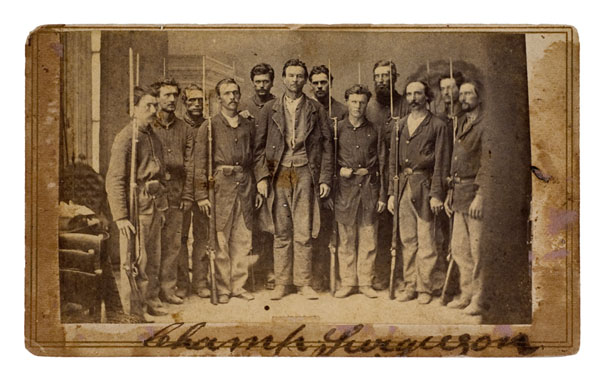
Champ Ferguson and guards.

Ferguson’s chief defense was that his actions fell within the terms of the surrender which barred punishment for actions committed during the war. His lawyers had convinced former Confederate General “Fighting Joe” Wheeler to attend. Wheeler’s testimony was generally favorable to the defense but failed to establish clear evidence that Ferguson had held a commission or had received and obeyed orders in killing any of the persons named in the indictment.9

The military commission convicted Ferguson in September, and he was hanged October 20, 1865, at the Nashville prison on Church Street, in front of three hundred people who had received passes to witness his death. The prison itself was protected by soldiers from the 15th United States Colored Infantry, a circumstance that greatly irritated the townsfolk.

As the long sentence was being read to Ferguson on the gallows, he alternately nodded and shook his head at various charges. When the Colonel said, “to all which the accused pleads not guilty,” Ferguson said, “But I don’t now!” After the cap was placed, he called out in a loud voice, “Oh, Lord, have mercy on me!”10

Champ Ferguson’s execution started a folklore tradition that endured for decades, namely that he was not actually hanged, but that his body was spirited away in a coffin and given to his wife and teenage daughter who had been present but unnoticed at his execution.

The folklore arose out of the fact that supposedly no one actually saw Ferguson’s body hanging after it dropped. The area below the gallows was obscured by wooden planking; hence, he might conceivably have been placed in his coffin alive. Indeed, the widely seen drawing of his execution – found in Harper’s Weekly, November 11, 1865, at page 716, shows it was impossible to see the gallows bottom, although the image shows Ferguson hanging.

One folklore tradition holds that Ferguson’s pillaging during the war made him wealthy, so his wife had the means to bribe the hangmen into placing the body of a recently deceased (supposedly hanged) black man in the coffin.11 Another version says that rocks were placed in his coffin, which was nailed shut when his wife carried it away.

The folklore is further enhanced because his wife and daughter left Tennessee for the West and were never heard from again – and by the fact that Ferguson’s name was misspelled on his gravestone. The story of Ferguson’s “escape” was retold every time a man was hanged in late 19th-century Tennessee. For this reason, hanged men’s bodies were often placed in an open coffin near the jail or place of execution for all to see.

The execution of Champ Ferguson probably led to the execution of George Crabb, James Lysaught, Thomas Perry, and James Knight. All were white. All except Knight, age 20, were teenagers. And despite their ages, all had criminal records.

Crabb was prosecuted and executed under the name “George Craft.”12 He had used the alias “Reid” or “Red.” Perry was sometimes known as “Ferry.” Knight had used the alias “McClusky” and was arrested under that name, but he also used the alias “William Dran” or “Dean.” He was prosecuted and executed as William Dean. Lysaught’s name has been reported as “Lycought.” These young men were known as the Hefferman killers.

Their crime was committed on the night of November 22, 1865, when Nashville was still under federal control. The killers were civilians employed as hands in the Army corrals. Knight had served in Confederate service in an Arkansas regiment. Perry had served in the 11th Tennessee and claimed to have been among those captured at Ft. Donelson. Crabb had been a teamster in the 11th Army Corps under Gen. Joseph Hooker. The killers lived in the back of a low saloon (referred to as a “doggery”) on Jefferson Street, then occupied by federal soldiers of both races.

William Hefferman (sometimes spelled “Heffran,” “Heffernan,” “Hufferman”), white, age 60, was a wealthy and respected street and railway contractor. Hefferman, his wife, adult daughter, and her husband Mr. Tracy, were returning to their home from a musical program at St. Cecilia Convent.

As the Hefferman carriage came near the doggery, four to six young men came out and suddenly turned toward them. Perry stopped the horse. Mr. Tracy asked, “What do you want!” as Hefferman said, “Surely you don’t mean to hurt anyone here!” Perry, closest to Hefferman, said, “Yes, goddamned quick, if you don’t give up your money!” Hefferman replied, “I am a private citizen, near my own home, just from an evening party and have no money.”13 Crabb seized Hefferman, pulled him to the ground, and beat him with a Billy club. Mrs. Hefferman got out to help her injured husband.

At that moment, Mr. Tracy shot a pistol at Crabb, and the bullet struck a glancing blow at the nipple and exited the chest. Crabb returned fire. His bullet grazed Mrs. Hefferman’s face and entered her husband’s nose, passing into his skull. The buggy bolted, still carrying the Tracys. By the time Mr. Tracy was able to control it, the killers had escaped. Taken to his home, Hefferman was able to describe both the incident and the killers, although he was bleeding badly and brain matter was coming out his nose. Hefferman died on November 26.

News of the incident stunned the city, and the next day two prostitutes led the town marshal to the injured Crabb, who quickly confessed and implicated the others. Perry had escaped to Murfreesboro, where he was arrested after breaking into a shed.14

Taken to jail, Crabb and his accomplices were visited by East Tennessee Unionists, Gen. Brownlow and Col. Horace Maynard. They identified Crabb as the person who had robbed them a few days earlier on the Franklin turnpike.

A three-member military tribunal heard evidence against all but Perry in November; Perry’s trial began on December 3, 1865. Co-defendant Joseph A. Jones (alias “Tom Carter”) denied involvement. Perry insisted he had not actually stopped the horse, only stood in front of it. He said Crabb was the shooter. Witnesses included persons the killers had confided in, such as Perry’s supervisor at the corral, who said that Perry had told him the details of the crime, which he relayed to the tribunal.15

All but Jones were found guilty of a multiple-count indictment and sentenced to death by hanging.16 They appealed to Gen. Thomas, who rejected their appeal on January 16, 1866. He sent the case to General Grant. Grant, too, refused them, as did President Andrew Johnson.

Throughout the trial and the appeal, the defendants maintained a confident and defiant manner, convinced they would be granted clemency. They broke only briefly, but generally maintained bravado, including joking, up to the moment they were pinioned and taken to the scaffold.17 Then they began to tremble and sob.

The killers were seated on coffins and taken to the gallows on two wagons, each pulled by four white horses. The execution was carried out on January 26, 1866, at the state prison on Nashville’s Church Street and was witnessed by a solemn and orderly crowd of ten thousand. Knight exhorted the on-lookers, “I wish to say to all, don’t swear, don’t visit low houses, don’t gamble, don’t do anything wrong. If you take warning by me, you will never meet my fate, but I am going to a better world.”18

Lysaught, the youngest, who had earlier joked that he weighed so little he might not actually die by the hanging, said, “I am no scholar; I have no education, but I wish, gentlemen, to say, that I hope I am going to a better world. I forgive everybody, and I hope no man in this crowd has anything against me; if he has, I hope he will forgive me.” After thanking the military jailers for treating him kindly, and stating that if he had stayed in the city jail he would have starved to death, Lysaught concluded, “That is all, gentlemen, I am going to a better world and I hope to meet you all there.”19 Each bid the other farewell as the caps were being drawn over their heads.

Lysaught’s neck was broken; the other three were strangled, notably Perry. The knot had slipped around the back of his neck. The killers were buried in unmarked graves at the National Cemetery in Nashville.

Later in 1866 the United States Supreme Court ruled that criminal trials by military commissions were unconstitutional where the state courts were open, as they were in Nashville at this time.20 But the result was not likely to have been different.

At the time of the Hefferman murder, in November 1865, the military was still trying to keep the peace in Middle Tennessee. The media carried frequent accounts of gangs robbing civilians.21 Most of the gangs were garbed in at least partial blue uniforms. The execution of the Hefferman killers was a signal that the Army would punish federal lawbreakers as well as former Confederate killers like Champ Ferguson. Coming on the heels of the Ferguson execution, it showed fairness to all, regardless of prior allegiance. This was the first quadruple execution in Tennessee. It would not be the last.


Notes:

1 Thurman Sensing. Champ Ferguson, Confederate Guerilla. (Nashville: Vanderbilt University Press, 1942), p. 1. (Standard biography of Ferguson.) See, J.D. Hale. Sketches of Scenes in the Career of Champ Ferguson, His Lieutenant, With Champ’s Confession, J. M. Hughes and the K.K.K. (The author: Hale’s Mills, Tennessee, no date [circa 1867]. 54 pp.

2 One of Ferguson’s lawyers was Josephus C. Guild, later a judge and dean of the Nashville bar. He vigorously defended Ferguson, but wrote nothing about the case in his memoirs except this: “October 20, 1865, Champ Ferguson was hung at the penitentiary on account of war operations. On the 20th of November William Heffran was dragged from his carriage and murdered by some ruffians belonging to the Federal army, who were subsequently apprehended, tried by a court-martial, convicted, and hung. The execution took place January 26, 1866.” Josephus C. Guild. Old Times in Tennessee. (Nashville: Tavel, Eastman & Howell, 1878) p. 496.

3 Id., note 1, at p. 83-84.

4 Id., note 1, at p. 87.

5 Bromfield L. Ridley. Battles and Sketches of the Army of Tennessee. (Nashville: 1906). (Ridley served on Gen. A. P. Stewart’s staff.)

6 Id., note 1, at p. 29.

7 Id., note 1, at p. 177.

8 Id., note 1, at p. 188.

9 Id., note 1, at p. 208-216. At 5′ 2″ tall, Wheeler was known as “Little Joe” Wheeler during the war, but became “Fighting Joe” thereafter. He was placed in command of the cavalry of the Army of Tennessee in 1862. Sothrons saw his testimony at Ferguson’s trial as a courageous gesture. By the time of the Spanish-American War, Wheeler “went over” to the Federal Army and was named a general, a largely symbolic gesture, but an important one.

10 See “From the Nashville Daily Press and Times, October 21, 1865,” in August Mencken. By the Neck: A Book of Hangings. (New York: Hastings House, 1942) at p. 120-126.

11 “Champ Ferguson,” Daily American, September 28, 1879, p. 2. In publishing the tale, this newspaper says that Ferguson was seen hanging by Henry Watterson, who wrote about it when he was a reporter for the Republican Banner. He was currently editor of the Louisville Courier-Journal.

12 “Fate of the Hefferman Murderers,” Nashville Union and American, Jan. 18, 1866, p. 1.

13 “Murder, Melancholy Progress of Highway Robbery in the State Capitol,” Republican Banner, November 24, 1865, p. 2.

14 “Another Murderer Arrested,” Republican Banner, Dec. 2, 1865, p. 1.

15 “Trial of Thomas Perry,” Republican Banner, Dec. 3, 1865, p. 2.

16 “The Heffernan Murderers,” Nashville Union, Jan. 18, 1866, p. 3. “Interview with the Hefferman Murderers,” Union and American, Jan. 20, 1866, p. 3.

17 “Talk With the Murderers of Heffernan,” Nashville Union, Jan. 25, 1866, p. 2.

18 See Pittsburgh Post (Pittsburgh, Pa.), February 1, 1866.

19 “Execution of the Hufferman Murderers,” Nashville American, January 27, 1866, p. 2.

20 Ex parte Milligan, 71 U.S. 2 (1866).

21 “Highway Robberies on the Murfreesboro Pike,” Republican Banner, December 10, 1865, p. 2. “Another Horrible Murder,” Republican Banner, December 11, 1865, p. 3.
“To Live in Hearts We Leave Behind Is Not to Die”

by Carol Kaplan.

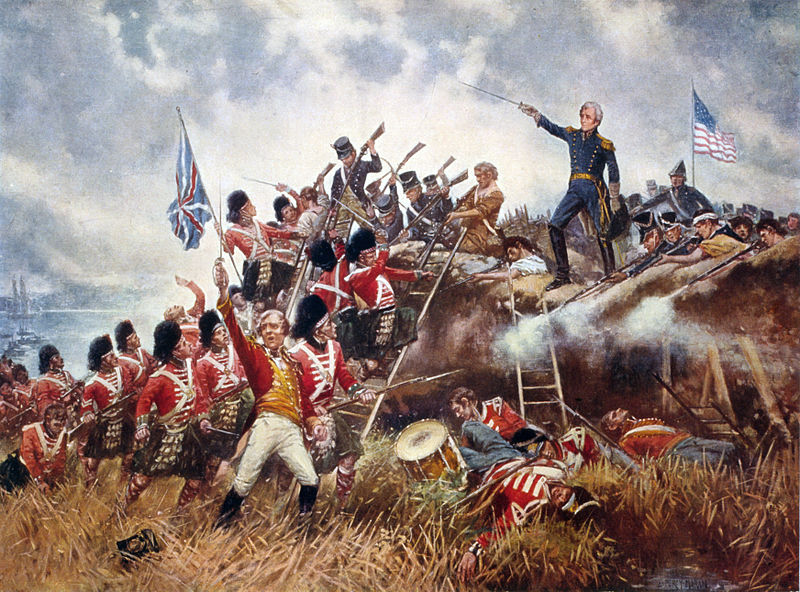
Jeffrey Lockelier was a black man, born free in North Carolina in 1788.  A young fellow with a taste for adventure, he came to Nashville in 1807.  Because the idea of soldiering appealed to him, he joined the militia, serving under Andrew Jackson during the War of 1812.  He distinguished himself in the Indian Wars at Enitachopco and Emuckfau Creeks and in the deadly Battle of Horseshoe Bend, which finally crushed the Creek Nation, forcing them to turn over 23 million acres to the U.S. Government.   Lockelier served with distinction in every conflict: his obituary stated that “none could boast of a heart more devoted to his country’s cause,” for “his military services terminated only when his country ceased to have enemies.” After the 1815 Battle of New Orleans, Jeffrey Lockelier, now known as “Major Jeffrey,” returned to Middle Tennessee, where he met and married a woman named Sabina, a slave of the Sumner family in Williamson County.  He soon purchased his wife from Thomas Sumner and petitioned the court to grant her freedom in July of 1817.  The census taker spelled their entry as “Major Locklun.”

Painting of the Battle of New Orleans by Edward Percy Moran (Library of Congress at http://hdl.loc.gov/loc.pnp/cph.3f03796)

Struggling with a heart ailment in his early 40s, Major Jeffrey “endured a long confinement,” during which he was visited by his old commanders, President Andrew Jackson and General John Coffee.  He “enjoyed, to a high degree their good opinion and friendship.”  Lockelier’s death occurred September 22, 1830, at the age of 42.  His obituary appeared in newspapers across the country, including the New York Evening Post, which marveled: “Though a very humble member of society, still it may be truly said, but few enjoyed the esteem and good will of the community to a greater extent than he did. His universal benevolence was a distinguished trait in his character; and it seemed to be the business and the pleasure of his life to serve others without even the expectation of reward.”

The admiring obituary that appeared in the National Banner & Nashville Whig 27 September 1830, ends like this: “One should not be forgotten who bestowed his best days to the service of his country; who lived a life of active benevolence, and died praising the goodness and mercy of his God.”  (2009)

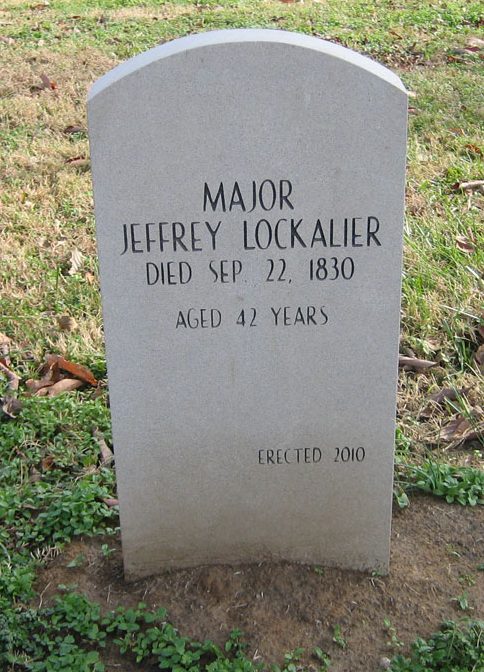
Jeffrey Lockelier’s grave at Nashville City Cemetery

Jeffrey Lockelier (whose name was spelled a variety of ways in different sources) was not forgotten by the city planners who named Nashville’s Locklayer St., near the Bicentennial Mall, in his honor.  Unfortunately, the original stone that marked his grave in Nashville’s historic City Cemetery disappeared long ago, but it was replaced in 2010 as part of the cemetery’s tombstone restoration project, which had previously replaced missing stones on the graves of Sally Thomas and Angeline Brady. 


The title of this essay comes from the poem “Hallowed Ground” by Thomas Campbell (1777-1844).


Previously published in Monuments and Milestones, the Nashville City Cemetery Newsletter.

An Eerie Street, an Ancient Creek, an Old Log House

Musings by Mike Slate.

Hurt Drive, located off Elm Hill Pike in the Donelson suburb of Nashville, is for me the eeriest street in Davidson County. In the 1960s this half-mile-long road was part of my boyhood newspaper route, and some of my friends lived here in neat, moderately sized brick houses. Today nothing remains of that civilization except a ribbon of asphalt road.

Built during the 1950s Donelson boom, the subdivision that includes Hurt Drive thrived for about thirty years before the Metropolitan Nashville Airport Authority acquired it during its noise mitigation program of the 1980s and ’90s. (Indeed, today’s planes fly very low over this area.) The MNAA razed every house along Hurt Drive, carefully removed all rubble, constructed impressive masonry gates at both the north and south ends of the street, and generally returned the land to nature. Currently the agency keeps much of the grass cut while allowing a few lots to grow more freely.

The aforementioned gates, which inhibit vehicular but not pedestrian traffic, enhance the mysterious aura of the empty street. Arriving at the south gate, a visitor is roadblocked without any explanatory signage. May I walk along this road and enjoy it as a greenway path? Should I keep away from here altogether? Nothing answers such questions. However, around at the north gate a lonesome sign warns, “MOTORIZED VEHICLES PROHIBITED,” implicitly granting permission to walk the road. Yet visitors unacquainted with the area’s history are still faced with the overarching conundrum: why is this road here, since there’s nothing on it?

And what about the name itself, Hurt Drive (sometimes “Hurt Road”)? Where did that come from? Since “Hurt” is an esteemed local surname with area roots at least back to the War of 1812, my guess is that the road was named after the Hurt clan (or a member thereof). Hurt family members are buried in the nearby James Buchanan Cemetery; Benjamin Hurt was an area postmaster in the 1850s; Joe Hurt, also a postmaster, owned a grocery store at Lebanon Road and Donelson Pike around 1900; and Dr. Joseph Hurt was a well-known Donelson physician of recent years.

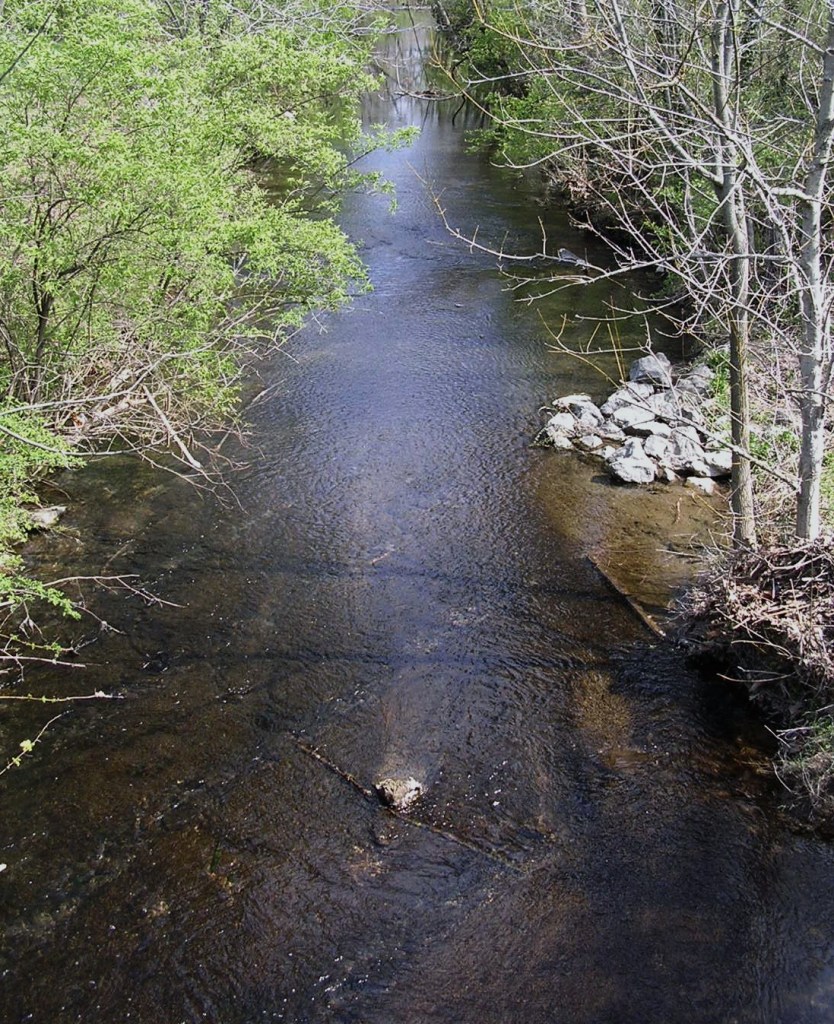
McCrory’s Creek flows immediately to the east of Hurt Drive. In fact, the ancient creek forms the back boundaries of some of the street’s lots, adding convincingly to Hurt Drive as a de facto greenway. Not surprisingly, “McCrory” is another eminent pioneer name. The specific individual for whom the creek was named is lost to history, but in 1792 Thomas McCrory helped repel the famous Indian attack at Buchanan’s Station, which was situated on Mill Creek, about three miles west of Hurt Drive down the present Elm Hill Pike. Although the McCrory family played a major role in the early development of the Davidson County area now known as Forest Hills, there are very few McCrorys remaining in the county today.

McCrory’s Creek (photo from NHN collection)

It’s nearly impossible for me to think of McCrory’s Creek without remembering the venerable Miss Jane Thomas. Her father settled along the creek in 1809 when Miss Thomas was nine years old. Later she helped establish a Methodist church nearby, raising money for a log building. When she was in her 90s, she wrote reminiscences in a series of newspaper articles, which were collected into a delightful, gossipy volume titled Old Days in Nashville. The important little sourcebook was first published in 1897, and reprints are still available today.

Virtually every Nashville historian is acquainted with Miss Thomas and her book, yet no one knows the precise location on McCrory’s Creek of either the Thomas home place or the Methodist church she helped found. If an enterprising researcher cannot pinpoint at least one of these and place an appropriate historical marker there, then perhaps a marker to the memory of the grand old lady could be erected on Hurt Drive, offering walkers something to read and contemplate.

At Elm Hill Pike, Hurt Drive is sandwiched between McCrory’s Creek to the east and the Buchanan Log House to the west, giving visitors a triple treat in a single geographical spot. The landmark house, owned by the non-profit Association for the Preservation of Tennessee Antiquities (APTA), has in its front lawn a new Metro historical marker that describes the home and its circa 1807 origins. Branches of the local Buchanan family, however, stretch back even further than that, all the way to the very beginnings of Nashville. Two Buchanans signed the 1780 Cumberland Compact, and another died in the 1781 “Battle of the Bluffs” at Fort Nashborough. In addition, Maj. John Buchanan fought along with Thomas McCrory at the “Battle of Buchanan’s Station,” mentioned above. 

Buchanan Log House (photo from NHN collection)

The log house marker also records the circa 1820 addition to the structure. It’s satisfying to imagine that, in addition to Buchanans, the enlargement project may have been watched or joined by members of the Thomas (perhaps by Miss Jane Thomas herself!), Hurt, and even McCrory families.

For lack of space the marker does not relate the important second ownership of the Buchanan House. After Buchanans had lived here for over fifty years, the place was purchased by Thomas Neal Frazier, an area judge. His son, who grew up here on the banks of McCrory’s Creek, was James B. Frazier. You might recognize that name, for he became governor of Tennessee in 1903 and a U.S. senator after that.

Hurt Drive, flanked by the Buchanan House and McCrory’s Creek, well illustrates the richness of Nashville history. Chapters of our heritage abound on every river, on every creek, and on almost every street or farm in the county . . . and all across Tennessee. Citizens who seek historical edification will likely find it right under their feet.


Source Note: A variety of written sources were consulted in the preparation of this article, but none were more helpful than two fonts of living knowledge: Debie Cox of the Metro Nashville Archives and Lu Whitworth of the Buchanan Log House.


This article was first published in the July 2009 issue of The Nashville Retrospect. We thank publisher Allen Forkum for his permission to republish it here.

The Southern Post Card Magazine

by Dave Price.

Recently, while looking for Nashville post cards on eBay, I discovered the listing of four 1907 issues of a small journal called The Southern Post Card Magazine, published in Nashville. I was the sole bidder.

Post card image of Cumberland River wharf (from NHN collection)

My first issue is dated February 1907 and is also styled “Vol. 2, No. 3.” We find that the magazine was published monthly by the Jolly Jokers’ Club, described as a “purely social club” chartered by the State of Tennessee and open to “any reliable white person who agrees to return all favors shown.” This last statement means that members (except the Secretary, who was “far too busy”) were expected to send a card back to any member sending him or her a card.

Membership dues, including a subscription to the magazine, were $1.00 per year. Five complaints of a member’s not returning favors could result in suspension. In sending “joke cards,” nothing but a high grade of wit would be tolerated.

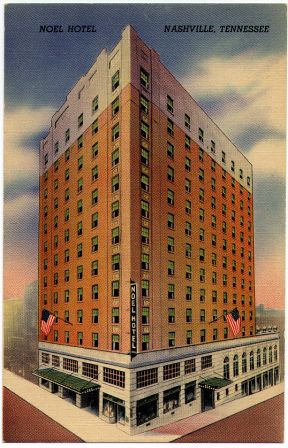
Post card image of Noel Hotel (from NHN collection)

Another fascinating rule was that, once a member’s collection was complete, his or her name would be printed in the “Post Card Collection Complete” column, and the member was no longer obligated to participate in the exchange of favors. Note: I have been collecting one thing and another since 1947 and have never heard a collector describe any kind of collection as “complete.” This comment notwithstanding, I find two local members listed as having complete collections: JJ #1057, Nurse Viola M. Hughes of 311 First Avenue South, and JJ #1650, Sadie Dozier of West Nashville.

The Secretary at the time of this issue was JJ #5, Miss Lena Haralson of 1009 Lischey Avenue, Nashville. This address was also listed as the office of the Jolly Jokers’ Club. We have discovered that Lena was then residing with Lucinda (widow of John) Haralson, who was probably Lena’s mother. The Translator, JJ #8, was Thruston Johnson of Oregon, Illinois.

Post card image of Union Station (from NHN collection)

We suspect the magazine was printed by Star Supply Company (also called Star Exchange), 17 Bruce Building, 164 Fourth Avenue North, Nashville, as the February issue features this firm in a handsome half-page ad for Nashville Post Cards . . . and Lena Haralson worked there as a stenographer. This edition lists the names and numbers of new “JJ” members from #2129 through #2441, an impressive increase.

My second issue, despite the “published monthly” notation, is for March-April 1907 and “Vol. 2, No. 4.” This issue features a lengthy “Jolly Jokers’ Code” and reprimands various members for such violations as failing to return favors or sending duplicate cards. One gripe simply says, “I am sorry to say that your cards are not suitable . . . if you cannot procure better ones, I wish to discontinue exchanging.”

This issue lists the same Secretary and Translator (Miss Haralson and Mr. Johnson). Also listed are new members #2442 through #2769 – another nice increase! One Nashville joiner was JJ #2448 Frank Purtee, who gave the L&N railroad shops as his address. We also see here an ad for cards featuring Evelyn Nesbit, whose name may be familiar to older readers.

Post card image of Tennessee School for the Blind (from NHN collection)

We skip down to the fall for our next issue, “Vol. 3, No. 4,” published in October 1907. This issue calls the JJs the “largest social and exchange club in the world.” By now Lena Haralson preferred the name “Mrs. Helena Haralson Johnson” and gave her address as 1208 Stainback Avenue. Coincidentally, our Translator, Thruston Johnson, had moved to Nashville and was also dwelling at 1208 Stainback. (Be still, my heart!) For club business, however, the couple had rented Post Office Box 144.

New members this month included numbers #3829 through #4037. One’s mind is boggled by these figures when we read ads from members wanting to exchange with “all members.” This month’s Star Supply ad specifies “Tuck’s Cards.”

JJ #860 Elijah L. Kepler, manager of the Duncan Dorris Photo Shop at 25 Arcade, Nashville (boards 2417 West End), had started a “Query Box” in the magazine and thereafter would respond to questions submitted. By October another Nashville firm had also started running ads: Nashville Photo Engraving of 306½ Third Avenue north.

Post card image of gates to Peabody College, previously the University of Nashville, at 2nd Ave. and Lindsley (from NHN collection)

My final issue is dated November 1907 and “Vol. 3, No. 5.” A new membership directory was planned and all members could have their photographs included by sending in $1.50. The feature story has to do with the upcoming election of officers. Friend Kepler had announced for the presidency, and Helena and Thruston were seeking re-election, along with many other candidates. Kepler took out an ad featuring his portrait, along with the redundant advice that he was “eager to please each jolly JJ.” One candidate for Vice President, JJ #933 Edith Fadeley of Cape May, New Jersey, announced that if elected she would smile at every JJ who came her way and twice at the jolly old bachelors and widowers.

A candidate for Secretary, JJ #2491 Lillian M. Hahn of Attica, New York, ran an intriguing ad. Lillian explained that Lena didn’t really want the job back and had encouraged her to “go in and win.” Alas, we have not seen any later issues, so we don’t know whether Nashville retained its strength in the election of officers for 1908.   (2006)

A Lovely Sunday for the Cemetery

by Carter G. Baker.

On a beautiful early spring Sunday afternoon, about twenty descendants and relatives of Private Robert Bradfute (1794-1861), a veteran of the War of 1812, gathered in City Cemetery for a dedication of his recently installed military marker. The ceremonies were arranged by Ruth (Bradfute) Heizer of Knoxville, a great-granddaughter of Private Bradfute’s brother, and were conducted by the United States Daughters of 1812.

British Burning Washington during War of 1812 (illustration from Paul M. Rapin de Thoyras, The History of England, from the Earliest Periods, Vol. 1, 1816)

Robert Bradfute was a Virginian, and sometime after 1821, following his war service with the Virginia Militia, he and his wife, née Lucy Ann Vasser, came to Nashville, where he worked as a brick mason. One of the many buildings he worked on was the old insane asylum, which was torn down in 1999 for the new Dell campus on Murfreesboro Road.

In addition to the Veterans Administration headstone for Robert, Mrs. Heizer and her husband Jim purchased monuments for six other relatives buried in the Bradfute lot. The family placed another marker for Lucy Ann, who died in 1826 while still a young mother of three or four children. Lucy Ann is buried about 50 yards from the Bradfute lot on Oak Street.

After the death of Lucy Ann, Robert married Sarah Holman Snead and fathered four more children. Sarah is buried next to her husband, along with one of her children. Robert’s brother Hamilton, his wife Nancy Robinson Bradfute, and their daughter Blanche, are also buried in the Bradfute lot.

William R. Bradfute, the second child and oldest son of Robert and Lucy Ann, served as a captain in the Mexican War and a colonel in the Confederate Army. In 1853 William’s first wife, Ann Bennett Bradfute, only 22 years old, died in Nashville and was buried in City Cemetery, although her grave is not now marked. Colonel Bradfute later moved to Texas, along with other family members. After his death, he was buried in the National Cemetery in Austin, Texas.

A number of Bradfute descendants had come from Texas to attend the dedication ceremony. One of them, Roland Bradfute Jr., Robert’s fourth great-grandson, sang the National Anthem a cappella. He sang beautifully, and everyone present found it especially inspiring to hear the words written during Private Bradfute’s war sung in the shadow of the two flags displayed at the ceremony: the current U.S. flag and the 15-star flag that had been the national flag during the War of 1812.  (2014)


Previously published in Monuments & Milestones, the Nashville City Cemetery newsletter.

Nashville-Tuskegee Ties, Part II: The Tuskegee Airmen

by Kathy B. Lauder.

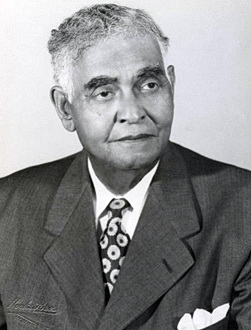
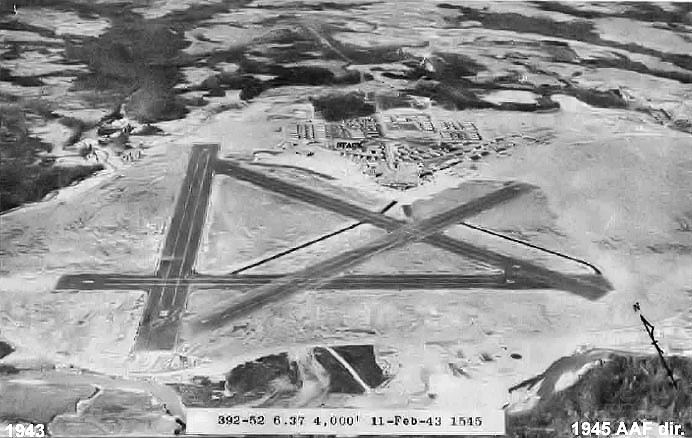
Our city’s most dramatic ties to Tuskegee developed shortly after the US entered World War II. In fact, it was Nashvillians who actually built the airbase where the famous Tuskegee Airmen trained. When brothers Moses and Calvin McKissack, well-known local architects, were selected to design and build the Tuskegee Airbase in 1942, they received what was then the largest federal contract ever won by an African American firm. McKissack & McKissack, now headquartered in New York City and Washington, D.C., remains the oldest minority-owned architectural engineering company in the United States.

Tuskegee Airmen 1945

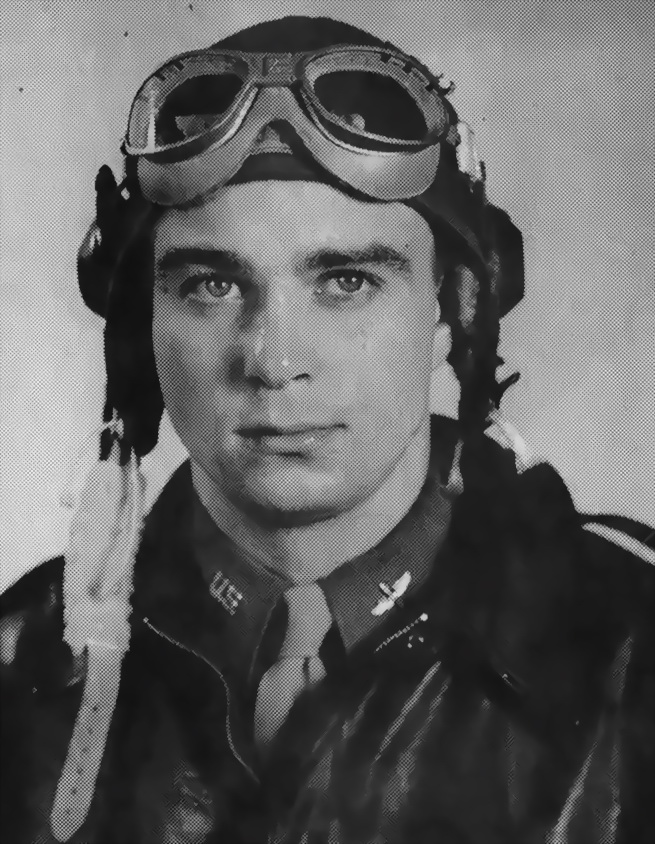
The Tuskegee Airmen, whose exploits have become more familiar through a couple of recent commercial films, were actually not well known during the war, despite their extraordinary skill and courage. They were the first African American aviators to serve in the U.S. military. The “Tuskegee Airmen” title also encompasses the instructors, navigators, mechanics, and ground crew who trained and supported the pilots. According to a National Park Service article, “These men were the crème of the crop, many of whom already had bachelor’s and master’s degrees when they first began flight training in July of 1941.” And a considerable number of those remarkable men – trainers, support staff, and aviators – had ties to Middle Tennessee.

·         Curtiss P-40 Warhawk – produced 1939-1944

The following local men graduated from the pilot training program on the dates listed:

  • 2nd Lieutenant Howard L. Baugh (see story below): Single Engine Section, SE-42-J; 10 Nov 1942.
  • 2nd Lieutenant William J. Faulkner (see story below): Single Engine Section, SE-43-D; 29 Apr 1943.
  • 2nd Lieutenant Carroll N. Langston Jr. (see story below): Single Engine Section, SE-43-I; 1 Oct 1943.
  • 2nd Lieutenant Thomas G. Patton: Single Engine Section, SE-44-B; 8 Feb 1944.
  • 2nd Lieutenant Hannibal M. Cox (see story below): Single Engine Section, SE-44-D; 15 Apr 1944.
  • Flight Officer Robert A. Pillow: Single Engine Section, SE-44-E; 23 May 1944.
  • Flight Officer Robert J. Murdic: Single Engine Section, SE-44-F; 27 Jun 1944.
  • 2nd Lieutenant Rutherford H. Adkins (see story below): Single Engine Section, SE-44-I-1; 16 Oct 1944.
  • Flight Officer Rutledge H. Fleming: Twin Engine Section, TE-45-A; 11 Mar 1945.

Those in the Single-Engine Cadet Pilot Class were trained to fly the Bell P-39 Airacobra, Curtiss P-40 Warhawk, Republic P-47 Thunderbolt, North American P-51 Mustang, and similar combat fighter aircraft. Those in the Twin-Engine Cadet Pilot Class were trained to fly the North American B-25 Mitchell. There was also a third cadet program, the Liaison Pilot Cadet Class, training liaison and service pilots.

The sturdy construction of the Republic P-47N Thunderbolt enabled it to absorb severe battle damage and stay in the air.

After the war, Tennessee State University developed a new program called Aeronautical and Industrial Technology, which included an aviation education component and an Air Force Reserve Officer Training Corps (ROTC). Cecil Ryan, who was head of the department of aviation, and his colleague George Turman had been instructors in the Tuskegee Airmen’s cadet program. They would instruct generations of pilots as well as aircraft design and maintenance engineers. Many of Ryan’s students went on to become pilots on both military and commercial aircraft.

Simon Gaskill, a commercial pilot for Eastern Airlines during the 1970s and ‘80s, once wore his pilot’s uniform on a tour of the TSU campus. When he ran into Cecil Ryan, he introduced himself and was startled when Ryan began to cry. “I wanted to be an airline pilot, but wasn’t allowed,” Ryan explained. “Seeing you come in here with that uniform was just too much for me.”

Carroll Napier Langston Jr. and family (photo courtesy of Kristi Farrow)

Carroll Napier Langston Jr. (1917-1944), another of the renowned Tuskegee Airmen, was the great-grandson of John Mercer Langston and great-nephew of Nashvillians James C. and Nettie Langston Napier, widely respected community leaders. Raised in Nashville and Chicago, he graduated from Oberlin College and earned an LL.B. from the University of Michigan. In 1941 he entered law practice in Chicago but, shortly after the U.S. entered World War II, he signed up for flight school at the Tuskegee Army Air Field in Alabama. By 1943 he was part of the 301st Fighter Squadron (Red Tail Angels) and was subsequently assigned to the 332nd Fighter Group. In June 1944, during a reconnaissance mission off the Italian coast, Lt. Langston’s engine lost oil pressure and he had to bail out. Tragically, his parachute failed to open, and a witness saw him clinging to the side of the plane as it went down. His body washed up on the beach several days later and was brought later to Greenwood Cemetery, where he now rests amongst his family. 

William J. Faulkner Jr.

Captain William J. “Billie” Faulkner Jr. (1918-1944), a graduate of Pearl High School and Morehouse College, was the son of the Rev. and Mrs. William J. Faulkner Sr. His father was dean of the Fisk University Chapel. William Jr. enlisted August 17, 1942, graduating from the Tuskegee pilot program as a 2nd Lieutenant on April 29, 1943. An airman with the 301st Fighter Squadron, U.S. Army Air Corps, he is believed to be the first African American from Nashville to be commissioned in the Army Air Forces. In September 1944 he was awarded the first oak leaf cluster to the Air Medal for “meritorious achievement in aerial flight while participating in sustained operational activities against the enemy.” Barely two months later, November 7, 1944, with 56 combat missions to his credit, he was reported missing in action over Austria. Two days before Christmas his grieving parents finally received word that he had been killed on the day he was reported missing in November, “possibly because of mechanical failure of his P-51C.” (Other sources say he was shot down.) He was awarded the Air Medal with four oak leaf clusters. Captain Faulkner is buried in France in the Lorraine American Cemetery and Memorial, which contains the largest number of World War II American graves (10,489) in all of Europe.

Hannibal M. Cox

Colonel Hannibal M. “Killer” Cox (1923-1988) graduated from flight training at Tuskegee in April 1944 and went on to serve as a combat pilot in three wars – World War II (where he flew 64 combat missions), the Korean War (more than 100 combat missions), and Vietnam. He earned a bachelor’s degree in aeronautics from Tennessee State University (TSU), a master’s in industrial relations and personnel management from the University of Chicago, and a Ph.D. in psychology from Western Colorado University. After Vietnam one of his command duties was to serve as a professor of aerospace science at TSU, his alma mater. When he retired from the U.S. Air Force in the 1960s (with an Air Medal, five oak leaf clusters, and the Distinguished Flying Cross), he became director of ground equipment for Eastern Air Lines. Later appointed director of Eastern’s equal opportunity and community relations programs, he was instrumental in breaking down racial bias in the airline industry.

Howard Lee Baugh

Colonel Howard Lee Baugh (1920-2008) was born in Virginia; attended public schools in Virginia and Brooklyn, New York; graduated from Virginia State University; and married his college sweetheart. In March 1942 he entered the U.S. Army Air Corps and completed his pilot training at Tuskegee, Alabama, that November. Assigned to the 99th Fighter Squadron in Sicily, he flew 135 combat missions.  As a pilot in the USAF, he registered 6,000 pilot hours, with a career record of 250 combat hours. Following his World War II service, Colonel Baugh, who had been trained by Cecil Ryan at the Tuskegee Institute, served for a period of time as Professor of Air Science at Tennessee State University. He retired from the United States Air Force as a Lieutenant Colonel in 1967. For his distinguished career as an aviator, Colonel Baugh was awarded the Distinguished Flying Cross, the Air Medal with three oak leaf clusters, the Air Force Commendation Medal, and the Air Force Distinguished Unit Citation, and other medals. In 2004 he was awarded the French Legion of Honor.

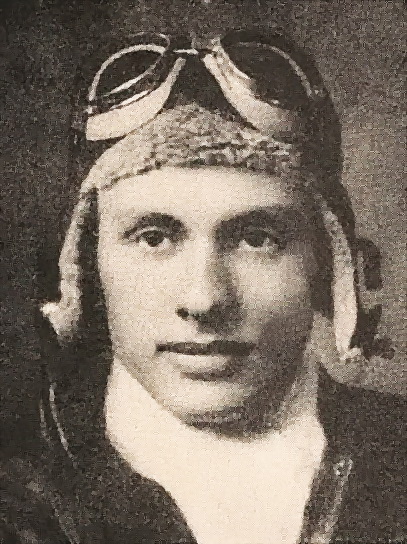
Rutherford H. Adkins, 1944

Dr. Rutherford H. “Lubby” Adkins (1924-1998), born in Alexandria, Virginia, developed an interest in physics while studying at Virginia Union University. He transferred to Temple University but was soon drafted into the U.S. Army. He took flight training for single-engine fighter planes at the Tuskegee Flight School, graduating as a 2nd Lieutenant in 1944. A member of the 100th Fighter Squadron of the 332nd Fighter Group – the Tuskegee Airmen – he flew 14 combat missions over Europe. Returning home, he earned a B.S. (Virginia State, 1947), an M.S. (Howard University, 1949), and a Ph.D., the first ever granted to an African American by The Catholic University in Washington, D.C. (1955). At various times he served on the faculties of Virginia State University, Tennessee State University, the U.S. Naval Academy, Fisk University, Morehouse College, and the Georgia Institute of Technology. He was president of Knoxville College from 1976 to 1981, returning to Fisk in 1993 to become division chair of Natural Sciences & Mathematics, interim president in 1996, and president in 1997, only a year before his death.

North American P-51 Mustang

Some of this material has been adapted from the Greenwood Project.


Learn more about the relationship between these two Southern cities in “Nashville-Tuskegee Connections, Part I.

Nashville-Tuskegee Ties, Part I: Medicine, Music, & Architecture

by Kathy B. Lauder.

Nashvillians have built some important connections with Tuskegee, Alabama, over the years, primarily in the fields of education, medicine, music, and the military.

Dr. Halley Tanner Dillon Johnson (1864-1901)

Booker T. Washington hired Dr. Halley Tanner Dillon (1864-1901) to be resident physician at Tuskegee Institute in 1891. After passing the state’s challenging medical exam, Dillon became the first woman, black or white, to practice medicine in Alabama. At Tuskegee she taught several classes, supervised the infirmary, established a dispensary where she mixed her own medicines, and founded a nursing school. She returned to Nashville after marrying Pastor John Quincy Johnson in 1894. When she died in childbirth at age 36, her death certificate listed her profession as “housekeeper.”

Dr. John Henry Hale (1878-1944)

Dr. John Henry Hale (1878-1944), a member of the Meharry faculty for nearly 40 years, was chairman of the Department of Surgery (performing more than 30,000 operations) as well as associate director of the Tumor Clinic, while also serving as head surgeon at Nashville’s Millie E. Hale Hospital. President (1935) of the National Medical Association, he was a longtime patron of the Tuskegee Institute and oversaw the Surgical Clinics there.

Dr. John C. Ashhurst (1908-1995)

Dr. John Christopher Ashhurst (1908-1995), a native of British Guyana, served as chief pathologist at the Veterans Administration Hospital in Tuskegee, Alabama, before moving to Nashville in the mid-1960s to become head of surgical pathology at Meharry Medical College, while at the same time serving as the county medical examiner.

Thomas W. Talley (1870-1952)

Thomas W. Talley (1870-1952), acknowledged as Tennessee’s first African American folklorist, began collecting folk songs about 1900 and published a collection, Negro Folk Rhymes, in 1922, a decade before Lomax and Niles. A Fisk graduate who later taught chemistry and choral music at his alma mater, Talley had previously taught at Tuskegee Institute (1900-1903).

Marcus H. Gunter (1918-2003) earned a degree in music at Tuskegee Institute. During college he performed with the Tuskegee Melody Barons, a popular dance band, and he later studied at the New England Conservatory of Music in Boston. During World War II, Gunter, a warrant officer, was director of the 41st Engineers Band in France. In 1947 he began a 39-year teaching career as music teacher and band director at Pearl High School. After retiring from his teaching career, he became owner and director of a Nashville funeral home.

Daughter of a Philadelphia longshoreman, Dorothy Coley Edmond (1927-2006) attended Fisk University, then earning a nursing degree from Meharry Medical College, a master’s degree from Columbia University, and an Ed.D. from Peabody College. She worked as a nursing instructor at Tuskegee Institute before marrying and returning to Nashville, where she established the School of Nursing at Tennessee State University. She is believed to be the first African American registered nurse ever to become a member of the Tennessee Nurses Association.

Moses McKissack III (1870-1952)

Born in Pulaski, Tennessee, Moses McKissack III (1879-1952) was the grandson of a slave who passed on his skills as a “master builder” to his descendants. As a teenager, Moses was hired by a local contractor to create designs and drawings for a Pulaski construction business. From 1895-1905 the youngster oversaw building crews in Tennessee and Alabama before moving to Nashville, where he and his brother Calvin opened their own firm –Among their first projects were Fisk University’s Carnegie Library and the residence of Vanderbilt’s dean of architecture and engineering. Later projects included Pearl High School and the TSU Memorial Library, as well as many other schools, homes, churches, and office buildings throughout the South. Now based in New York City and Washington, D.C., McKissack & McKissack remains the oldest minority-owned architectural engineering company in the U.S.

Calvin McKissack (1890-1968)

Like his older brother Moses, Fisk University graduate Calvin McKissack (1890-1968) earned his architecture degree through a correspondence course and from lessons passed down by their grandfather. Not long after they opened their Nashville firm (1905), Calvin started a satellite company in Dallas. However, he eventually returned to Nashville to teach industrial drawing at Tennessee Agricultural and Industrial State Normal School (now Tennessee State University), which had opened in June 1912. Six years later he was hired to be director of Pearl High School’s industrial arts department, and he presently became executive secretary of the Tennessee State Association of Teachers in Colored Schools. When the state enacted a law requiring architects to be registered (1921), the McKissacks were nearly banned from taking the licensing examination because of their race. State administrators eventually conceded, evidently assuming neither brother would be able to pass, but when the authorities continued to dither after both men sailed through the exam, the national media took up the story . . . whereupon the McKissack brothers promptly received their licenses, and their company officially became Tennessee’s first professional African American architectural firm. Their $5.7 million contract (1942) to design and build the 99th Pursuit Squadron Air Base in Tuskegee, Alabama, was the largest federal contract ever granted to an African American firm up to that time. The base was the home of the Tuskegee Airmen, African American fighter pilots who would gain the admiration of the entire world for their skill and courage in combat. Moses McKissack, whom President Franklin D. Roosevelt appointed to the White House Conference on Housing Problems, continued to head the firm until his death in 1952. His brother Calvin succeeded him, handing the reins to Moses’s son, William DeBerry McKissack, in 1968.

Tuskegee Army Airfield, 1943

Learn more about the Tuskegee Airmen in “Nashville-Tuskegee Connections, Part II.”


Some of this material has been adapted from the Greenwood Project.

Buchanan’s Station: The Battle That Saved the Cumberland Settlements

by Mike Slate.

Probably recounted more often than any other Indian attack in Tennessee history1, the heroic Battle of Buchanan’s Station occurred on the moonlit night of September 30, 1792. A confederacy of about 300 Creeks, Chickamauga Cherokees, and Shawnee2 surrounded Major John Buchanan’s Mill Creek stockade, intending to destroy it before advancing on Nashville and the other Cumberland settlements. A mere fifteen sharpshooters3 within the station turned back the onslaught by killing or wounding several notable Indian leaders without losing a single defender. Historian J.G.M. Ramsey called the victory “a feat of bravery which has scarcely been surpassed in all the annals of border warfare.”4

Informants Richard Finnelson and Joseph Deraque had warned the Cumberland settlers of the impending attack.5 In Knoxville territorial governor William Blount was similarly alerted by friendly Indians. Blount ordered Nashville’s James Robertson to raise militia and prepare, but he sent orders to stand down after no attack materialized. Robertson, more skeptical, remained vigilant and sent out scouts to hunt for marauders. Two of the scouts, Jonathan Gee and Seward Clayton, never returned and were later discovered to have been killed.6

Following a war conference that fueled their longstanding outrage over colonial encroachment, the Indians, armed by the Spanish government, began their campaign in Chickamauga country near today’s Chattanooga. As they approached Nashville, they quarreled about whether to attack Buchanan’s Station first. This decision set the stage for the ensuing drama.7

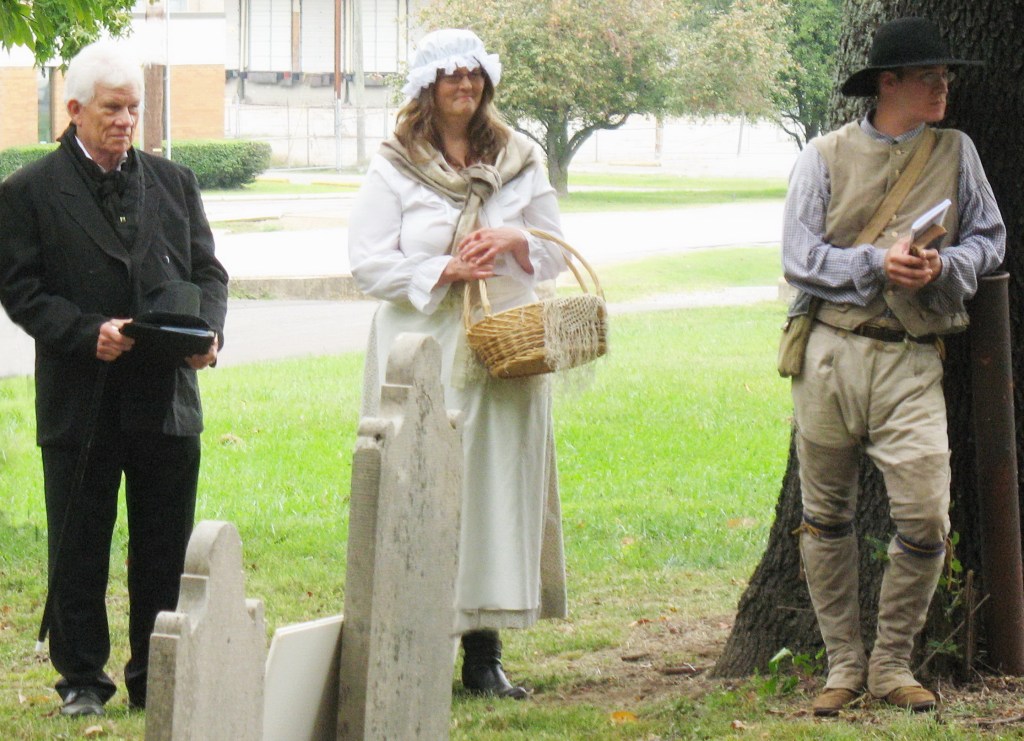
On guard at Buchanan’s Station, John McCrory heard the Indians approaching and fired the first shot of the battle, instantly killing Shawnee Warrior.8 The Indians fired volley after volley at the blockhouse as the little garrison inside struggled against overwhelming odds. Sarah “Sally” Ridley Buchanan, Major Buchanan’s hugely pregnant wife, became the voice of victory. Aided by other women, she reportedly molded and carried additional ammunition to the riflemen, supplied them with distilled spirits, insisted that they make every shot count, and cheered them on. For her courageous acts that night, she would become known as “the greatest heroine of the West.”9

Reenactors in a 2012 event at Buchanan’s Station cemetery portray Maj. John Buchanan, Sally Buchanan, and a wilderness preacher.

The Indians also demonstrated great courage. Cherokee warrior Kiachatallee (also Chiachattalla) attempted to set the fort ablaze. Although mortally injured, he continued to kindle flames with his dying breath.10 Among other braves who died that Sunday night was White Owl’s Son, possibly the brother of Dragging Canoe.11 John Watts, recently chosen chief of the Lower Cherokees (Chickamaugas), was severely wounded but later recovered.

The battle finally ended, perhaps because of the ineptitude of an inebriated Irishman in the station. Not realizing he had overloaded the Buchanans’ old blunderbuss, Jimmy O’Connor produced a stupendous boom.12 The Indians, terrified of cannon fire, withdrew.

The Battle of Buchanan’s Station has captured the attention of historians since 1792. British scholar Dr. John Sugden recently determined that the Shawnee Warrior killed by John McCrory was Cheeseekau, Tecumseh’s brother and mentor. Moreover, Sugden writes, Tecumseh himself was present at the battle and watched his brother die.13 Such valuable ongoing research will continue to deepen our understanding of this critical frontier event.  (2014)

Portrait of Major John Buchanan (TN State Museum)

1 Although such matters are difficult to quantify, I know of no single conflict between colonial settlers and Native Americans in Tennessee history, not even Nashville’s “Battle of the Bluff,” that has appeared in print as often as the Battle of Buchanan’s Station (BoBS). Accounts of the BoBS are many, varied, and sometimes conflicting. Tracing and analyzing these accounts chronologically, from 1792 until the present, is a fascinating historiographical journey. The “baseline” account is a 388-word report from James Robertson to territorial governor William Blount, which arrived to Blount on October 9, 1792. That correspondence can be found in American State Papers: Indian Affairs 1: 294-295. Skipping over many other accounts to the present, three excellent modern treatments of the battle are John Buchanan [a coincidental name], Jackson’s Way: Andrew Jackson and the People of the Western Waters (Hoboken NJ: John Wiley & Sons, 2001, reprint by Castle Books), 131-136; John Sugden, Tecumseh: A Life (New York: Henry Holt and Company, paperback reprint, 1997), 70-75; and John Anthony Caruso, The Appalachian Frontier: America’s First Surge Westward (Knoxville: University of Tennessee Press, 2003, new edition of the 1959 original), 353-357.

2 The number of Indians said to have surrounded Buchanan’s Station varies from 280 to 900 or more. Robertson’s original account (in the American State Papers) says, “supposed to consist of three or four hundred.” However, a report from Blount on November 5, 1792, says, “appeared to have been, Creeks, from 400 to 500; Cherokees, 200; Shawanese, from 30-40” (See American State Papers: Indian Affairs 1: 331). The Tennessee state historical marker on the battle site says “about 300,” and most modern treatments also report “about 300.” I have chosen to use the conservative “about 300” figure.

3 The exact number of defenders, like that of the attackers, is uncertain. Robertson’s original account clearly says “fifteen gun-men,” and that is the number used by some later accounts and most modern ones. Yet it appears possible if not likely that Robertson’s report was not precisely accurate. Over the ensuing years the number increased to about twenty. A few accounts attempt to name the defenders, and a researcher can combine those accounts and arrive at well over twenty. Those accounts which attempt to name the defenders include the following: John Buchanan Todd, letter to Lyman Draper, 9 November 1854, Draper Manuscripts 6XX64; Major Thomas Washington, “The Attack on Buchanan’s Station,” Annals of the Army of Tennessee and Early Western History, Vol. 1 November (1878): 378-381; Josephus Conn Guild, Old Times in Tennessee (Knoxville: Tenase Company, 1971, reprint of the 1878 original), 300-313; Thomas Buchanan, “Buchanan Memoir,” at https://sites.google.com/site/davidsoncounty/home/people-of-interest/buchanan-history, accessed 01-25-14; and Edward Albright, Early History of Middle Tennessee (Nashville: Brandon Printing Company, 1909), 171-177. It appears that some of the pioneers named were indeed involved in the larger context of the battle but not in the actual conflict itself. I have chosen to use Robertson’s conservative “fifteen gun-men” figure.

4 J.G.M. Ramsey, The Annals of Tennessee to the End of the Eighteenth Century (Johnson City TN: The Overmountain Press, 1999 reprint of the 1853 original), 566-567.

5 For more on Finnelson and Deraque see American State Papers: Indian Affairs 1: 288-292.

6 Robertson’s original account (in the American State Papers) reports of Gee and Clayton that “it is supposed they are killed.” Later accounts substantiate this and describe the circumstances of their deaths. Little is known about Jonathan Gee. Ironically, Seward Clayton was captured by Indians when he was a boy, in an incident that involved Major John Buchanan. For that story see Lizzie P. Elliott, Early History of Nashville (Nashville: The Board of Education, 1911), 155-158. The Indians later released Clayton, who then met his death by their hands in 1792.

7 The events and circumstances leading up to the Battle of Buchanan’s Station are substantially covered by the three modern accounts listed in note #1 above. The BoBS was the climax of a much larger story that is instructive as to the political climate of the time as well as to the complicated relationships between Native Americans and Euro-American settlers.

8 “John Mc. Rory” is the only active defender that Robertson mentions by name in his original account. The specific fact that McCrory killed Shawnee Warrior is not stated by Robertson, but is taken from later accounts. Additionally, some later accounts mention Thomas McCrory rather than John. An example of such accounts is the “literary” (complete with dialogue, etc.) story by Octavia Zollicoffer Bond, Old Tells Retold (Nashville: Smith & Lamar, 1906), 154-167.

9 Elizabeth F. Ellet, The Women of the American Revolution, Vol. III (New York: Charles Scribner, 1856), 310-327. Ellet wrote an entire chapter featuring Sarah Buchanan. Concerning the designation, “the greatest heroine of the West,” Ellet’s exact words were: “The fame of this gallant defence [during the BoBS] went abroad, and the young wife of Major Buchanan was celebrated as the greatest heroine of the West.” Also see Wilson and Fiske, eds., Appleton’s Cyclopaedia of American Biography, Vol. 1 (New York: D. Appleton and Company, 1888), 436-437, in which Sarah is again called “the greatest heroine of the west.”

10 The events of the death of Kiachatalle (also known as “Tom Tunbridge’s step-son”) must have been quite dramatic. Robertson’s report says that he “ascended the roof with a torch, where he was shot, and, falling to the ground, renewed his attempts to fire the bottom logs, and was killed.” Kiachatalle’s body was identified the next morning by Joseph Brown, who knew him well from his captivity by the Indians a few years before the BoBS.

11 White Owl’s Son seems to be sometimes known as “Little Owl,” who was indeed Dragging Canoe’s brother. A Creek chief (perhaps Talotiskee) was also killed at the battle, and Unacate was injured or killed. See American State Papers: Indian Affairs 1: 331. One or two other accounts report that as many as thirty Indians were killed that night. More research needs to be done about the Indians who participated in the BoBS.

12 The priceless story of Jimmy O’Connor’s fortunate misuse of the blunderbuss has been told over and over again. Some accounts, however, say that it was the boom of the little swivel cannon at Fort Nashborough that so frightened the Indians. I am partial to John Buchanan Todd’s clever statement (in Draper, 6XX64) that, “Jemmy O’Connor blundering with his blunderbuss in all probability saved the station.”

13 It would be difficult to overestimate the importance and influence of Sugden’s determination that Cheeseekau (sometimes called “Chiksika”) died at Buchanan’s Station in the presence of his brother, the iconic Tecumseh. Fortunately, Sugden provides his well-reasoned analysis of the sources related to this matter in Sugden, 421-422 n. 1. Many scholars and Internet sources have accepted Sugden’s discovery as fact, which has placed Buchanan’s Station on the radar of many additional historians.


FUNDAMENTAL SOURCES

American State Papers: Indian Affairs 1: 294-295.

Arnow, Harriette Simpson. Flowering of the Cumberland. Lincoln, University of Nebraska Press, 1996 edition of the 1963 original.

Buchanan, John. Jackson’s Way: Andrew Jackson and the People of the Western Waters. Hoboken NJ, John Wiley & Sons, 2001, reprint by Castle Books.

Caruso, John Anthony. The Appalachian Frontier: America’s First Surge Westward. Knoxville, University of Tennessee Press, 2003, new edition of the 1959 original.

Clements, Paul. Chronicles of the Cumberland Settlements. Nashville, self-published, 2012.

Ramsey, J.G.M. The Annals of Tennessee to the End of the Eighteenth Century. Johnson City TN, The Overmountain Press, 1999 reprint of the 1853 original.

Sugden, John. Tecumseh: A Life. New York, Henry Holt and Company, 1997, paperback reprint.


ADDENDUM

James Robertson’s original account of the Battle of Buchanan’s Station as found in American State Papers: Indian Affairs 1: 294-295:

“On the 30th September, about midnight, John Buchanan’s Station, four miles south of Nashville, (at which sundry families had collected, and fifteen gun-men) was attacked by a party of Creeks and Lower Cherokees, supposed to consist of three or four hundred. Their approach was suspected by the running of cattle, that had taken fright at them, and, upon examination, they were found rapidly advancing within ten yards of the gate; from this place and distance they received the first fire from the man who discovered them, (John Mc. Rory.) They immediately returned the fire, and continued a very heavy and constant firing upon the station, (blockhouses, surrounded with a stockade) for an hour, and were repulsed with considerable loss, without injuring man, woman, or child, in the station.

“During the whole time of attack, the Indians were not more distant than ten yards from the blockhouse, and often in large numbers round the lower walls, attempting to put fire to it. One ascended the roof with a torch, where he was shot, and, falling to the ground, renewed his attempts to fire the bottom logs, and was killed. The Indians fired 30 balls through a port-hole of the overjutting, which lodged in the roof in the circumference of a hat, and those sticking in the walls, on the outside, were very numerous.

“Upon viewing the ground next morning, it appeared that the fellow who was shot from the roof, was a Cherokee half-breed of the Running Water, known by the whites by the name of Tom Tunbridge’s step-son, the son of a French woman, by an Indian, and there was much blood, and signs that many dead had been dragged off, and litters having been made to carry their wounded to their horses, which they had left a mile from the station. Near the blockhouse were found several swords, hatchets, pipes, kettles, and budgets of different Indian articles; one of the swords was a fine Spanish blade, and richly mounted in the Spanish fashion. In the morning previous to the attack, Jonathan Gee, and — Clayton were sent out as spies, and on the ground, among other articles left by the Indians, were found a handkerchief and a moccason [sic], known one to belong to Gee, and the other to Clayton, hence it is supposed they are killed.”

The Powder Magazine Explosion (1847)

by Allen Forkum.

During October 1847 Nashvillians were alarmed by newspaper reports of numerous fires in the city, some caused by accident, some by “incendiaries” (i.e., arsonists). But on the evening of October 12, 1847, something much worse happened when a strong thunderstorm passed over the city.

A newspaper editor wrote of hearing a thunderclap, then a “terrific report—a lifting up sensation, as if something had exploded in the interior of the earth, with the effects of an earthquake.” He was in an office on the Public Square about one-half mile from the source of the explosion: a brick building storing gunpowder just west of Capitol Hill. The “powder magazine,” which reportedly contained over 500 kegs of gunpowder, had been struck by lightning. The building was completely blown from the site, sending brick missiles throughout the city.

The shock wave and debris broke almost every pane of glass in the city, some two miles away. More than fifty nearby houses were destroyed or rendered unfit for occupation, particularly on the streets Gay, Spruce (today’s Rosa L. Park Avenue) and High (today’s 6th Avenue North). Three people were killed instantly and at least one other person died later; many more were wounded. One newspaper account described a 100-pound rock going through the roof and into the cellar of the Nashville Inn on the Public Square.

Within a week of the explosion, city officials took measures to relocate another powder magazine away from the city, and the owners stationed a guard by it “day and night” until it could be moved. An attempt was made in the Tennessee House of Representatives to pass a resolution giving the city $1,000 from the State Treasury “for distribution among the sufferers.” The resolution did not make it to the Senate.

Lawsuits for damages were filed against the owners of the powder manufacturing company, Sycamore Powder Mill. One case went all the way to the Tennessee State Supreme Court, which found that “powder houses” placed in populated areas constitute a “nuisance.” During the Civil War, the memory of the 1847 explosion prompted the Nashville Dispatch to call for the removal of powder and ammunition stored downtown, a recommendation with which Federal authorities complied.


Sources:

Nashville Whig, October 7, 1847, “DISTRESSING AFFAIR,” regarding an explosion at a house on Market Street where fireworks were being manufactured.

Nashville Whig, October 9, 1847, “FIRES,” regarding “several fires during the present week.”

Nashville Whig, October 12, 1847, “MORE FIRES.”

Nashville Daily Union, October 13, 1847, “TERRIBLE CATASTROPHE.”

Republican Banner, October 13, 1847, “Explosion of a Powder Magazine by Lightning,” which also includes a reprint of a detailed article from the Orthopolitan titled “DREADFUL ACCIDENT” containing a house-to-house description of damage.

Nashville Whig, October 14, 1847, “FRIGHTFUL CALAMITY, A POWDER MAGAZINE EXPLODED!!!”

Nashville Daily Union, October 14, 1847, “FURTHER PARTICULARS OF THE DISTRESSING CALAMITY,” regarding the 100-pound rock and other stories.

Republican Banner, October 18, 1847, “The Powder Magazine Below the City.”

Republican Banner, November 19, 1847, “Corporation of Nashville.” Attributes three deaths to the “Explosion of a Powder Magazine.”

Journal of the House of Representatives of the State of Tennessee, at the Twenty-Seventh General Assembly, Held at Nashville, 1847-8. Pages 79 and 80, Resolution No. 26.

Republican Banner, May 22, 1851, “Suit for Damages.”

Reports of the Cases Argued and Determined in the Supreme Court of Tennessee, During the Years 1851–2, Volume 1 (1853), pages 213–217, Cheatham et als. vs. Shearon, Trustee, &c.

Nashville Dispatch, June 4, 1863, “Whether justly entertained or not, there is no little uneasiness among the citizens of Nashville in regard to the large quantity of powder and ammunition of various kinds believed to be stored in the city for the military authorities.”

Nashville Dispatch, December 18, 1863, “Removal of Powder.”

Sally Thomas  (1787 – 1850)

by James A. Hoobler.

On to Liberty (Theodore Kaufmann, 1867; Metropolitan Museum of Art) 

Born into slavery in Charlottesville, Virginia, Sally Thomas, the slave of Charles Thomas, bore two sons to John, her owner’s brother – John, born in 1808, and Henry, born a year later. Around 1817 Sally and her children were sent over 550 miles to Thomas family land near Nashville. Here her owner allowed her to take in laundry if she gave him some of the profits. Ceding control over her, he made her a “quasi-slave,” who could rent her own house, move about freely, buy, sell, and negotiate her own business contracts. Although in time her owner even stopped requiring her to share her earnings with him, Sally was still legally considered his property.

Justice John C. Catron (portrait by Chester Harding, Tennessee Portrait Project/TSLA)

 In 1827 attorney John C. Catron fathered Sally’s third son, James P. Thomas. Sally and her children lived then at the corner of Cherry (4th Avenue) and Deaderick Streets, a block from the Davidson County Courthouse.  There she ran her laundry business, saving money to purchase the freedom of her children. Sally’s oldest son, John, worked for a Nashville barge captain, even taking his last name. Captain Rapier, who had taught John to read and write, saved his own money to free John, and in 1829 his executors obtained permission from the Alabama General Assembly to use estate funds to purchase John’s freedom. 

In 1834 Sally learned that she, Henry, and James were being returned to Virginia to settle her owner’s estate. Fearing they would be sold separately, she urged Henry to escape. Hiding by day, avoiding farms where he might be spotted, Henry fled north to Louisville, Kentucky, only to be caught and jailed. Still chained, he miraculously escaped the first night in a stolen boat. Surviving a plunge over the Falls of The Ohio, he crossed into Indiana, where a sympathetic individual removed his chains. Henry eventually arrived in Buffalo, New York, where he worked as a barber; he later moved to Canada.  

Meanwhile, to keep James from being sold away from her, Sally persuaded attorney Ephraim Hubbard Foster to help her buy the child from John Martin, the Thomas relative who owned him. Martin wanted $400 for the seven-year-old, but Sally had saved only $350. Foster agreed to lend her the other $50 and arranged the sale with Martin. Although Sally soon paid off her debt to Ephraim Foster and personally held James’s bill of sale and “free papers,” under Tennessee law James was still considered Foster’s slave. Since the 1834 state Constitution required free blacks to leave Tennessee immediately or return to slavery, James had to appear to be someone’s property in order to remain in Nashville.

Senator Ephraim H. Foster (portrait by Washington B. Cooper, Tennessee Portrait Project / Cheekwood Museum of Art)

Sally purchased her own freedom with the assistance of Godfrey M. Fogg (nephew of educator Francis B. Fogg, and law partner of Ephraim Foster), who loaned her part of the money. Deeds in the Davidson County Courthouse list Sally as the property of G. M. Fogg, and James as the property of Ephraim Foster – legally Sally and James would remain slaves until the courts ruled them free and permitted them to remain in Tennessee as free persons. Regrettably, Sally died in 1850, before such a ruling was made. James, now running a barbershop in the house Sally had rented at Deaderick and Cherry, purchased a grave site for her in City Cemetery, erecting a tombstone inscribed, “Sally Thomas 1787-1850.”  On March 6, 1851, Ephraim Foster petitioned the Davidson County Court to allow him to free James. The court found in favor of the petition, Foster posted a bond, and James was free. James’s own petition to be permitted to remain in Nashville was also approved, with the posting of a good character bond. Ironically, James was the natural son of Tennessee’s Chief Justice, John C. Catron, whom Andrew Jackson had appointed to the U. S. Supreme Court during his last days in office, when the court was expanded to nine members. Thus Catron’s Dred Scott ruling that African Americans were property and had no citizenship rights applied to his own son.  (2009)


Dedication ceremony for new Sally Thomas grave marker, 2009

Sally Thomas died during Nashville’s 1850 cholera epidemic. In 1908 her tombstone could still be found, but by 2005 it was no longer standing. In 2009 a replacement tombstone for Sally Thomas was dedicated in a well-attended ceremony at City Cemetery.


Previously published in Monuments & Milestones, the Nashville City Cemetery newsletter.

The story of the Thomas-Rapier family is the subject of the book In Search of the Promised Land: A Slave Family in the Old South by John Hope Franklin and Loren Schweninger (Oxford University Press, 2005).