A Pioneer History of Stone’s River near the Clover Bottoms

by Amelia Whitsitt Edwards.

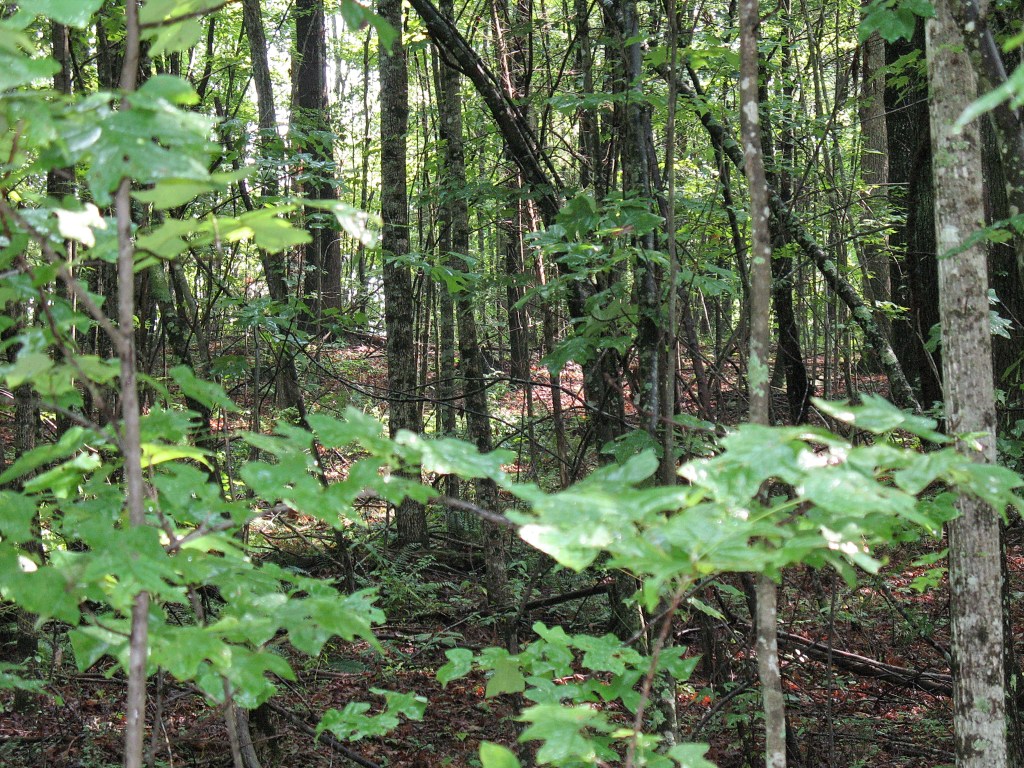
One of the most popular features of the Donelson area is a paved greenway trail system along the banks of Stone’s River from the Percy Priest Dam to the Cumberland River. The trail winds through the Clover Bottoms, an area of prime importance to the early settlers in the Nashville area.

Scene on the greenway trail (from NHN collection)

The pioneer story began in 1766 with the exploration of the Long Hunters. The river was named in honor of one of their group, Uriah Stone. These adventurers carried the story of this bountiful, uninhabited land with them when they returned to Virginia and North Carolina. It was fourteen years, however, before the first settlers arrived.

In the spring of 1780, John Donelson, having led the flotilla of settlers to Nashborough, recognized the need to plant a corn crop immediately. He again boarded the good ship Adventure with his family, poled up the Cumberland around the great bend until he found the mouth of Stone’s River. He was looking for alluvial fields that were as fertile as the Valley of the Nile and which needed no clearing in order to plant.

The Donelson Party arrived on flatboats

A short distance from the confluence of the two rivers he found what he was looking for on the west bank of Stone’s River*, an area forever after known as the Clover Bottoms. Here he docked his boat and built half-faced shelters to house his family on the opposite bluff. This was fifteen-year-old Rachel Donelson’s first home in Tennessee.

That July heavy rains inundated the corn crop. This unhappy event, plus constant harassment from the native Indians, forced the family to move to Mansker’s Fort for protection.

By fall, word reached the settlers at Mansker’s that the flood waters had subsided and that the corn had eared. John Donelson sent a request to the men at Fort Nashborough to meet him at the Clover Bottoms to help harvest the corn. Approximately ten men from each fort built wooden sleds to drag the corn from the field to the boats moored in Stone’s River. Several days were required to load the boats.

As they left the shore, the boat from Fort Nashborough was attacked by Indians; only three settlers escaped with their lives. The Donelson party was on the north bank, harvesting the cotton planted there. They abandoned their boat loaded with corn and managed to get away on foot through the woods. Donelson’s heroic slave, Somerset, swam the Cumberland River and brought help from Mansker’s Fort to the stranded group.

Meanwhile, the boat from Fort Nashborough floated downstream, eventually reaching the bluffs with its tragic cargo of corn and slain men. The settlers there rescued the corn and buried their dead.

Some years later Andrew Jackson, who had married Rachel Donelson, operated several businesses along the Stone’s River corridor. He first opened a general store near the Clover Bottoms. In order to stock his store, he went to Philadelphia and traded land preemptions for flour, sugar, piece goods, and pocket knives. The store was a two-story building near today’s Downeymead Drive.  C. Lawrence Winn, a descendant of Jackson’s adopted son, built a house on the property in 1960.

In 1805 Jackson, with two partners, formed the Clover Bottom Jockey Club. A race track and tavern were built by the river. The story of Jackson’s duel with Charles Dickinson is well known. The unfortunate quarrel that sparked the duel started at this race track.

A story that is not so well known is that of Jackson’s boat yard on Stone’s River, near its mouth. Here he constructed five flat boats and one keel boat for former Vice President Aaron Burr who was leading a group of colonists to lands he had acquired in Louisiana. In 1812 Andrew Jackson became a military officer and began his lengthy pursuit of both a military and a political career. Thereafter his business interests on Stone’s River faded away.
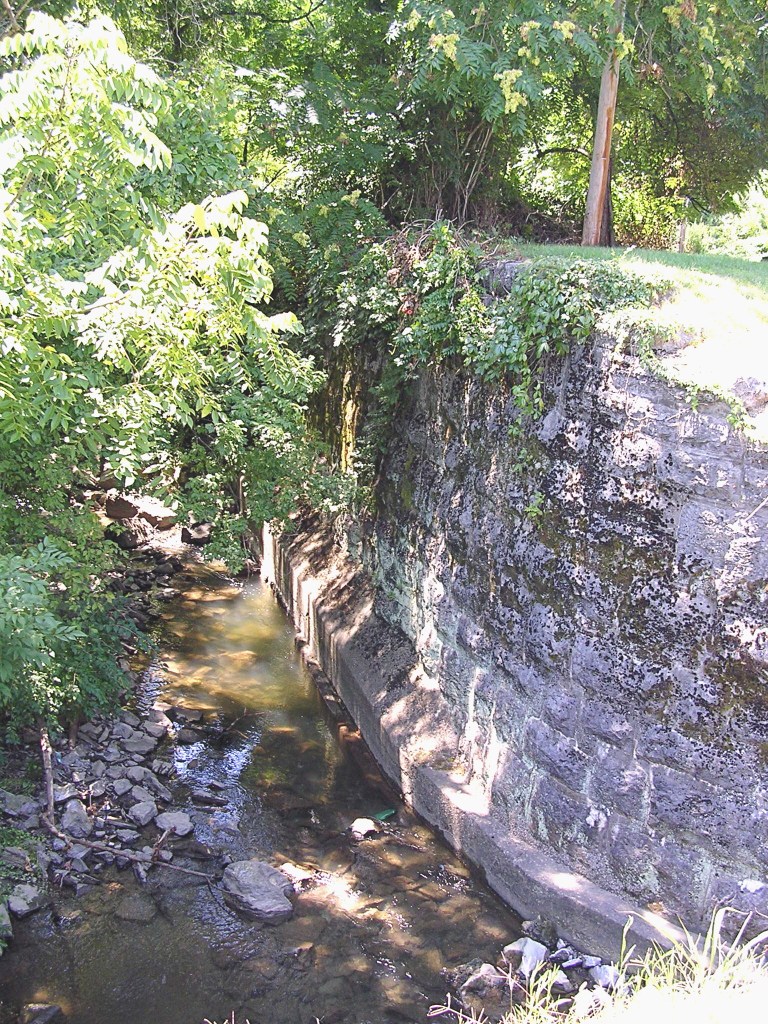
A Donelson creek (from NHN photo collection)

The large tract of land known as Clover Bottom Plantation came to be owned by Dr. James Hoggatt, who built the ante-bellum mansion on the property. The property was sold to Mr. Andrew Price in the late 19th century, and then to A.F. and R.D. Stanford in the early 20th century. After World War II it was sold to the State of Tennessee.

Although the last several years have brought considerable business development to the Clover Bottoms, much of the river bank remains untouched by man. The Greenway Project is a promise to maintain the natural beauty of this historic site and preserve it for our future generations. (2000)


* Historians surmise that John Donelson’s cornfield was located just west of the Stone’s River bridge, in the general area of today’s Jackson Downs (Target) shopping center, which was named, incidentally, for the racetrack Andrew Jackson later built slightly northeast of that location.

Alice Thompson Collinsworth: Intrepid Pioneer

by Gloria Newsom Huggins.

On Christmas Day 1779 James and Elizabeth Thompson arrived at French Lick on the Cumberland River. The couple had joined James Robertson’s adventurers, looking for a new life on land where they believed they would be free. However, they had no idea what a high price they would pay for land in this territory that was to become Nashville, Tennessee.

By the time John Donelson’s party arrived on April 24, 1780, the Robertson group had already built eight stations of log cabins. A week later the men in the group gathered at the Bluff and adopted the Cumberland Compact1. Within the next two weeks they agreed on additional resolutions, and on May 13, 1780, James Thompson and his son Robert joined 254 other men in signing the completed Compact.

Signature page of the Cumberland Compact

As original settlers, the Thompsons received 640 acres on Richland Creek, near today’s Belle Meade mansion. In 1790 James began building the family’s cabin there, not realizing the dangers that lay ahead. By 1791 two of the Thompsons’ sons had lost their lives in Indian attacks. More tragedy was to follow: a narrative given to The South-Western Monthly in 1852 by John Davis, an early neighbor, described the murder of James and Elizabeth Thompson and their daughter Elizabeth by a party of Indians on February 25, 1792. Thomas E. Matthews’ book General James Robertson, Father of Tennessee, adds that the marauders enslaved the Thompson’s 31-year-old daughter Alice, along with two houseguests, a Mrs. Caffrey and her young son.

Scene in Indian village

The captives were taken to a Creek village called Kialigee, where Mrs. Caffrey’s little boy was taken from her and given to another white slave to raise. It would be two years before they were freed. Indian agent John O’Riley purchased Alice from her captors for 800 weight of dressed deerskins valued at $266 (the equivalent of almost $7,000 today). In May 1794 Alice was taken to the American Agency at Rock Island, Georgia. Before she returned to Nashville, she met with Governor Blount in Knoxville to answer his questions about other captives she had seen in the Indian camps. Governor Blount recorded these facts in a letter to the Secretary of War on October 2, 1794.

Meanwhile, in 1793, Edmund Collinsworth had arrived in Nashville to join his half-brother John Cockrill, who was married to James Robertson’s sister Ann. Edmund was a veteran of the Revolutionary War, having enlisted in the First Virginia Regiment in 1777 and served until April 1780. According to family stories, it was “love at first sight” when Alice met Edmund upon her return to Nashville in late fall 1794. They were married on December 17, 1795.

The couple built their home on land that had belonged to Alice’s brother John, who had died in the 1791 Indian attack. It is believed that both Alice and Edmund were eventually buried in unmarked graves on this home place, which is located in today’s Antioch/ Mount View area southeast of Nashville.

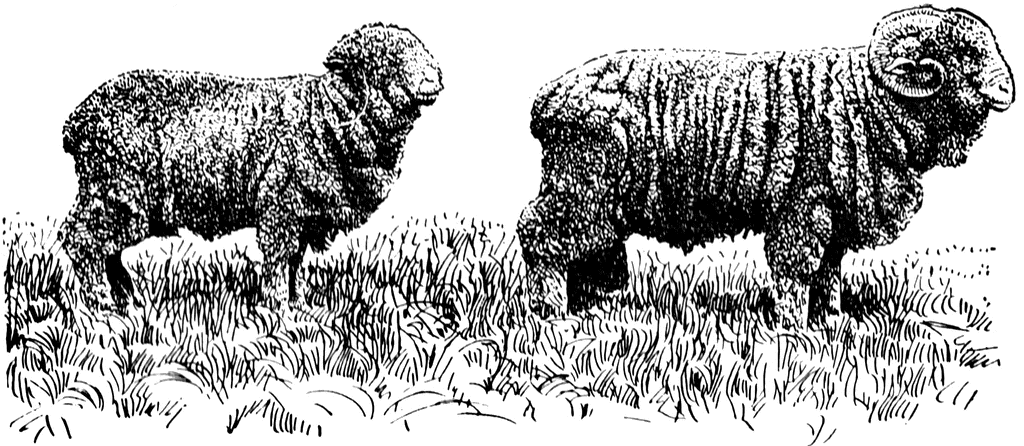
Edmund died in March of 1816, leaving Alice with seven children ranging in age from seven to eighteen. As she always seemed to do, Alice took the bad with the good and persevered, bringing up the children on her own. Her son James carried his Tennessee fortitude to the young Republic of Texas where he served as aide-de-camp to Sam Houston during the Battle of San Jacinto. He was a signer of the Texas Declaration of Independence and was Chief Justice of the Texas Supreme court at the time of his death. Another of Alice’s sons, John, graduated from the U.S. Military Academy at West Point. Daughter Susan married Mark Robertson Cockrill, who owned a 5.600-acre farm where he bred award-winning Merino sheep, their wool acclaimed as the finest in the world.

Merino sheep

Alice died in February 1828 at her home, which she shared by then with her daughter Parmelia Ann Davis and her family. The old house is long gone, but in December 1864 it was the place where Parmelia Ann had a touching encounter with a Union officer . . . but that’s another story2.


1 The Cumberland Compact, adopted in Nashville in 1780, was essentially a constitution for the frontier settlement, setting rules for governing the colony (including salaries, which were to be paid in animal skins) and for making and enforcing laws. It was signed by 256 colonists. (ed.)

2 Widowed in 1848, Parmelia watched the railroad industry change the face of middle Tennessee. During the Civil War, Nathan Bedford Forrest and others took great pride in sabotaging the tracks to impede the advance of Union troops. In early December 1864 Parmelia heard the thunderous crash of a train accident near her property and rushed toward the flaming wreckage to see what had happened. The Union officer in charge was gathering the bodies of 24 soldiers killed in the accident, planning to bury them all together in an embankment near the tracks. Parmelia intervened, insisting that the dead soldiers be buried on her plantation, each individual grave to be marked with a stone from her fields. Touched by her kind gesture, the Union officer posted a “special guard” to protect Parmelia and her land from attack for the remainder of the war. After the war the remains of the 24 Union soldiers were reportedly moved to the Stones River National Cemetery in Murfreesboro.  (ed.)

Where is the Buchanan Station Sword?

by Mike Slate.

The earlier of Nashville’s two most famous Indian onslaughts occurred on April 2, 1781. It was probably Charlotte Robertson – stalwart wife of Nashville co-founder James Robertson – who sicced the Fort Nashborough dogs on the attacking Indians, a storied deed that helped foil a clever Indian subterfuge. Another hero of that fateful day was John Buchanan Sr., who darted from the fort and rescued Edward Swanson, who had been clubbed by one of the marauders. These heroics notwithstanding, several pioneers died at the “Battle of the Bluff,” including Alexander Buchanan, thought to be John’s son.

The second of our legendary Indian battles took place on September 30, 1792, at Buchanan’s Station, which had been established about 1784 by Major John Buchanan, another son of the elder John. In his 1853 Annals of Tennessee, J.G.M. Ramsey described the Battle of Buchanan’s Station as “a feat of bravery which has scarcely been surpassed in all the annals of border warfare.” In that nighttime attack as many as 900 Creeks, Cherokees, Chickamaugans, and others were repulsed by about 20 settlers inside the station. Again the hero of the day was a woman: Sarah (called “Sally” or “Sallie”) Buchanan, wife of Major John. The heavily pregnant Sally cheered on the defenders, molded bullets, and perhaps even served up distilled beverages while the men fired away through blockhouse portholes.

Photo of Buchanan’s Station cemetery by Esther Victory.

Although the battle could have become Tennessee’s Alamo, the besieged pioneers did not suffer a single casualty. However, among the noteworthy Indians killed that night was Kiachatalee (or Chiachattalla), a dauntless warrior who attempted to set the fort ablaze. The Indians intent was to assault Fort Nashborough after destroying Buchanan’s Station, but the plucky stationers confounded the natives’ ambitions.

At first light an inspection of the premises produced numerous articles left by the retreating attackers. Several swords were found, including “a fine Spanish blade . . . richly mounted in the Spanish fashion.” Some historians have conjectured that the sword may have been traded to the Indians in exchange for scalps of slain settlers (certainly the Spanish stirred up such trouble for the westward-advancing Americans). Such a sword would have been quite a prize for the victorious stationers, plunder that would not have been treated carelessly. We can easily imagine that they presented it to Sally Buchanan as a tribute to her uncommon spunk.

So what has happened to this splendid Spanish sword? Does a Buchanan family member treasure it today? Does it survive in some museum, under the auspices of curators who have no knowledge of its history? Maybe it awaits us in a dark, cobwebbed attic; or perhaps all that separates us from this luxurious booty is a nondescript floorboard in some old house. Unfortunately, we may never set our eyes on this symbol of pioneer resilience, but all is not lost. In fact, we have something far more precious than a mere sword: we have the Buchanan Station Cemetery, where Major John and Sarah Buchanan are buried, along with other pioneers.

If the Buchanan Station sword were in a display case at the Tennessee State Museum, tens of thousands of admirers would have by now filed past it. But only a handful of Nashvillians have made the pilgrimage to the little cemetery to pay respects to our earliest settlers, upon whose sturdy shoulders rests our local civilization. If you are moved to visit the cemetery, you will find it along Mill Creek near the corner of Elm Hill Pike and Massman Drive. If you turn on Massman into the industrial park, you will find the cemetery on your left just after the first set of buildings. Parking for a few cars is available on the left side of the cemetery, which is now marked by a black fence and informative signage. We think you will agree that the Buchanan Station Cemetery is one of the most fascinating features of Nashville history.

John Montgomery’s Nashville Nap

by Mike Slate.

“Stand at Cumberland Gap and watch the procession of civilization, marching single file – the buffalo following the trail to the salt springs, the Indian, the fur-trader and hunter, the cattle-raiser, the pioneer farmer – and the frontier has passed by.”  Frederick Jackson Turner, 1893

How does someone get into a major history book by taking a nap? Whatever his reasons, iconic 19th-century historian Lyman C. Draper (1815-1891) thought an account of John Montgomery’s Nashville nap important enough to insert into his biography of Daniel Boone. Draper’s anecdote, virtually unknown except to Boone scholars, is reproduced here by permission of Stackpole Books (The Life of Daniel Boone, ed. by Ted Franklin Belue, p. 266):

“Among this band of Nimrods was John Montgomery. Having hunted awhile around Station Camp Creek and the neighboring licks, he concluded he would like to go alone and visit the French Lick region and informed his companions as he started not to be alarmed on his account should he be a week or two absent. He loitered around French Lick a day or so, and then went to what was afterwards called Robertson’s lick on Richland Creek, five miles west of the present city of Nashville. His object was not game but to view the country. Entering a thicket adjoining the lick, he lay down to take a nap and soon dreamed that if he did not take care, the Indians would kill him. So vivid was the dream that it alarmed and awakened him. While thinking of it, a gun was fired not apparently a hundred yards from him, and in a few moments a stricken deer came dashing through the bushes and fell dead almost at his feet. Knowing that Indians were close upon him, he hesitated whether to waylay the fallen deer or retreat further into the thicket; but upon a moment’s reflection he concluded that he had better quietly withdraw; for, should he wound or kill an Indian, he feared it would at least fill the minds of his hunting companions with apprehensions of retaliation, or even break up their hunting expedition with the loss of some of the party.  Acting upon this discreet conclusion, he crept carefully away and returned to the Station Camp.”

This statue of John Montgomery now stands in downtown Clarksville, Tennessee (photo from NHN collection)

While Draper’s Montgomery story may initially seem only mildly intriguing, a second look suggests some significant “firsts,” as well as a tragic irony. To my knowledge, this is the youngest age at which the future founder of Clarksville and source of Montgomery County’s name enters substantively into the historical record. According to Draper’s summary of John Montgomery’s life, which appears near the end of our story’s chapter (p. 272), Montgomery was born in 1748. Since the context of Draper’s anecdote is a 1771 group hunting and exploring expedition, Montgomery was only about 23 years old when he had his frightful dream near the natural salt licks that would, about eight years later, give rise to the new outpost of Nashborough (later Nashville).

Although there is a Station Camp Creek associated with Daniel Boone in eastern Kentucky, in our narrative Draper is no doubt referencing the one in today’s Sumner County, Tennessee. Groups of “Long Hunters,” so called because of their lengthy hunting expeditions, often established central camps in the wilderness and launched from there in smaller groups. It was from our nearby Station Camp that Montgomery began his exploration of the country around French Lick.

Draper’s reference to “Robertson’s Lick on Richland Creek” may also be a first. His 1771 context is the earliest point I know in which this salt lick and creek become elements of our written heritage. Shortly after James Robertson co-founded Fort Nashborough in 1780, he claimed land along Richland Creek that included the buffalo and deer lick and moved his family there. For a while the family lived in a log house, a replica of which stands today in H.G. Hill Park at 6710 Charlotte Pike, but Robertson soon built a comfortable brick home that, had it survived, would be located near today’s Robertson Avenue in West Nashville.

So how did John Montgomery (and later Robertson himself) manage to discover the Richland Creek/ Robertson’s Lick area? That was probably easy enough. Buffalo and deer made paths from salt lick to salt lick, with Indians stalking after the game. No doubt Montgomery simply followed the buffalo-Indian trail that ran from French Lick, the geo-historical epicenter of future Nashville, out to Robertson’s Lick, a future suburban area. Like other Nashville thoroughfares, today’s Charlotte Pike may originally have been a natural buffalo trace, and Montgomery was probably among the first white men to travel that ancient “road.”

Daniel Boone was the most famous of the Long Hunters.

Some historians malign the Long Hunters as ne’er-do-wells who escaped the drudgery of homesteading by taking to the woods, leaving wives and children to fend for themselves. While such criticism tends to counterbalance overly romantic views of the storied woodsmen, it certainly does not apply to John Montgomery. Far from lazy, he was among the busiest of American frontiersmen. After his career as a Long Hunter, he commanded troops under George Rogers Clark in the Illinois campaign of the Revolutionary War and, in concert with Col. Evan Shelby, quelled the fierce Chickamauga Indians near today’s Chattanooga, Tennessee. In 1780 he returned to the French Lick, presumably with his family, aboard the Donelson flotilla to Fort Nashborough, where he signed the Cumberland Compact. He served briefly as sheriff of the Cumberland district before co-founding Clarksville in 1784 with surveyor Martin Armstrong. Montgomery named the new city for his former colonel, George Rogers Clark.

After returning from the apocalyptic 1794 Nickajack expedition, in which he once again led troops against the Chickamaugans, Montgomery was killed and scalped by Indians while hunting near Eddyville, Kentucky, on November 27, some 23 years after his prescient dream at Robertson’s Lick. Although history’s ironies often delight us, this one compels a moment of silence. Draper, perhaps after his own quiet reflection, eulogized our fallen luminary as “brave to a fault, generous, and kind; six feet, two inches in height, with blue eyes, auburn hair, ruddy complexion, handsome features, possessing great strength and activity, and presenting altogether a real border war hero whose ‘lofty deeds and daring high’ excite our liveliest admiration” (p. 272).


Sources: Draper’s The Life of Daniel Boone; Durham’s The Great Leap Westward: A History of Sumner County, Tennessee; Haywood’s The Civil and Political History of Tennessee; Kelley’s West Nashville…Its People and Environs; Consultation with Ilene Jones Cornwell; Goodpasture’s “Colonel John Montgomery,” Tennessee Historical Magazine 5 (1919), pp. 145-150, and online.  


This article was first published in the January 2010 edition of The Nashville Retrospect.  We thank publisher Allen Forkum for his permission to republish it here.  

Buchanan’s Station: A Stirring Reminiscence of the Olden Time

Primary Source Document, transcribed by Kathy B. Lauder.

Republican Banner, November 17, 1869

To the Editor of the Banner:

In company with the Vice-president of the Pacific Railroad, a few days since, I rode along the first six miles of the road. The work is in a forward condition, and but for two or three injunctions, the grading, masonry, etc., would be finished by the first of next January ready for track-laying.  The masonry of the bridge at Mill Creek is finished and the iron bridge will be erected when the track-laying reaches that point.  The object of this communication is to call public attention to the fact that this bridge crosses the creek at the point where was fought one of the most remarkable Indian battles that characterize the early settlements of Tennessee.

Nearly fifty years ago, the writer became familiar with the spot, and often heard from those who had participated in the battle an account of the gallant and successful defense of the fort, then called Buchanan’s Station.  The eastern abutment of the bridge rests on the bluff near the spot where stood the stockade and block-house.  It should be commemorated by some suitable tablet and inscription erected upon that end of the bridge.  This and many similar events are passing out of the memory of our people, and I am afraid that the rising generation are not at all familiar with the early history of our State.    In 1792 General Robertson, the father of Middle Tennessee, received intelligence which led him to believe the Indians would visit his neighborhood.  He sent out one of his trusty scouts, Abraham Castleman, to reconnoitre and find out what danger, if any, was impending.  Castleman made a circuit of some sixty miles, going south and returning by the place where Murfreesboro now stands.  He reported traces of the Indians at that point.  Other scouts reported that no Indians were about and none appearing.  Castleman was jeered for his report to such an extent as to cause both himself and General Robertson great mortification.  Events, however, proved the correctness of his reconnoisance [sic].  On Monday, the 30th of September, the people in the fort were awakened by the running in of the cattle and other noises which betokened a large force of Indians at hand.  Before daylight a vigorous attack was made by a large body of savages.  They attempted to fire the fort before the little garrison were in position for defense.  In the fort were fifteen gun-men and a few women, who did their full share of the fighting, running bullets, loading the guns, and firing, as the occasion required.  The heroic conduct of Mrs. Buchanan, exhibited in her coolness, bravery, and the spirit in which she animated the men, was common talk long after her death. 

Reenactors portray Sally Buchanan and a wilderness preacher at a 2012 event to commemorate the 200th anniversary of the Battle of Buchanan’s Station. (photo from NHN collection)

This station was on the old road to the Hermitage, and until the turnpike was built visitors to the Hermitage were shown this place as one pre-eminently entitled to notice.  With the people of this section, Mrs. Buchanan was as much a heroine as General Jackson was afterward a hero. 

The battle lasted an hour. The Indians, from the brisk and incessant firing kept up from the fort to their destruction, believed it was defended by a large force, and retired, leaving some of their dead on the field, but carrying off their wounded.  They left a large amount of guns, swords, tomahawks, kettles, etc., on the field.  The celebrated John Watts, a noted Cherokee Chief, was wounded.  Kiachatalee, a noted Indian warrior, was killed, as was also a hostile half-breed, known as “Tom Turnbridge’s step-son,” who was shot while attempting to fire the fort.  Thirty balls were fired through one port-hole into the roof of the fort, and were found in the area of a man’s hat.  Governor Blount, in his official account of this battle, estimated the number of assailants at three or four hundred.  Both Ramsey and Putnam, in their histories, say the Indians acknowledged their force to have been seven hundred, and that they were dispirited by the constant fire, which led them to believe that the fort was defended by a very strong force.

Not a man, woman or child in the fort received the slightest harm.  Surely such an event as this is worthy of some commemoration.  A simple tablet of iron, with a suitable inscription, could be placed by the railroad company on this bridge at a trifling cost, which they can well afford to pay, as the owners of the land neither charge damages for running the road through it, nor ask pay for the fine stone quarried from the bluff for the erection of the bridge.

(No author is listed.)

The Historic Mud Tavern Community

by Richard R. Neil.

The Mud Tavern community grew out of two events in the early settlement of Middle Tennessee. First, sometime before 1784, Major John Buchanan built a “station,” or fortified home, on the east bank of Mill Creek just downstream from where Elm Hill Pike today crosses the creek. This is thought to be the first permanent dwelling in the Mud Tavern area.  Buchanan lived in his “station” house until his death in 1832.

Buchanan’s Station became famous in early Middle Tennessee history when, during the Chickamauga Wars, it was attacked on the evening of September 30, 1792, by a large party of Cherokee, Shawnee, and Muskogee warriors. The attack was successfully repelled by the small band of men and women who had gathered for safety at the station amid signs that the Chickamauga group was in the area. More important for this article is that the station’s defenders included James Mulherrin and Sampson Williams – two men who had migrated with Buchanan in 1780 from South Carolina to Tennessee – as well as James Todd, Samuel McMurray, and others who had received land grants in the immediate vicinity. The presence of so many neighboring settlers suggests that Buchanan station was already the civic center for a developing community of people that would come to be known as Mud Tavern. 

The second founding event is as legendary as it is historic.  Sometime near the beginning of the 19th century a tavern opened on Elm Hill Pike near what is today the intersection of the Elm Hill and McGavock Pikes. It was said to have been built of mud and cedar, hence the name “Mud Tavern.” There are no records to show who first owned the inn, but Richard Smith purchased property at this site in 1810, and court decisions in 1816 in 1832 seem to suggest that it was indeed Smith who operated a tavern there.  Although there are no ruins to mark its location or documents to prove its existence, stories of the old tavern persist. It is said that Andrew Jackson often stopped there on his way to and from Nashville and that he stayed there for two nights as he prepared for his fateful 1806 duel with Charles Dickinson. In the end, however, the best proof of the inn’s existence and its significance is that the surrounding community chose to call itself Mud Tavern, and so it appears on Davidson County maps into the 21st century.

In 1821 the Rev. Richard Dabbs came from Charlotte County, Virginia, to become founding pastor of the First Baptist Church of Nashville. He purchased 347 acres in the Mud Tavern community and built his home on hills overlooking the Mill Creek Valley. Rev. Dabbs died just two years after assuming leadership of First Baptist Church, but by that time his family had become well established in the area. In the years just before the Civil War, his grandsons expanded the original purchase to more than six hundred acres. The war and its aftermath reduced the fortunes of the Dabbs family, but they continued to play a role in the Mud Tavern community and beyond. John W. T. Dabbs, M.D., was a beloved physician in the Nashville area during the early part of the 20th century.  His son, John W.T. Dabbs Jr., Ph. D, gained an international reputation for his work at Oak Ridge National Laboratory on the nuclear ramifications of extremely low temperatures. Descendants of the Rev. Richard Dabbs were still living on his Mud Tavern farm in 1955, when the airport authority purchased the land in order to extend runways to accommodate jet air traffic.

The expansion of southern railroads after the Civil War played a major role in the area’s recovery. The community appeared on the map in 1869 when the Tennessee and Pacific Railroad established a route called the Lebanon Junction and showed Mud Tavern as one of several flag-stop stations along the way. An 1871 Davidson County map – “from actual surveys made by order of the county court” – clearly marks Mud Tavern as a separate and distinct community with the railroad running through it. 

The railroad station had a two-fold and somewhat ironic effect on Mud Tavern residents.  It provided their community with a geographic center of activity: within a fairly short time the area around the station had acquired a post office, a school, and a general store run for many years by Wallace Gleaves. The railroad also gave local citizens access to jobs, schools, and services beyond the immediate community. In 1877 the T&P was purchased by the Nashville, Chattanooga, and Saint Louis Railway, to open up travel an even larger world. Sometime in the 1920s, however, the general store acquired gasoline pumps to service the automobiles and trucks that were beginning to displace the railroads. By 1934 passenger traffic on the Lebanon Junction had declined precipitously, and the NC&SL petitioned the Interstate Commerce Commission to abandon it. The last train stopped at Mud Tavern in 1935. Among those who boarded was longtime resident Will Page, who later told an interviewer, “I took the last trip on the train about two years ago on the thirteenth of July.” It was the end of an era.

From the earliest days, Mud Tavern was primarily a rural, farming community within six or seven miles of downtown Nashville. Farmers took their produce to market by wagon, train, and truck until well into the 1950s. Some of the community’s most enduring institutions supported and influenced its agricultural way of life. Early in the 20th century, Peabody College established Knapp School of Country Life on acreage that included the old Buchanan Station. Along with other practices, the school introduced alfalfa as a hay crop among local farmers. The present-day Purity Dairies had its origins in Mud Tavern on the Miles Ezell farm. For many years Oscar L. Farris, agent for the University of Tennessee Agricultural Extension Service, lived on a hill overlooking the site of the old Mud Tavern inn. Farris and his wife Mary helped farm families of the community adapt as agricultural technology began to change rapidly during the 20th century.

In 1911 the community acquired an institution that would become emblematic of its way of life. The Davidson County Board of Education deeded to Jacob Young the old Mud Tavern school, which sat a few yards west of the crossroads where the Mud Tavern inn had been located.  Young in turn gave the clapboarded building and one acre of land to the Mud Tavern community to be used for “the good of the community,” and it was received by H. S. Allen, D. W. Thompson, James Hite, Leopold Strasser, Thomas Whitworth, and Thomas Page, who were elected trustees.  That one-room school became the meeting place of the Elm Hill Community Club. Over the years it was the site of many ice cream socials, community fairs, a free circulation library, worship services, baseball games, 4-H club and Home Demonstration meetings . . . in short, all of the activities associated with a lively rural society.       

After 1935 the urban ethos of Nashville, which was never far away, slowly but inevitably encroached upon Mud Tavern’s bucolic existence with its siren call of more lucrative jobs and public demands for new roads, commercial development, and residential subdivisions. The airport expanded in 1955, and by the early 1960s Briley Parkway and Interstate 40 had been built through the area, obliterating many of the old farms. Still, as late as 1990 the Elm Hill Community Club building could still be seen hidden in a bramble patch and surrounded by taller commercial buildings, a symbol of an earlier way of life that was gone but not forgotten. Today a group of former Mud Tavern residents meets twice a year to share stories and memories of the area.

In one of Wendell Berry’s short stories, an old man reminisces about his life on his family’s farm: “He is thinking of the membership of the fields that he has belonged to all his life, and will belong to while he breathes, and afterward.  He is thinking of the living ones of that membership – at work today in the fields that the dead were at work in before them. ‘I am blessed,’ he thinks. ‘I am blessed.’” Those whose families lived in the Mud Tavern community count themselves blessed to belong to its membership.


This article was originally published in the January 2010 edition of The Nashville Retrospect. We thank publisher Allen Forkum for his permission to republish it here.  Photograph of Mud Tavern historical marker from NHN collection.  

The Battle of Buchanan’s Station, 1792

Primary Source Document, transcribed by Mike Slate.

An Early, Official Account of the Battle of Buchanan’s Station from American State Papers: Indian Affairs, Vol. 4, pp. 294-295

   Governor Blount to the Secretary of War, Knoxville, October 10th, 1792

Sir:   Yesterday I received an express from General Robertson, by which I have the enclosed account of the attack upon Buchanan’s station on the 30th September: his letter was dated on the 3d instant, on the Indian Trail, four miles from Buchanan’s station, where he was encamped with three hundred men, waiting the return of the reconnoitering party. The express informs me, after he left the General, he (the express) received information of twenty-four Indians being seen on that morning at Fletcher’s Lick, eight miles southwest of Nashville, and seven on the north side of the river, about as many miles distant from the town: the first mentioned fired upon Mr. Joselin and the latter upon Mr. McRory, but neither received any wound. This is all I have yet heard of the large body of the Creeks and Cherokees that passed the Tennessee, from the 15th to the 17th September, as mentioned by the Breath, Charley, and John Boggs. Fourteen days elapsed from the passing of the Tennessee to the attack upon Buchanan’s station, when the distance between could have been marched in from four to six days. Difference in opinion, as to the mode and place of attack, at the rendezvous after they passed at the Tennessee, probably was the cause of the delay; I have no other way to account for it; and it is a rock on which large parties of Indians have generally split, especially when consisting of more than one nation.

It is to be hoped the repulsed party will return with their wounded, and it is to be feared, from the firing of the parties upon Joselin and McRory, that such small parties will continue on the frontiers, and commit depredations, but not such as were justly apprehended, when it was known so large a party had passed the Tennessee. General Robertson received my order of the 14th to discharge the militia in service, under my order of the 11th, on the 20th of September, but hesitated to execute it, because he had been previously informed by Jo. Deraque and Richard Finnelson, that the chiefs of the Lower towns would write me as they did (alluding to the letters of the Galss [sic] and the Bloody Fellow) with an intention to deceive me; the event has proved the truth of the information, and justified the General’s conduct. The express further informs me that the Cumberland people are in good spirits; and employ every hour, when they are not embodied for the common defence, in erecting block-houses and stockades, the better to ensure safety to their families. I am without information worth communicating, both from the Upper and Lower Cherokees, since that received by John Bogs [sic] and the Hanging Maw. Since the 11th of September, the day on which I received the letter from the Turkey and the other chiefs of the Upper towns, giving me notice of the determination of the five Lower for war, and of theirs to continue in peace and friendship, I have omitted no occasion of impressing the people under my government with the necessity of considering the Upper towns as much friends as if the Lower had not declared for war; and I have the pleasure to assure you that their conduct, not only in observing the treaty, but in their treatment of the friendly Indians, deserves the highest commendation; and upon the complaint of the Hanging Maw, that some of the frontier people of North Carolina at Swannano, had behaved “cross,” as he expressed it, to some of the Cherokees of the Upper towns, I thought it proper to forward an address to them on the subject, a copy of which you have enclosed. Nevertheless, I have information on which I fully depend, that several young men of the Upper have joined the Lower towns; and there is no doubt but more will; and even suppose they ultimately all should, (which I do not suspect) [no period mark] I trust it will be thought good policy in me to keep the friendship of as many as I can, until I have the honor of your orders on that head.

Only part of two companies have arrived here since the return made to your office of Major Sawyer’s battalion: but in the course of ten days I expect nearly the whole number called for by my order of the 27th September, of which I gave you information in my letter of that date by Mr. Allison.

The Captain de Mombray, of Nashville, whose name is mentioned in the information of Jo. Deraque and Richard Finnelson, is the bearer of this letter, an old resident of Kaskaskias, where he served as a Captain under General George Rogers Clark; last war, with reputation, and is now a valuable and respectable citizen.

                                                                   I have the honor to be, &c.

An account of the attack, by the Creeks and Cherokees, upon Buchanan’s Station, on the 30th September, 1792

On the 30th September, about midnight, John Buchanan’s Station, four miles south of Nashville, (at which sundry families had collected, and fifteen gun-men) was attacked by a party of Creeks and Lower Cherokees, supposed to consist of three or four hundred. Their approach was suspected by the running of cattle, that had taken fright at them, and, upon examination, they were found rapidly advancing within ten yards of the gate; from this place and distance they received the first fire from the man who discovered them, (John Mc. Rory.) They immediately returned the fire, and continued a very heavy and constant firing upon the station, (blockhouses, surrounded with a stockade) for an hour, and were repulsed with considerable loss, without injuring man, woman, or child, in the station.

During the whole time of attack, the Indians were not more distant than ten yards from the blockhouse, and often in large numbers round the lower walls, attempting to put fire to it. One ascended the roof with a torch, where he was shot, and, falling to the ground, renewed his attempts to fire the bottom logs, and was killed. The Indians fired 30 balls through a port-hole of the overjutting, which lodged in the roof in the circumference of a hat, and those sticking in the walls, on the outside, were very numerous.

Upon viewing the ground next morning, it appeared that the fellow who was shot from the roof was a Cherokee half-breed of the Running Water, known by the whites by the name of Tom Tunbridge’s step-son, the son of a French woman, by an Indian, and there was much blood, and signs that many dead had been dragged off, and litters having been made to carry their wounded to their horses, which they had left a mile from the station. Near the blockhouse were found several swords, hatchets, pipes, kettles, and budgets of different Indian articles; one of the swords was a fine Spanish blade, and richly mounted in the Spanish fashion. In the morning previous to the attack, Jonathan Gee, and Clayton were sent out as spies, and on the ground, among other articles left by the Indians, were found a handkerchief and a moccason [sic], known one to belong to Gee, and the other to Clayton, hence it is supposed they are killed.      

Touring Elm Hill Pike

by Susan Douglas Wilson.

Elm Hill Pike is one of the most historic roads in Nashville. Few thoroughfares in our city contain so much history packed into so few miles. The road, which probably began as a buffalo or Indian trail, has been mentioned in several accounts of early Nashville history. Andrew Jackson was reported to be a frequent traveler on Elm Hill Pike on his journeys from downtown Nashville to the Hermitage. Mapmakers and old-timers have also referred to this road as “the chicken pike” and the Stones River Road.

As you turn off of Murfreesboro Pike onto Elm Hill Pike, the first historic site encountered is Mt. Ararat Cemetery on the north. Mount Ararat was founded in 1869 by local black leaders and became a burial ground for many of Nashville’s black pioneers. Over the years, the cemetery became a dumping ground and a target for vandals. In 1982 the management of Mt. Ararat was taken over by the Greenwood Cemetery’s board of directors, which voted to change the name from Mt. Ararat to Greenwood Cemetery West and to begin a comprehensive restoration project.

About a mile east of Mt. Ararat Cemetery is Greenwood Cemetery, established on thirty-seven acres in 1888 by Preston Taylor. Taylor, born a slave in Louisiana in 1849, was an influential black preacher, undertaker, and business leader. In addition to Taylor, illustrious Nashville citizens buried at Greenwood Cemetery include Z. Alexander Looby, the Rev. Kelly Miller Smith, Sr., DeFord Bailey, John Merritt, and J. C. Napier.

The gates of Mt. Ararat Cemetery (photograph from NHN Collection)

In 1906 Preston Taylor opened Greenwood Park on approximately forty acres adjoining Greenwood Cemetery. The park was established to serve the black community and included a baseball stadium, skating rink, swimming pool, theater, merry-go-round, bandstand, zoo, and many other attractions. A state-wide fair and a Boy Scout summer camp were also held at Greenwood Park. The admission to the park was ten cents on regular days and twenty-five cents on holidays. The Fairfield-Green streetcar stop was nearby and horse-drawn wagons would pick up patrons and deliver them to the park’s entrance at Lebanon Road and Spence Lane. Preston Taylor died in 1931 and his wife managed the park until its closing in 1949.

Buchanan’s Station was located about another mile east where Mill Creek crosses Elm Hill Pike. The station was established by John Buchanan in 1780. Twelve years later, an oft-recounted Indian battle ensued. On a moonlit night in 1792, a band of three hundred Creek and Cherokee, under the leadership of Chiachattalla, raided the station. The twenty-one settlers fought bravely and defeated their attackers, killing Chiachattalla. Major Buchanan lived at the station until his death in 1832. He is buried, along with his wife and other settlers, in the station’s cemetery.

John and Sally Buchanan’s gravestones in Buchanan Station Cemetery. (from NHN Collection)

Peabody College established the Seaman A. Knapp School of Rural Life in 1915 on one hundred fifty acres on Elm Hill Pike. More acreage, including the site of Buchanan’s Station, was acquired in 1922. The farm was the first institution in the United States devoted to the study of the problems of rural life. Peabody College officials believed that teachers should become acquainted with agricultural life since so many of them would be teaching in rural areas. The experimental farm became a showplace with award-winning dairy and beef cattle herds. Innovative techniques in irrigation, pasturage and field equipment were tested at the farm; and many crops were raised including a certified corn station and a contoured, 25-acre orchard. Knapp Farm provided Peabody College with all its meat, vegetables, and fruit until World War II. The importance of the farm declined after the 1920s because of state-supported agricultural research. Expensive to maintain, Knapp Farm was sold in 1965 to a contractor who developed it into an industrial park.

Though the exact location of Mud Tavern is disputed, most old-timers agree that it was near the intersection of Elm Hill Pike and McGavock Pike. The tavern, built during Nashville’s youth, was made of cedar logs with a mud and stick chimney. Andrew Jackson was a frequent patron and it is reported that he spent two days there planning strategy in his duel with the ill-fated Charles Dickinson. Years later a community named Mud Tavern grew up in the area and contained a railroad station, school, post office, and grocery store. The Mud Tavern school building was used for many years as a clubhouse by the Elm Hill Community Club.

On the far side of Donelson Pike, at the corner of Elm Hill Pike and Hurt Drive, is the James Buchanan house. This two-story log house was built circa 1809. James Buchanan and his wife are buried in the family graveyard near the house, which is now under the care of the Association for Preservation of Tennessee Antiquities.

At the present time, Elm Hill Pike ends at Bell Road. The eastern-most part of the road has been re-engineered several times. The course of the road itself may change, but the history of Elm Hill Pike will always remain as a significant part of Nashville’s heritage.  (2000)

General James Robertson, Frontier Surgeon

by Jack Andrew Skipper.

The best known of the Middle Tennessee settlers who were scalped and lived to tell about it was David Hood, a colorful character at Fort Nashborough. He was admired for his knowledge of Bible verses and his sense of humor, which often involved wordplay. After a near-fatal Indian attack, during which he fooled his assailants by playing “possum,” he joked about “hoodwinking” his adversaries and giving up his hood but not his life, thanks to his “possuming.”

One day in the winter of 1781-1782, as Hood was coming from Freeland’s Station on his way home to Fort Nashborough, Hood encountered several unfriendly Indians, who fired their muskets at him (1). Attempting to outrun them, he concluded that his only chance of survival was to appear mortally wounded, so he fell into the weeds and snow as if dead. One account claims that he was shot with at least two musket balls (2). He was still alive, however, and somehow remained silent while they lifted his scalp. According to John Rains, another Nashborough resident, the knife they used was dull and required much work to do the deed. The Indians then walked toward Fort Nashborough in search of other victims.

Bloody and dazed, Hood struggled to his feet and started toward home, only to come face to face with the very same Indians on their return. They attacked him a second time, shooting him in the chest, and again left him for dead. The next day some of the settlers, following the trail of blood, found his still form lying in a brush pile. Believing he was dead, they carried him to an outbuilding at the fort to await burial.

Several ladies from the settlement, mourning the loss of yet another comrade, came to prepare Hood’s body for the funeral. No doubt they were saddened by the fact that this lighthearted pioneer was gone, leaving them without the cheer he had gladly provided. However, Hood began to move slightly! Astonished, they asked him if he was still alive. He whispered that he thought he could live if he were given half a chance. He was carried indoors, and James Robertson himself attended him, operating on his bare skull. In a short time Hood was walking about; by summer the beloved cooper was able to resume his trade.

In 1777, while living in the Watauga settlement, James Robertson had met a Dr. Vance from whom he learned a surgical technique for saving the lives of scalping victims. Vance, a physician visiting the Holston settlements from Augusta County, Virginia, was treating Frederick Calvit, who had been scalped in March of that year (3). Needing to attend to other settlers, the doctor taught Robertson to perform the surgery. Robertson finished what Vance had started on Calvit. The procedure allowed new skin to grow over the bare skull bone, thus preventing the skull deterioration which often took the lives of scalping victims who had survived their attacks.

Robertson utilized the Vance method on several patients, including David Hood at Fort Nashborough. Using an awl, he drilled numerous holes in Hood’s skull. Apparently, this process was relatively painless. Tissue from inside the skull (we assume not brain matter) would issue from the holes, spread over the skull, and prevent deterioration. Some of the new membrane would turn into black scales, which would be removed. The flesh would be treated regularly with ointment and a layer of lint until it cured.

David Hood lived for many years after being scalped. No doubt his deep faith and rich sense of humor assisted him in his recovery and subsequent longevity. James Robertson, in providing this service to his fellow settlers, once again proved to be invaluable to those he led into the wilderness of Middle
Tennessee (4).


Sources:

(1) A. W. Putnam, History of Middle Tennessee, pp. 153-155.
(2) “Boy Born, Man Scalped, 3 Slain in One Day,” by Ed Huddleston, Nashville Banner, April 17, 1956, p. 7.
(3) Benjamin Smith Barton, M.D., ed. “Remarks on the Management of the Scalped-Head,” by James Robertson (as communicated to the editor by Felix Robertson, M.D., April 10, 1806)The Philadelphia Medical And Physical Journal, Vol. II, 1806, pp. 27-30.
(4) “James Robertson Was Pioneer and Patriarch,” by Robert H. White, state historian, Nashville Tennessean, July 12, 1957, “Visitor’s Corner.”