Primary Source Document, transcribed by Kathy B. Lauder.
Republican Banner, November 17, 1869
To the Editor of the Banner:
In company with the Vice-president of the Pacific Railroad, a few days since, I rode along the first six miles of the road. The work is in a forward condition, and but for two or three injunctions, the grading, masonry, etc., would be finished by the first of next January ready for track-laying. The masonry of the bridge at Mill Creek is finished and the iron bridge will be erected when the track-laying reaches that point. The object of this communication is to call public attention to the fact that this bridge crosses the creek at the point where was fought one of the most remarkable Indian battles that characterize the early settlements of Tennessee.
Nearly fifty years ago, the writer became familiar with the spot, and often heard from those who had participated in the battle an account of the gallant and successful defense of the fort, then called Buchanan’s Station. The eastern abutment of the bridge rests on the bluff near the spot where stood the stockade and block-house. It should be commemorated by some suitable tablet and inscription erected upon that end of the bridge. This and many similar events are passing out of the memory of our people, and I am afraid that the rising generation are not at all familiar with the early history of our State. In 1792 General Robertson, the father of Middle Tennessee, received intelligence which led him to believe the Indians would visit his neighborhood. He sent out one of his trusty scouts, Abraham Castleman, to reconnoitre and find out what danger, if any, was impending. Castleman made a circuit of some sixty miles, going south and returning by the place where Murfreesboro now stands. He reported traces of the Indians at that point. Other scouts reported that no Indians were about and none appearing. Castleman was jeered for his report to such an extent as to cause both himself and General Robertson great mortification. Events, however, proved the correctness of his reconnoisance [sic]. On Monday, the 30th of September, the people in the fort were awakened by the running in of the cattle and other noises which betokened a large force of Indians at hand. Before daylight a vigorous attack was made by a large body of savages. They attempted to fire the fort before the little garrison were in position for defense. In the fort were fifteen gun-men and a few women, who did their full share of the fighting, running bullets, loading the guns, and firing, as the occasion required. The heroic conduct of Mrs. Buchanan, exhibited in her coolness, bravery, and the spirit in which she animated the men, was common talk long after her death.
Reenactors portray Sally Buchanan and a wilderness preacher at a 2012 event to commemorate the 200th anniversary of the Battle of Buchanan’s Station. (photo from NHN collection)
This station was on the old road to the Hermitage, and until the turnpike was built visitors to the Hermitage were shown this place as one pre-eminently entitled to notice. With the people of this section, Mrs. Buchanan was as much a heroine as General Jackson was afterward a hero.
The battle lasted an hour. The Indians, from the brisk and incessant firing kept up from the fort to their destruction, believed it was defended by a large force, and retired, leaving some of their dead on the field, but carrying off their wounded. They left a large amount of guns, swords, tomahawks, kettles, etc., on the field. The celebrated John Watts, a noted Cherokee Chief, was wounded. Kiachatalee, a noted Indian warrior, was killed, as was also a hostile half-breed, known as “Tom Turnbridge’s step-son,” who was shot while attempting to fire the fort. Thirty balls were fired through one port-hole into the roof of the fort, and were found in the area of a man’s hat. Governor Blount, in his official account of this battle, estimated the number of assailants at three or four hundred. Both Ramsey and Putnam, in their histories, say the Indians acknowledged their force to have been seven hundred, and that they were dispirited by the constant fire, which led them to believe that the fort was defended by a very strong force.
Not a man, woman or child in the fort received the slightest harm. Surely such an event as this is worthy of some commemoration. A simple tablet of iron, with a suitable inscription, could be placed by the railroad company on this bridge at a trifling cost, which they can well afford to pay, as the owners of the land neither charge damages for running the road through it, nor ask pay for the fine stone quarried from the bluff for the erection of the bridge.
In the 1920s Lebanon Road ran through the Clover Bottom farm property and crossed Stone’s River just west of the present road and bridge. The old stone bridge abutments are still standing. The Stanford brothers, A.F. and R.D., had purchased the farm in 1918. Since Lebanon Road split the property, A.F. took the section to the east of the road and R.D. took the section to the west. A.F.’s part included the antebellum Hoggatt residence and R.D. built a two-story brick colonial revival home on his side of the road.
In the period following World War I the outlying areas of Davidson County were still rural farm lands. A.F. Stanford ran a dairy farm at Clover Bottom while R.D. Stanford raised white-faced beef cattle. The majority of the population of the county, however, lived within the confines of the Nashville city limits. With the proliferation of the family motor car in the “Roaring Twenties,” excursions to the countryside became a popular pastime. For those fortunate enough to own an automobile, exploring country roads, farms, and creek sides was a welcome relief from city life. There was usually a picnic basket on board filled with fried chicken, biscuits that had been buttered while hot, stuffed eggs, and a special Nashville favorite, chess pie.
Finding a swimming hole in one of the area rivers or creeks was an extra bonus on these outings. Although Mill Creek and Richland Creek were good for wading, neither furnished very deep holes for swimming. Men and boys swam in the Cumberland River, but it was considered too dangerous for women and children. The best swimming spots were found in the Harpeth and Stone’s rivers.
Clover Bottom beach house. Photo courtesy of the author.
One such spot on Stone’s River was on A.F. Stanford’s side of the old bridge near where the present-day bridge crosses. Mr. Stanford created a beach by having tons of sand hauled in. He constructed a frame beach house with dressing rooms, lockers, and showers. There were boats, springboards, and picnic tables. He even employed Mr. and Mrs. M.B. Hall to manage the beach operation. Mr. Stanford’s generosity in creating this community beach is documented in a 1927 advertisement which stated that everything was free. It also stated that Old Hickory busses passed every thirty minutes—fare twenty-five cents.
Advertisement for Clover Bottom Beach, 1927, courtesy of the author.
When the new bridge was constructed in the early 1930s, the old road leading to the beach entrance was closed. The new bridge piers were sunk into the the swimming hole and floods washed away the sand. All that remains of the once-lively recreational spot are photographs taken by Wiles Studio in 1931, now in the collection of Merle Stanford Davis who married A.F. Stanford in 1927 and was mistress of Clover Bottom until 1948. She has generously shared her recollections for the publication of this article. (2000)
Entrance to Clover Bottom Beach. Photo courtesy of the author.
The Mud Tavern community grew out of two events in the early settlement of Middle Tennessee. First, sometime before 1784, Major John Buchanan built a “station,” or fortified home, on the east bank of Mill Creek just downstream from where Elm Hill Pike today crosses the creek. This is thought to be the first permanent dwelling in the Mud Tavern area. Buchanan lived in his “station” house until his death in 1832.
Buchanan’s Station became famous in early Middle Tennessee history when, during the Chickamauga Wars, it was attacked on the evening of September 30, 1792, by a large party of Cherokee, Shawnee, and Muskogee warriors. The attack was successfully repelled by the small band of men and women who had gathered for safety at the station amid signs that the Chickamauga group was in the area. More important for this article is that the station’s defenders included James Mulherrin and Sampson Williams – two men who had migrated with Buchanan in 1780 from South Carolina to Tennessee – as well as James Todd, Samuel McMurray, and others who had received land grants in the immediate vicinity. The presence of so many neighboring settlers suggests that Buchanan station was already the civic center for a developing community of people that would come to be known as Mud Tavern.
The second founding event is as legendary as it is historic. Sometime near the beginning of the 19th century a tavern opened on Elm Hill Pike near what is today the intersection of the Elm Hill and McGavock Pikes. It was said to have been built of mud and cedar, hence the name “Mud Tavern.” There are no records to show who first owned the inn, but Richard Smith purchased property at this site in 1810, and court decisions in 1816 in 1832 seem to suggest that it was indeed Smith who operated a tavern there. Although there are no ruins to mark its location or documents to prove its existence, stories of the old tavern persist. It is said that Andrew Jackson often stopped there on his way to and from Nashville and that he stayed there for two nights as he prepared for his fateful 1806 duel with Charles Dickinson. In the end, however, the best proof of the inn’s existence and its significance is that the surrounding community chose to call itself Mud Tavern, and so it appears on Davidson County maps into the 21st century.
In 1821 the Rev. Richard Dabbs came from Charlotte County, Virginia, to become founding pastor of the First Baptist Church of Nashville. He purchased 347 acres in the Mud Tavern community and built his home on hills overlooking the Mill Creek Valley. Rev. Dabbs died just two years after assuming leadership of First Baptist Church, but by that time his family had become well established in the area. In the years just before the Civil War, his grandsons expanded the original purchase to more than six hundred acres. The war and its aftermath reduced the fortunes of the Dabbs family, but they continued to play a role in the Mud Tavern community and beyond. John W. T. Dabbs, M.D., was a beloved physician in the Nashville area during the early part of the 20th century. His son, John W.T. Dabbs Jr., Ph. D, gained an international reputation for his work at Oak Ridge National Laboratory on the nuclear ramifications of extremely low temperatures. Descendants of the Rev. Richard Dabbs were still living on his Mud Tavern farm in 1955, when the airport authority purchased the land in order to extend runways to accommodate jet air traffic.
The expansion of southern railroads after the Civil War played a major role in the area’s recovery. The community appeared on the map in 1869 when the Tennessee and Pacific Railroad established a route called the Lebanon Junction and showed Mud Tavern as one of several flag-stop stations along the way. An 1871 Davidson County map – “from actual surveys made by order of the county court” – clearly marks Mud Tavern as a separate and distinct community with the railroad running through it.
The railroad station had a two-fold and somewhat ironic effect on Mud Tavern residents. It provided their community with a geographic center of activity: within a fairly short time the area around the station had acquired a post office, a school, and a general store run for many years by Wallace Gleaves. The railroad also gave local citizens access to jobs, schools, and services beyond the immediate community. In 1877 the T&P was purchased by the Nashville, Chattanooga, and Saint Louis Railway, to open up travel an even larger world. Sometime in the 1920s, however, the general store acquired gasoline pumps to service the automobiles and trucks that were beginning to displace the railroads. By 1934 passenger traffic on the Lebanon Junction had declined precipitously, and the NC&SL petitioned the Interstate Commerce Commission to abandon it. The last train stopped at Mud Tavern in 1935. Among those who boarded was longtime resident Will Page, who later told an interviewer, “I took the last trip on the train about two years ago on the thirteenth of July.” It was the end of an era.
From the earliest days, Mud Tavern was primarily a rural, farming community within six or seven miles of downtown Nashville. Farmers took their produce to market by wagon, train, and truck until well into the 1950s. Some of the community’s most enduring institutions supported and influenced its agricultural way of life. Early in the 20th century, Peabody College established Knapp School of Country Life on acreage that included the old Buchanan Station. Along with other practices, the school introduced alfalfa as a hay crop among local farmers. The present-day Purity Dairies had its origins in Mud Tavern on the Miles Ezell farm. For many years Oscar L. Farris, agent for the University of Tennessee Agricultural Extension Service, lived on a hill overlooking the site of the old Mud Tavern inn. Farris and his wife Mary helped farm families of the community adapt as agricultural technology began to change rapidly during the 20th century.
In 1911 the community acquired an institution that would become emblematic of its way of life. The Davidson County Board of Education deeded to Jacob Young the old Mud Tavern school, which sat a few yards west of the crossroads where the Mud Tavern inn had been located. Young in turn gave the clapboarded building and one acre of land to the Mud Tavern community to be used for “the good of the community,” and it was received by H. S. Allen, D. W. Thompson, James Hite, Leopold Strasser, Thomas Whitworth, and Thomas Page, who were elected trustees. That one-room school became the meeting place of the Elm Hill Community Club. Over the years it was the site of many ice cream socials, community fairs, a free circulation library, worship services, baseball games, 4-H club and Home Demonstration meetings . . . in short, all of the activities associated with a lively rural society.
After 1935 the urban ethos of Nashville, which was never far away, slowly but inevitably encroached upon Mud Tavern’s bucolic existence with its siren call of more lucrative jobs and public demands for new roads, commercial development, and residential subdivisions. The airport expanded in 1955, and by the early 1960s Briley Parkway and Interstate 40 had been built through the area, obliterating many of the old farms. Still, as late as 1990 the Elm Hill Community Club building could still be seen hidden in a bramble patch and surrounded by taller commercial buildings, a symbol of an earlier way of life that was gone but not forgotten. Today a group of former Mud Tavern residents meets twice a year to share stories and memories of the area.
In one of Wendell Berry’s short stories, an old man reminisces about his life on his family’s farm: “He is thinking of the membership of the fields that he has belonged to all his life, and will belong to while he breathes, and afterward. He is thinking of the living ones of that membership – at work today in the fields that the dead were at work in before them. ‘I am blessed,’ he thinks. ‘I am blessed.’” Those whose families lived in the Mud Tavern community count themselves blessed to belong to its membership.
This article was originally published in the January 2010 edition of The Nashville Retrospect. We thank publisher Allen Forkum for his permission to republish it here. Photograph of Mud Tavern historical marker from NHN collection.
He is responsible for the use of the “Radnor” name for Tennessee’s first natural area, Radnor Lake. He was president of two colleges. He knew William Jennings Bryan. He wrote books and ran a publishing house. He helped save a church. He conducted tours across the United States. He had two wives named “Annie B. Eshman.” He was a pioneer in the field of automobile driving safety. Nevertheless, few Tennesseans would recognize the name of this gifted farm boy, Andrew Nelson Eshman.
A.N. Eshman, born near Mt. Pleasant, Tennessee, came to Nashville in 1905 from West Point, Mississippi. He was 40 years old, yet he had already served as Huntsville, Alabama’s superintendent of schools and as president of West Point’s Southern Female College. In 1898 he had drawn a renowned speaker, William Jennings Bryan, to the SFC campus, where the noted orator addressed an audience of 5,000. After arriving in Nashville, Eshman bought 20 acres on the Nolensville Pike and built a 250-foot-long brick school building on a hill overlooking the pike. Like the SFC, it was a women’s school, which he named Radnor College.
Radnor College (postcard from NHN collection)
Eshman’s use of the name “Radnor” was apparently the first in Nashville. Several years after the school was founded, the L&N Railroad opened Radnor Yards, located just to the west of the college. The railroad evidently appropriated the name of the school for its freight and switching yards. In turn, Radnor Lake was named after the yards. A man-made reservoir in the Overton Hills, the lake provided Radnor Yards with water. The larger question is how Eshman came by the name “Radnor” for his school. No one knows, but it is conceivable that he named the college after Radnor Township near Philadelphia, Pennsylvania. The famous women’s college Bryn Mawr is located there, and Eshman, a frequent traveler, had no doubt ridden trains through Radnor on trips to Philadelphia.
Eshman was a Cumberland Presbyterian minister who, along with other dedicated leaders, fought to save the Cumberland Presbyterian Church from losing its identity after its 1906 merger with the Presbyterian Church, U.S.A. Thanks to the efforts of these men, the C. P. Church survived, although greatly diminished in size. One unfortunate casualty of the merger was the Cumberland Presbyterian Publishing House, which had operated for many years on Cherry Street (today’s Fourth Avenue) in downtown Nashville. In 1913 the Federal District Court in Nashville granted control of the publishing house to the Presbyterian Church, U.S.A. From that point forward, Eshman did the work of the C. P. publishing house in his own printing plant on the Radnor College campus. Cumberland Presbyterian publishing continued there until 1924, at what came to be called “Radnor Terrace” on McClellan Avenue. The present church building of the Radnor Church of Christ is thought to sit approximately where the old printing plant stood.
For reasons not fully understood today, Eshman closed Radnor College in 1914. No doubt a large factor was the death that May of his wife, Annie Bone Eshman, who had served as treasurer of the school. The rising popularity of co-education may have contributed to the decision as well. Other local schools for women closed during this same period: Columbia’s Athenaeum college in 1907, Franklin’s Tennessee Female College in 1913, Boscobel College in 1914, and Buford College in 1920.
After closing the school Eshman converted the main building into apartments and subdivided the acreage into housing lots. He sold lot numbers 24 through 31 to the Board of Trustees of the Cumberland Presbyterian Theological Seminary, who were searching for a permanent location for a ministerial school. The Board chose not to use the site, however, and the C. P. Church continued to rely on its theological department at Bethel College in McKenzie, Tennessee. If fate had twisted in a different direction, we might today find several imposing academic structures along McClellan Avenue and Nolensville Pike.
Ostensibly, Eshman had named McClellan Avenue, which led from Nolensville Pike to the main college building, in honor of Judge J. J. McClellan of West Point, Mississippi, another leader in the C. P. Church. In addition to an “Eshman Avenue,” West Point also has a street named after McClellan. Thus, Nashville and West Point are historically entwined, yet their interconnected stories have long been virtually unknown to either city.
On April 15, 1919, Eshman married Annie Boardman Mack in Hartford, Alabama. This second Annie B. Eshman had been a student at Southern Female College and had taught music at Radnor College. She was younger than Eshman by 18 years.
After their marriage A. N. and Annie moved to the resort town of Estill Springs, Tennessee, where he engaged in writing and conducting tours across the country. On the evening of September 28, 1921, the Radnor Apartments, formerly Radnor College, were totally destroyed by fire. So spectacular was the nighttime fire on the hilltop, an L&N train engineer reportedly sighted the blaze from 47 miles away. The sad news of the loss of the building, however, was no doubt mitigated by the happy event of October 8, 1923. On this date Eshman and Annie, he at 58 and she at 39, became the parents of A. N. Eshman Jr., born at Estill Springs.
In his later years Eshman served as an agent of the U. S. Sesquicentennial, pastored churches in Alabama and Tennessee, and authored books including Beauty Spots in America and the Life-Saving Brigade, in which he championed the safe driving of automobiles. He and Annie spent the last years of their lives in Columbia, Tennessee, Annie’s home town. A. N. Eshman passed away on January 23, 1951; Annie died on October 26, 1965, and was laid to rest beside her husband in the historic cemetery of the Cumberland Presbyterian Church at McCains, Tennessee.
Now the site of a telephone relay tower, Eshman Hill was crowned with city water tanks for many years following the destruction of the college building. A Radnor College catalogue of 1911-1912 had boasted that from the hill one could see up to 30 miles to the east. So prominent is the knoll that it can be seen from Ft. Negley (St. Cloud Hill), causing one to wonder what part it may have played in the 1864 Battle of Nashville. This and other captivating aspects of the hill’s history await future research.
“His heart was as big as he was, and he was a big man . . .” (Herbert Kohn, former Executive Secretary of the Y.M.H.A.). “He was a terrific force in the Jewish and in the non-Jewish community. He participated in everything” (Percy Cohen, lifelong Nashville resident). “He probably did more for Nashville than any other citizen in the last century” (a proud nephew).
Lee Loventhal poster courtesy of Vanderbilt University library
These accolades characterize Lee J. Loventhal, a man of limitless energy. Born in East Nashville in 1875, he was the son of L. J. and Mary Sulzbacher Loventhal, a Jewish couple of German ancestry. Salutatorian of his Fogg High School class in 1892, he entered Vanderbilt intending to study law, but his father’s death in 1895 left him — a 19-year-old college student — responsible for his mother, his six siblings, and his father’s bustling insurance business. Not only did he manage the company successfully, but he also continued to work diligently at his studies, graduating from Vanderbilt with honors. His insurance company still thrives today, the oldest of its kind in Nashville under continuous ownership by one family.
Loventhal was a citizen exemplar in business as well as in service to the Nashville community. There was hardly an aspect of civic life in which he was not involved. For a quarter of a century he served on the Park Commission, helping develop the magnificent system of parks and playgrounds that still enhance life in Nashville. His concern for education led him to accept the position of Commissioner of Watkins Institute. He also served on the Board of Trustees and various important committees of Fisk University, whose gratitude for his support is recorded in this inscription: “Lee J. Loventhal helped to carry into our day the splendid American tradition of faith in the education and training of young men and women irrespective of color which inspired the founding of Fisk University at the close of the Civil War.”
Always loyal to Vanderbilt, Loventhal served on its Board of Trust for 22 years, donating both time and money to the university. He established the Lee J. Loventhal Prize in Public Speaking with an annual gift perpetuated in his will. Author Bill Carey names him as a major force behind fundraising for the new Vanderbilt stadium in the 1920s. When the university offered a degree in business administration, businessman Loventhal was invited to be a guest lecturer.
His generosity also extended to the Y.M.C.A. Graduate School. When this institution cooperated with Vanderbilt, Peabody, and Scarritt to form the Joint University Libraries system, Loventhal worked tirelessly on the campaign, donating generously himself. His very presence on a board lent it stature: the Public Health Nursing Society, the Nashville Boy Scouts, the Nashville Boys’ Club, and the Tennessee Children’s Home-Finding Society all benefited from his efforts.
During World War I he served as state treasurer of United War Work in Tennessee, collecting and sending the National Treasury over two million dollars to support the war effort. Meanwhile, in his role as finance chairman of the local Red Cross, he successfully raised contingency funds to keep that organization active.
Young Men’s/Young Women’s Hebrew Association Building. (Postcard from NHN Collection)
At the end of the war, as society readjusted, many charities emerged. It was not uncommon then to find each street corner “worked” by well-intentioned solicitors, to the great discomfort of passers-by. Loventhal and a few others realized they could adapt the wartime effort to peacetime causes. Their vision and initiative gave rise in 1925 to the Nashville Community Chest, which coordinated fund raising with disbursements to charities. He himself served as its first president and sat on the executive committee for many years.
Amid his many commitments, Loventhal was also a charter member of the Kiwanis Club, a Mason, a Knight Commander of the Scottish Rite, and a Shriner. He helped found the Young Men’s Hebrew Association and campaigned vigorously to establish what is now the Gordon Jewish Community Center, serving for six years as its first president and working many more years as its treasurer. So vital was he in the creation of the Y.M.H.A. that a picture of him, inscribed “Our First President,” hung for years in the entrance of the building. According to a well-known anecdote of the time, a young Jewish lad who spent much time at the Y.M.H.A. was asked by a teacher whether he knew the name of the first president. Without hesitation, the boy responded, “Lee J. Loventhal.”
Devoted to Jewish causes, Loventhal served on the boards of the Federated Jewish charities, the B’nai B’rith Maimonides Lodge, and the Vine Street Temple. He also gave active support to several Jewish institutions outside Nashville: the Hebrew Union College in Cincinnati, the Leo N. Levy Hospital in Hot Springs, and the Old Folks’ Home in Memphis.
Despite his busy schedule, Loventhal was first and foremost a family man. His 1899 marriage to Gertrude Moses of Baltimore produced two daughters, one of whom died in childhood, and two beloved grandchildren.
Men playing checkers at Young Men’s Hebrew Association in Nashville, about 1930 (photo by Marvin W. Wiles)
Lee J. Loventhal died in 1940 after a four-month illness. In 1944 the Joint University Libraries* acquired a memorial fund from his family and friends to establish a collection of Jewish books in his honor, with specially commissioned bookplates designed by artist Robert Gregory Gifford. The collection upholds the ideals that guided Loventhal’s life: education and service to one’s fellow man.
* A trust indenture from Nashville, Tennessee established the Joint University Libraries on December 28, 1938. Libraries included in the cooperative are those of Vanderbilt University, George Peabody College for Teachers, and Scarritt College for Christian Workers.
SOURCES Jewish Federation Archives Vanderbilt Special Collections
Once upon a time there wuz a family that lived at Gainesboro, Tennessee, Jackson County, four, three miles north of Gainesboro. So they decided to come to Nashville. An Dad come down an rented a farm that a fellar told him he’d get rich. Rented a four-hundred-acre farm. So then he come back and he told em that, oh, how much a barrel of corn would bring. It’us bringin bout three dollars at home, them time. So then, that wuz in August 1911.
So we got ready to come, we had a watermelon patch on the hill there. An Dad got some watermelon to come along with us, an . . . so me an Willie, we went up on the hill, an course we busted one open an eat it, and throwed it over in the bushes.
Dewey Richardson, the narrator of this story. Photo used by permission of the author.
So we . . . the way we’uz comin down here, me an uncle, us three boys, Willie, an myself, Carlie, Comer, Bedford, and Zinnie. We had, uh . . . four mules, five mules. Uncle Jim had three or four. We’uz gonna ride on the mules an in the wagon, an change around an drive our cows too. Gonna come thru all the way in a covered wagon. So that mornin, that . . . we had made a deal with an ole man, that’s a raft man that pilot rafts thru to Nashville, on the water, Cumberland River. So, he had made up a little raft to come to Nashville, an so we put all of our household goods on the raft, including our meat, an eggs, an flour. All things like that . . . chickens. So anyway, we got ready to move after he’d got done pulled away, why, we got ready to go, that mornin it wuz pourin the rain. An Mother an them had cooked fried chicken, an a whole basket full of teacakes. Aw, we’uz gonna have a glorious time on our way. Jus tickled to death
So Dad an em went to the store an there’s a fella that used to haul products of all kinds, an goods, from West Point, plum on to Gainesboro. An he’d pick up stuff an bring it to West Point, stuff that wuz shipped. So he had a deal, with . . . he could make a deal with the boat people. An he made a deal then, it’uz rainin and everthing. We decided to jus go on the boat then. We goes on to West Point, got there jus fore dark, put our cattle and mules up, everthing.
So, we’uz aimin to lay down in the warehouse til the boat come. It’uz sposed to come in the early part of the night sometime. So then, bout that time, why, the cows got . . . one cow got out. An so Uncle Jim an Dad went to git it, while they ‘uz gone, me an Comer, prowlin around lookin into everthing, so we saw some bananas, and so we stole some bananas. Eat them. Then we laid down . . . to go to sleep and bout that time Uncle Jim an Dad come with the cow and put em in the stall with the others.
An then, it wudn’t too long til . . . Mother an the chilern an Aunt Mattie an her chilern came. Some one brought um, I don’t know who. Someone brought um to there in a surrey.
So we wuz waitin for the boat, and finally the boat come around a curve. An . . . when it come around that curve and throwed that big bright light on the stock pin, one ole mule went plum overboard. An out he went. So Dad an Uncle Jim had to go an git em. Finally they got em, brought em back. And put em back in the stall, an they got a ropes on em. An all the men that worked on the boat, the crew, they had to put ropes around his front feet, to make em step. An then some would get behind em an push em.
So we loaded all of that stuff, an Aunt Mattie, an them commenced comin on the boat. She’s kindly shy, scared of everthing she saw. But she wudn’t too crazy bout the crew. But anyway, we went on, we pulled up the river just a little piece up there an loaded wheat bout all night. An then pulled out. We come along towards Nashville. Now then, we’d go down a piece, load up wheat, corn, cattle, hogs, sheep, anything that wuz to be shipped, why, we’d load up there. An I’d seen the time that it’d jus be pourin the rain and they’d git out there in that mud a tryin to drive cattle. Some of em they’d jus have to catch em by the tail, to keep em from runnin away. An all of that. But they had a good time when they went from one landing to another.
But we soon learnt, that how many times it blowed for a lock an how many times it blowed for a landin. Evertime it blowed for a lock, we’d go, even if it’uz in the night we’d git up. But anyway, the first lock we come to, why, we’d never seen a lock before, so we wondered what it’d look like. When you’d go in, why, you could see everthing, but then when you’d leave out, you’d have to look up to see the top of it. So we’uz way down, couldn’t even talk to people on the lock. So then one night, it blowed for a lock, an Willie heard it an he got up. Someone had sold our dog to em, to a man. He wuz fixin to get off at that lock, an he told him, says, “Hey, where you goin with my dog.” He says, “I bought this dog.” “He’s my dog anyway” says “I’m gonna have em.” So he got em, went an tied em up again. But he watched that dog all the time.
So then we come around down to Carthage, which wudn’t bout 30 miles from where we got on. An we saw a train. We’d never saw a train before. It’s jus bout daylight. So we jumps right out of the bed, jus flies out. Don’t pay no tension to what we got on. Saw that train and boy we thought that thang wuz awful. So then, we run back to bed.
Then comin on, we had bout two locks to go thru before we got to the farm that we had rented. So before we had got . . .uh . . . our journey, course they’d milk the cows an . . . uh . . . they’d churn right on the boat, right with the crowd, just like they’s at home. An I don’t know whether they put the butter on the table or milk, or what they done. But anyway, jus made theirself at home, there in the big hallway. An then we’d get ready to eat, why, they’d set the tables up right there in the middle, then everbody’d eat around.
Well, if you’uz wantin to jus get outside, why, you’d go right out on the bow there, or deck. The deck’s what it’d be. Go out there an you could sit there an watch . . . look on each side of the river as you go along an different landins. When it’d land if you’uz gonna be there several hours, why, we’d get off an walk around. We’s all over that boat, everwhere, and Olene an em, it’d jus kill em cause Mother wouldn’t let em jus go, like we did. We’d go plum to the pilot house, an everwhere. Anyway, we come on, last lock we jus got thru breakfast. They tried to, tried to put us off before breakfast. They tried to put the breakfast off, but they couldn’t do it. We got our breakfast anyway. So here we come, when they put the stage down, course we had to be the first ones off. Me and Bedford, an Comer, an Zinney, Willie, an Carlie. An Bedford, as quick as he hit the ground he reached down and says, “Boy” says “Too much sand down here”, says “I don’t like it”.
But anyway, we got all our stuff off, moved em up there to our tenant house that Uncle Oliver was supposed to move in there. The main house wudn’t empty, wouldn’t be empty first of the year. An Uncle Oliver and em wudn’t supposed to come down til first of the year, so that gave us that house to live in. An then we moved up there in the main house. Anyway we stayed there one year. But then, . . . it took bout three or four days to make the trip.
GOIN TO TOWN
So . . . uh . . . we decided, Dad an em decided, to carry us to town one day. We’d never been to Nashville. We didn’t know what it looked like. So we’uz walkin an the streetcar wuz jus goin out, out of town. Zinnie says “Look a’there at that thing”, says “What’s that thing on top?” “That big rod up there.” An that’uz the trolley ware. The one that run the thang. But we didn’t know it that time, but we knowed it fore we got back home. So it come back, an we went to town, all big eyes, you know, an lookin at everthang, countrified as it ever got.
SCHOOL
So then, later on, then school started. Well, when we’uz in Jackson County, we’d . . . uh . . . Jackson County, why, we had a big stairway to put our lunch buckets in, or dinner buckets what we called it. We didn’t know what a lunch wuz. Dinner bucket in. We’d go out at dinnertime and sit down on a rock, the whole family sit around an eat, jus like you’uz at home, only we had flat rocks to eat on, and everbody done the same. But anyway, we went an we carried our dinner bucket with us, an everthing in it, you know. So we got there an we didn’t have nowhere to put our buckets: we couldn’t find no place to put our buckets. Nobody else had no buckets, we didn’t know what to do. Finally we put em under our desk. Well then, when dinner time come we taken our buckets out there, an . . . uh . . . to sit down an eat. We didn’t have no rock to sit on. We sat out on the ground. So, anyway we spread it out there, an we wuz eatin, an noticed all the children jus comin round, standin round, lookin at us, callin us Hillbillys, an everthing else. So I guess we wuz a Hillbilly anyway. But that wound the buckets up. From then on we carried a, a little individual lunch. Jus what we wanted to eat.
Before that time, why, there’s another family moved from up there, the Cantrells. I don’t know . . . there’uz four or five of them. An went to that same school. Course they lived across the river, but they went to that school. So they, got the . . . why, when they carried their lunch, why, then the boys they didn’t have nowhere to put their buckets and they kept lookin and nobody had no buckets, but them. So he told all of em, went around to all of em, told em, said now, “We’re not gonna have no dinner today. Ain’t nobody got no buckets.” So they listened to him, but on the way home when school wuz out, they’s a little patch of woods there, and they went in them woods an eat their lunch, their dinner.
THE PICNIC
But anyway, durin that summer we had picnics there on the farm. It’uz a picnic ground there for boats to bring people up. They’d bring from one, two, three, or four, I noticed as high as four boat loads would come up there at one time. So anyway, we got the rent outa that. An that help pay on the farm. We kept it all cleaned off, with the mowers. So then, the first picnic come, why, we went down there. We didn’t have nothing to do, us six boys, Uncle Jim, an Dad. Course the fella’uz down there that told us bout the farm when we lived in Jackson, why he wuz there, eatin somethin. I said some’en to Comer, or some of em, I says, “That man must like butter.” He says, “That ain’t butter”, says “that’s ice cream.” So then, we decided to go to Uncle Jim and Dad, an get us a nickel apiece. It wudn’t but a nickel. A great big bowl full for a nickel. So we went an they gave us a nickel apiece. We begged um out of it. Course we’uz like all boys, didn’t have a penny to our name. But we got us a bowl of ice cream apiece. So we enjoyed that picnic. Evertime they’d have one, if we could go, we’d go up there. Sometimes we couldn’t go.
THE ELEVATOR
But anyway, then later on, we come to town again. So we jus alookin around an someone said something other bout some elevators. So anyway, we went to the Stahlman Buildin, which was 12 stories, the biggest building in Nashville at that time. So we went in alookin around, so we jus ride up to the top. An we looked around a little while an we’uz ready to go, all six of us. So we decided to go back, an we’uz waitin for the elevator, an happened that both of um come up there at the same time. So they said something to each other. I don’t know what they said. But we knew later on after we got down, because when he put us on, he didn’t stop. The other feller was to catch the traffic as he went down. But we didn’t know it, an we went all the way without stoppin. We didn’t know what’uz gonna take place, because seem like we’uz going back to the top, and it’uz jus settin there. So we got off, and I know they had a big laugh out of us.
George Peabody College’s Knapp Farm and its sister institution, the Seaman A. Knapp School of Country Life, began operations on Elm Hill Pike in 1915. Financed by a $250,000 philanthropic endowment and other funds raised throughout the South, the farm and its associated agricultural school was a memorial to Seaman Knapp, an agronomist and leader in farm demonstration work. Eventually the farm grew to 315 acres and became nationally known for putting modern agricultural theory into practice. Many of its pioneering practices were at first ridiculed as “college ideas” but later became accepted as standard techniques. One source of pride was the farm’s outstanding herd of registered Holstein cattle, perhaps the first to graze in the pastures of the South.
The farm was situated in a bend in the Mill Creek along the old Chicken Pike/Mud Tavern pioneer route. The farmland included the site of historic Buchanan’s Station, one of the original Cumberland settlements where a handful of settlers withstood one of the last great Indian onslaughts in Nashville’s history. Today, the Buchanan’s Station historical marker and the cemetery where Major Buchanan and his wife are buried have survived the industrialization of the area.
Buchanan’s Station Cemetery prior to its renovation. (NHN photo)
In 1923 Peabody established its Knapp Farm Club House on the exact site of the old Buchanan stockade. This stately colonial mansion was a social center for the college for about forty years, and its bucolic setting along with the hypnotic sounds of the rushing Mill Creek enchanted thousands of students, faculty, and other visitors over the years.
Despite the disapproval and counter proposals of some alumni and faculty, the Peabody Board of Trustees sold the farm and its club house for one million dollars in 1965. Today, many important commercial facilities—including those of Standard Candy Company and Gibson Guitar—are located along Massman Drive, which cuts through the heart of the once-great farm.
Since no vestige of Knapp Farm remains today, Nashvillians are generally unaware of its existence. One way to ensure the future recognition of the Knapp Farm adventure would be to erect a suitable historical marker along Elm Hill Pike or Massman Drive. (1997)
German-born Jacob May, 18 years old, came to America in 1879, a passenger in steerage. He arrived in this country unable to speak the language and carrying only seven dollars in his pocket. His first job was peddling dry goods from a pack on his back. When he had earned enough to purchase a horse and wagon, he peddled his wares throughout New England. He eventually married and settled in Laconia, New Hampshire, a hosiery mill town, where he opened a general store. When on buying trips for the store, he sold his suppliers hosiery from the Laconia mill.
A series of photos from November 1910 indicates that the May Company employees were primarily women and children. (Lewis Wickes Hine Photography, from Library of Congress Prints & Photo Division, reproduction number LC-DIG-nclc-01889; Call number LOT 7479, v. 2, no. 1750.)
It was an advertisement in a Boston newspaper that brought Jacob May to Nashville. He and a friend successfully bid on a Tennessee prison labor contract – 50 men at approximately 50 cents a day. May moved his family and several French-Canadian fixers (knitting machine repairmen) to Nashville and started the Rock City Hosiery Mills in the old Church Street penitentiary in 1895.
Jacob May and his partners acquired the six-and-a-half-acre Nashville property for the hosiery mill in 1908. May himself served as president and then as chairman of the board until his death, after which time his sons Mortimer and Dan operated the mill. The May company was noted for the quality of its socks. The crew of Apollo 2, which landed on the moon in 1969, wore socks made by May Hosiery under contract to NASA.
The May building in recent years
By 1908 May and his partners had opened for business on Chestnut Street. In the following years, May Mills counted as customers Marshall Field, Montgomery Ward, Spiegel, Woolworth, Kress, and the Boy and Girl Scouts, as well as Nashville wholesalers J.S. Reeves, Neely-Harwell, W.S. Riddle, and Eskind & Greenspan. In the 1930s May became one of the first licensees of Walt Disney, and his company was a prime contractor for mortar fuses during World War II.
During the years leading up World War II, Jacob and Mortimer May made five trips into Hitler’s Germany and managed to rescue more than 200 Jews before the flow of visas was cut off. Mortimer maintained an association with the network of underground movements in Europe who succeeded in saving some intellectual Jewish leaders the Nazis were eager to destroy. After the war Mortimer took part in the efforts to establish a Jewish homeland in Israel.
The family sold the mill to the Wayne-Gassard Company of Chattanooga in 1965, operating it for nearly 20 years. They sold it to the Renfro Corporation in the summer of 1983 but slow sales forced Renfro to close it soon after (1985), displacing 147 employees.
Today, the expanse of unrenovated buildings still retains the aura of the hosiery mill. It is currently the headquarters for a variety of enterprises including the Tennessee Repertory Theatre, art and photography studios, video productions, scenic design, drapery fabrication, stained glass manufacturing, food products, and more. (2000)
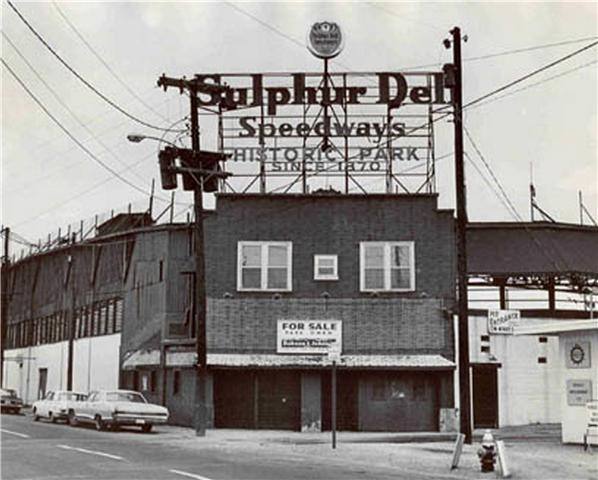
It was a warm summer evening back in the early 1950s as three or four ten- or eleven-year-old boys gathered at one of their houses near Blair Boulevard. The Dad who lived there was taking the boys out to Sulphur Dell to watch the Nashville Vols play baseball. Full of excitement, everybody loaded into the old black ’48 Chevy, and they were on their way.
Photo of Sulphur Dell from the collection of Skip Nipper. Used by permission.
The Dell was back behind the Capitol down beyond where the Bicentennial Mall is now. Back then, big old brick houses and little wooden ones filled the area right up to the edge of Capitol Hill itself. By then, the neighborhood was so rundown that no one wanted to go down there. But Mr. Dad drove right in, as it was a shortcut to the ball park.
The streets were full of kids running around and folks hanging out on their porches talking. Suddenly, the car full of boys grew silent and their eyes popped wide open as they watched a trim teenage girl without any clothes on run out of a house and right across the street in front of Mr. Dad’s car. He came to a quick stop to keep from hitting her, and everybody stared as she ran up onto another porch and disappeared behind a ragged old screen door.
No one said a word, but they all stared at that door in the hope that she’d run back out and cross the street again. As Mr. Dad began driving on down the street to the Dell, he looked over his shoulder at his dumbstruck passengers and said, “You know, boys, you just never know what you’ll see in the quarters!”
With that, the spell was broken and everybody was soon slapping their fists into their gloves in anticipation of the foul ball they just knew they were going to catch. Arriving at the ballpark, each one bought a Coke for a nickel and settled in for some baseball. None of those boys can remember the score of that game, or even who was playing, but they never forgot what they saw “in the quarters” behind the Capitol on that summer night some sixty years ago.
One hundred years after the first tornado was catalogued in Middle Tennessee,1 Nashville found itself facing the deadliest storm in its recorded history up to that time. Although many residents believed that the hills to the south and west would protect the city from approaching storms,2 weather conditions on March 14, 1933, were creating a recipe for disaster. At 3:00 the temperature had reached 80 degrees – a record high for the date3; meanwhile, a strong cold front was speeding toward Nashville from the northwest, carrying a line of powerful thunderstorms. The front edge of the system hit after sunset, dropping 0.81 inches of rain and large hailstones.4
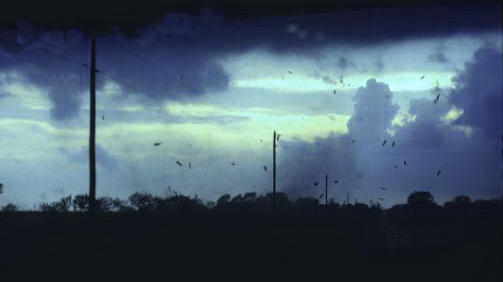
The tornado followed the storm over the western hills, touching down at Charlotte Pike and 51st Avenue just before 7:30, shattering windows as it passed over the State Capitol, and picking up strength as it approached the Public Square. There it damaged several buildings as it passed within 400 feet of the Weather Office.5 After it crossed the Cumberland River into East Nashville, its path widened to 800 yards. By now an F3* tornado, it tore through the dark into heavily populated neighborhoods, destroying homes, schools, churches, and businesses.6
Public domain image from spc.noaa.gov
The storm hurtled on into Donelson and Hermitage, demolishing several more homes and a filling station, uprooting huge trees, splintering utility poles, and injuring several residents.7 From there it continued into Wilson County, creating additional casualties and severely damaging 228 buildings, most of them in Lebanon.8
The tornado, which traveled for 45 miles through three counties, caused 11 deaths in Davidson County, 4 more in Wilson County, and at least 45 injuries requiring medical treatment, before it lifted and dispersed over Smith County.9 During the next few days Nashville’s City Building Office estimated that 1,500 buildings had been damaged by the storm, 800 so seriously as to be uninhabitable.10 Total recorded property damage included 1,400 homes, sixteen churches, thirty-six stores, five factories, four schools, a library, and a lodge hall.11
Nashvillians had no warning. At that time the Weather Bureau prohibited forecasts of approaching tornadoes, believing they would cause widespread panic.12 As a result, many of those killed or injured did not have time to seek shelter.
* According to the Fujita scale of tornado intensity, an F3 tornado (158-206 mph) can cause severe damage: “roofs and some walls torn off well-constructed houses; trains overturned; most trees in forest uprooted; heavy cars lifted off the ground and thrown.” (2015)


 Nashville Historical Newsletter